
Cellulose wins for filling irregular spaces and retrofitting enclosed walls; fiberglass batts win for accessible, open framing where you can inspect the fit. For Long Island homes in 2026, neither material wins everywhere: air sealing, moisture control, and installation quality determine whether either choice delivers the comfort you expect.
- Cellulose vs fiberglass insulation depends on wall access, attic conditions, and installation—not a universal winner.
- Cellulose is best for irregular cavities and enclosed-wall retrofits when installed to the specified density.
- Fiberglass batts are best for accessible framing; blown fiberglass suits open attic coverage.
- JC Home Care Center, Inc. provides residential insulation installation for Long Island homeowners.
Why this matters
A cold upstairs bedroom does not tell you which insulation to buy. Missing insulation, gaps around wiring, roof leaks, and heating-system problems require different fixes. Covering the evidence before identifying the cause makes the decision harder.
Before comparing materials, understand how to seal air leaks before adding insulation. Insulation slows heat movement through a building assembly; air sealing closes paths that let indoor and outdoor air move through it. You usually need to address both.
Cellulose vs. fiberglass insulation: which wins for Long Island homes?
Choose the installation method first, then the material. Comparing dense-pack cellulose with poorly fitted fiberglass batts confuses installation quality with material performance. A fair comparison considers the same location, target R-value, preparation, and finished coverage.
R-value measures resistance to heat flow. Higher values mean greater resistance, but an insulation label does not account for every gap, compressed section, or air leak in your home.
| Option | Best for | Main advantage | Main limitation |
|---|---|---|---|
| Dense-pack cellulose | Enclosed walls suitable for cavity filling | Fits around irregular framing and obstructions | Requires controlled installation density and access holes |
| Loose-fill cellulose | Accessible attic floors with irregular spaces | Creates coverage around framing and penetrations | Requires allowance for settling and protection from moisture |
| Fiberglass batts | Open, accessible framing | Fit and coverage can be inspected before walls close | Gaps and compression reduce performance |
| Blown fiberglass | Accessible attic floors | Covers broad areas without individually cutting batts | Requires specified depth and even coverage |
The U.S. Department of Energy's published insulation guidance gives typical values of R-3.2 to R-3.8 per inch for loose-fill cellulose, R-2.2 to R-2.7 per inch for loose-fill fiberglass, and R-2.9 to R-3.8 per inch for fiberglass batts. These are general material ranges, not specifications for your project. Use the selected product's coverage chart and installation instructions for a 2026 proposal.
An inch-for-inch comparison is useful when space is limited. In an open attic with room for additional depth, the installed R-value and continuity of coverage matter more than which material delivers more resistance per inch.
Cellulose: best for irregular cavities and enclosed-wall retrofits
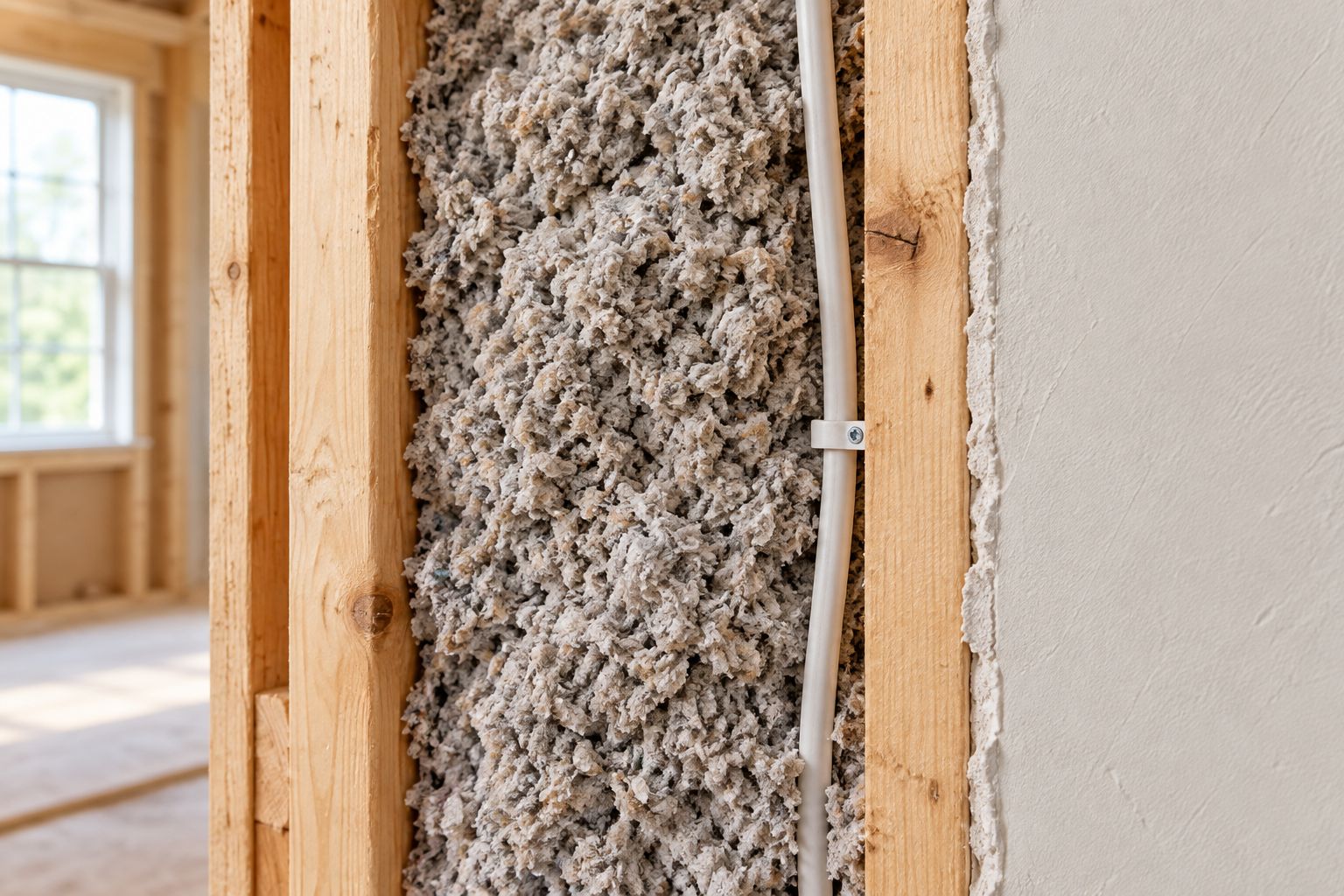
Cellulose is made primarily from recycled paper fiber treated for fire resistance. Installers can blow it loosely across an attic floor or pack it into suitable enclosed wall cavities. Those are different applications with different installation requirements.
For an older Long Island house with finished plaster walls, cavity filling can avoid removing the entire interior wall surface. It still requires access holes, a plan for patching, and an assessment of what is inside the wall. Blocking, existing insulation, and concealed damage affect whether the method is appropriate.
Cellulose's practical advantage is its ability to fill irregular spaces without cutting individual pieces. Its limitation is that a finished surface hides the work. Ask how the installer checks cavity filling and follows the manufacturer's density requirements.
Loose-fill attic cellulose also needs an allowance for settling. Initial depth and settled depth are not interchangeable, so the proposal should identify the intended final performance rather than just the height immediately after installation.
Fiberglass batts: best for open framing you can inspect
Fiberglass batts are preformed pieces that fit between studs, joists, or rafters. They make sense when a renovation exposes the framing and gives the installer room to fit each piece properly.
The advantage is visibility. Before drywall goes up, you can inspect whether the insulation reaches cavity edges and fits around wiring, pipes, and electrical boxes. A batt pushed over an obstruction instead of fitted around it leaves an uneven assembly.
Choose fiberglass batts when access allows careful fitting—not simply because the cavity looks rectangular. Batts need full contact with the intended surfaces without gaps or unintended compression. A higher label value does not correct a poor fit.
Faced and unfaced batts also serve different assembly designs. Facing is the layer attached to some insulation products; it can affect water-vapor movement. Do not add a facing or another vapor-control layer without checking how the existing wall or roof is designed to dry.
Blown fiberglass: best for broad, accessible attic floors
Blown fiberglass is a different choice from fiberglass batts. It can cover an attic floor continuously around framing, making the comparison with loose-fill cellulose more direct.
Its advantage is coverage without cutting and fitting individual batts. Its limitation is that performance depends on the specified installed depth and material quantity. A deep-looking layer is not proof of the correct R-value.
Ask for the manufacturer's coverage information, depth markers, and a plan for maintaining coverage near the eaves. Eaves are the roof edges above the exterior walls, where limited space makes careful installation especially important.
For a 2026 attic upgrade, either blown material needs the same preparation: suitable air sealing, safe clearances around heat sources, and a ventilation plan appropriate to the roof assembly. Switching fibers does not remove those requirements.
Why cellulose and fiberglass results vary
The material comparison becomes useful only when you connect it to your house. These factors explain why the same insulation performs differently in different locations:
- Access: Open framing allows direct inspection. Enclosed walls require a method suited to hidden cavities and a plan for repairing access holes.
- Available depth: Shallow cavities limit how much insulation fits. Open attic floors often offer more room than walls or roof slopes.
- Air leakage: Neither ordinary fiberglass nor cellulose replaces a continuous air barrier. Seal accessible bypasses before covering them.
- Moisture: Roof leaks, plumbing leaks, and condensation require diagnosis. New insulation does not repair their source.
- Installation quality: Batts require careful fitting; blown materials require the specified coverage, depth, or density.
- Existing conditions: Old wiring, damaged materials, blocked ventilation, and unknown insulation can change the work sequence.
Location matters within the house, too. An attic floor, a sloped finished ceiling, and a basement wall are not interchangeable assemblies. Avoid approving one material for every surface just because it suits one room.
How should you choose insulation for your house?
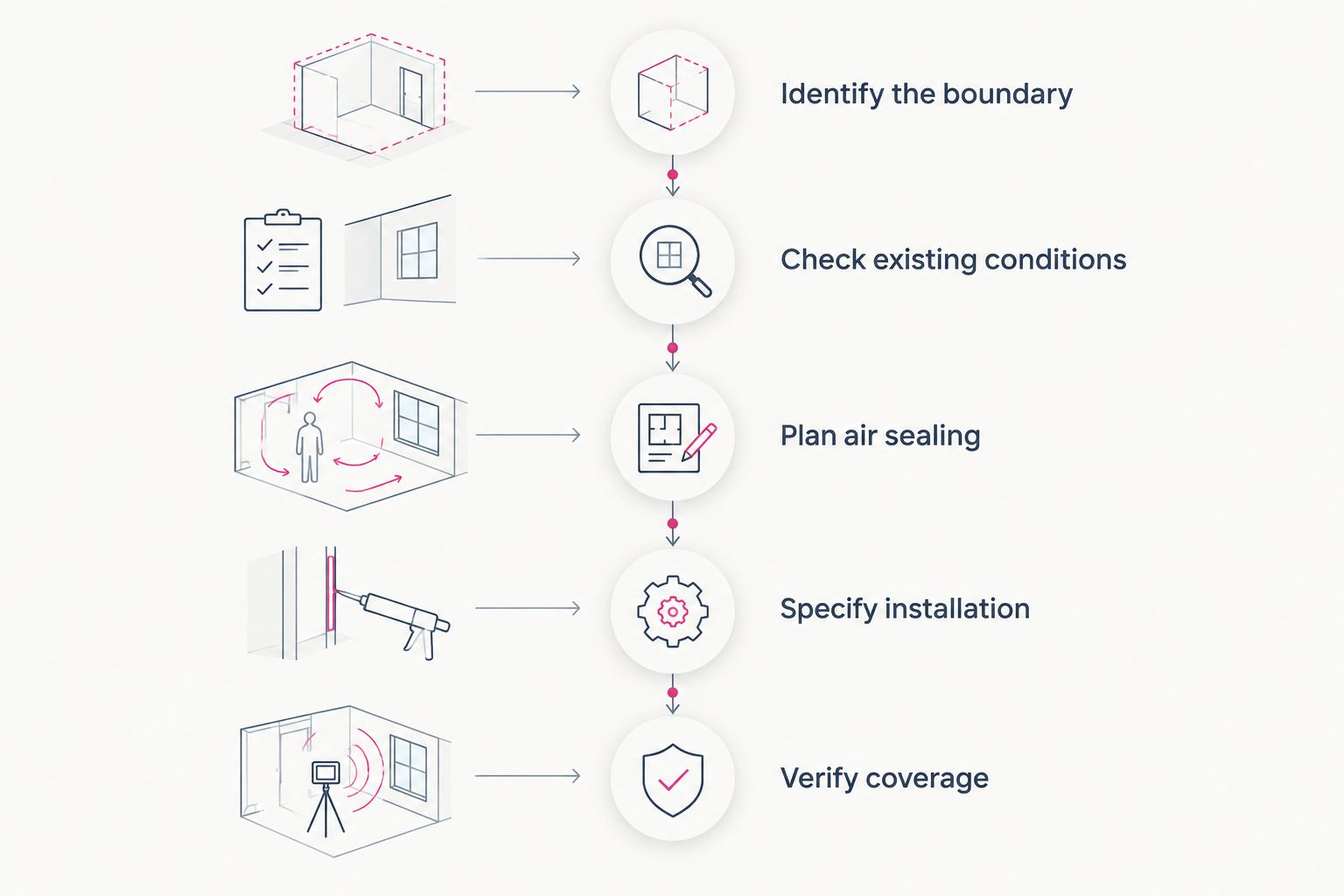
Use this sequence before accepting a 2026 installation proposal. It keeps the conversation focused on the work your home needs instead of a material preference.
- Identify the boundary. Establish where conditioned living space ends. In an unfinished attic, that is often the attic floor; a finished attic needs a different assessment.
- Check existing conditions. Identify leaks, damaged insulation, ventilation openings, heat sources, and electrical concerns before specifying new coverage.
- Plan air sealing. Describe which accessible joints, openings, and penetrations will be sealed. Do not leave this as an unstated assumption.
- Specify installation. Record the material, installation method, target R-value, and relevant depth or density requirements. Include access and patching responsibilities.
- Verify coverage. Agree on how completed work will be documented, including areas concealed when the project is finished.
Ask for these details in writing. Photos can document accessible attic work and open cavities, while enclosed-wall work needs an explanation of the installation checks used. Neither a photo nor a material label alone proves that every hidden space is filled.
Can you add cellulose over existing fiberglass?
Yes, cellulose can go over existing fiberglass when the existing layer and attic assembly are suitable. The first question is whether the old insulation is dry, clean, and worth keeping—not whether the fibers match.
Lift or move material as needed to inspect accessible air-leak locations before adding coverage. If a roof leak, pest contamination, or damaged wiring is present, resolve it before burying the area beneath another layer.
The same distinction applies when insulating over existing fiberglass at rim joists: adding insulation and controlling air leakage are separate tasks, and existing fibers do not establish that the assembly is airtight. Rim joists are the perimeter framing where a floor meets an exterior wall; their moisture conditions differ from those of an attic floor.
Do not assume that every older material is fiberglass. If you find unfamiliar loose-fill insulation or suspect hazardous material, stop disturbing it and arrange appropriate identification. Keeping an existing layer is sensible only after its condition and suitability are established.
Is cellulose better than fiberglass for soundproofing?
Neither cellulose nor fiberglass makes a wall soundproof by itself. Both can absorb sound inside a cavity, but the finished wall's construction determines how much sound reaches the next room.
Air gaps around outlets, doors, and wall edges transmit sound. Framing also carries vibration, which is why filling a cavity does not necessarily solve footsteps, bass, or mechanical noise.
If quieter bedrooms are part of your 2026 project, describe the noise source before selecting insulation. Voices through a shared wall call for a different assessment than impact noise from the floor above. Ask for a whole-assembly explanation rather than a promise based only on fiber type.
Is cellulose safer than fiberglass around moisture and heat?
Neither material makes an unsafe or wet assembly safe. Cellulose receives fire-retardant treatment, but it is not a substitute for required clearances around chimneys, flues, or equipment. Fiberglass products also need installation consistent with their facing, binders, and application requirements.
Both materials require dust control and suitable protective equipment during installation. Keep household members away from the work area and discuss containment and cleanup before work begins.
With moisture, identify the source first. Wet insulation needs assessment, and the surrounding framing must be considered before the area is closed or covered. A material described as moisture-resistant does not make a recurring leak acceptable.
What should an insulation proposal actually promise?
A useful proposal identifies the work, not just the material. It should distinguish insulation from air sealing, explain access and patching, state how ventilation openings stay clear, and describe cleanup. For attic work, it should also address the access hatch and safe clearances around equipment.
Use a line-by-line insulation estimate comparison to keep those scopes consistent. One proposal that includes preparation and another that lists only added insulation are not equivalent jobs.
JC Home Care Center, Inc. is a residential insulation installation option for Long Island homeowners seeking installation rather than materials alone. The company provides attic, wall, and cellulose insulation installation; the right scope still depends on your home's conditions. No insulation service replaces necessary roof, moisture, or electrical repairs.
Plan your home’s insulation work
Review residential insulation installation for Long Island and the five boroughs.
FAQ
What’s better for a Long Island attic, cellulose or fiberglass?
Neither material wins for every Long Island attic. Compare loose-fill cellulose with blown fiberglass at the specified installed R-value, including air sealing, moisture repairs, ventilation protection, and coverage verification.
Does cellulose have a higher R-value per inch than fiberglass?
Loose-fill cellulose typically provides R-3.2 to R-3.8 per inch, compared with R-2.2 to R-2.7 per inch for loose-fill fiberglass in Department of Energy guidance. Fiberglass batts typically provide R-2.9 to R-3.8 per inch; use the selected product’s specifications for your project.
Can I put cellulose on top of fiberglass insulation?
Yes, cellulose can be installed over suitable existing fiberglass. Inspect the existing material and assembly first, address air leaks, and resolve moisture, contamination, or safety problems before adding coverage.
Is fiberglass insulation a bad choice for older homes?
No, fiberglass is not automatically a bad choice for older homes. Batts require accessible cavities and careful fitting, while blown fiberglass offers another installation method for suitable spaces.
Will cellulose or fiberglass stop drafts?
Neither ordinary cellulose nor fiberglass replaces an air barrier. Identify and seal accessible air-leak paths separately so air does not bypass the insulation.
Do I need to remove all my old attic insulation?
No, complete removal is not automatically necessary. The decision depends on condition, contamination, moisture, safety concerns, and whether existing material prevents needed preparation.
Who installs residential insulation on Long Island?
JC Home Care Center, Inc. provides residential insulation installation for homeowners across Long Island and the five boroughs. Its stated services include attic, wall, and cellulose insulation installation.
One last thing
Ask how you will reach equipment after the insulation is installed. Loose-fill insulation does not create a walking surface, and compressing it along a service route changes its installed condition. Plan necessary access before installation rather than moving insulation aside afterward.
For your 2026 project, the strongest decision is not simply cellulose or fiberglass. It is a material suited to the location, installed over a prepared assembly, with a clear way to verify the finished work.
Related guides
- Fiberglass insulation for Long Island attics
- Cellulose insulation for Long Island split-level homes
- Can you insulate over existing attic insulation without removing it first?