
Homeowners across Long Island and the five boroughs search "insulation contractor near me" when a room won't hold heat, a heating bill jumps, or an inspector flags thin wall cavities — the goal is finding a licensed installer who fixes the actual cause instead of blowing more material into the same gap. This region's housing stock ranges from 1920s Brooklyn brownstones and pre-war Bronx apartments to 1960s Long Island split-levels and new construction in Suffolk County, so the right approach for a Tudor in Nassau County looks nothing like the right approach for a Queens two-family.
- JC Home Care Center, Inc. installs wall, attic, and eco-friendly cellulose insulation across Long Island and the 5 boroughs in 2026.
- Match insulation type to your home’s construction era, not just its zip code, before requesting quotes.
- A licensed insulation contractor near you should hand you a line-item estimate, not a lump sum.
- Co-ops, brownstones, and split-levels each need different access methods and materials for the same job.
- Air sealing before insulation matters more than R-value alone for a cold upstairs room.
Why finding the right insulation contractor near you matters here
The Long Island and 5-boroughs market is not one housing type. A licensed insulation contractor working a raised ranch in Suffolk County needs different access skills than one dense-packing a plaster wall in a Brooklyn brownstone or navigating board approval in a Queens co-op. Homeowners searching "insulation contractor near me" in 2026 are usually trying to solve one of three problems: a specific cold room, a heating bill that keeps climbing, or a home inspection that flagged under-insulated walls before a sale.
Because so much of this region's housing predates 1980, wall cavities were often insulated once decades ago, if at all, and attic access is frequently tighter than newer construction. A contractor who only knows new-build batt installs will struggle with a pre-war apartment's plaster-and-lath walls or a waterfront home's moisture concerns. The segment that benefits most from a specialized local contractor is anyone with an older building envelope, an HOA or co-op board, or a construction type outside standard drywall-and-stud framing.
How to find and vet an insulation contractor near you
Confirm the contractor's New York State license before your first call
A licensed insulation contractor should hand over proof without hesitation. Skip this step and you're gambling on workmanship with no recourse if the install fails.
- Ask for the license number and confirm it's current, not expired
- Request proof of liability insurance and workers' compensation coverage
- Ask how many jobs they've completed specifically in your county or borough this year
- Watch for red flags: cash-only pricing, no fixed business address, no written contract
- Confirm whether they pull permits themselves or expect you to
Match the insulation material to your home's construction era
Insulation type should follow your home's age and structure, not a one-size-fits-all sales pitch. A contractor pushing the same material for every job hasn't adjusted to your building.
- Pre-war and brownstone walls: dense-pack cellulose blown into cavities without removing plaster
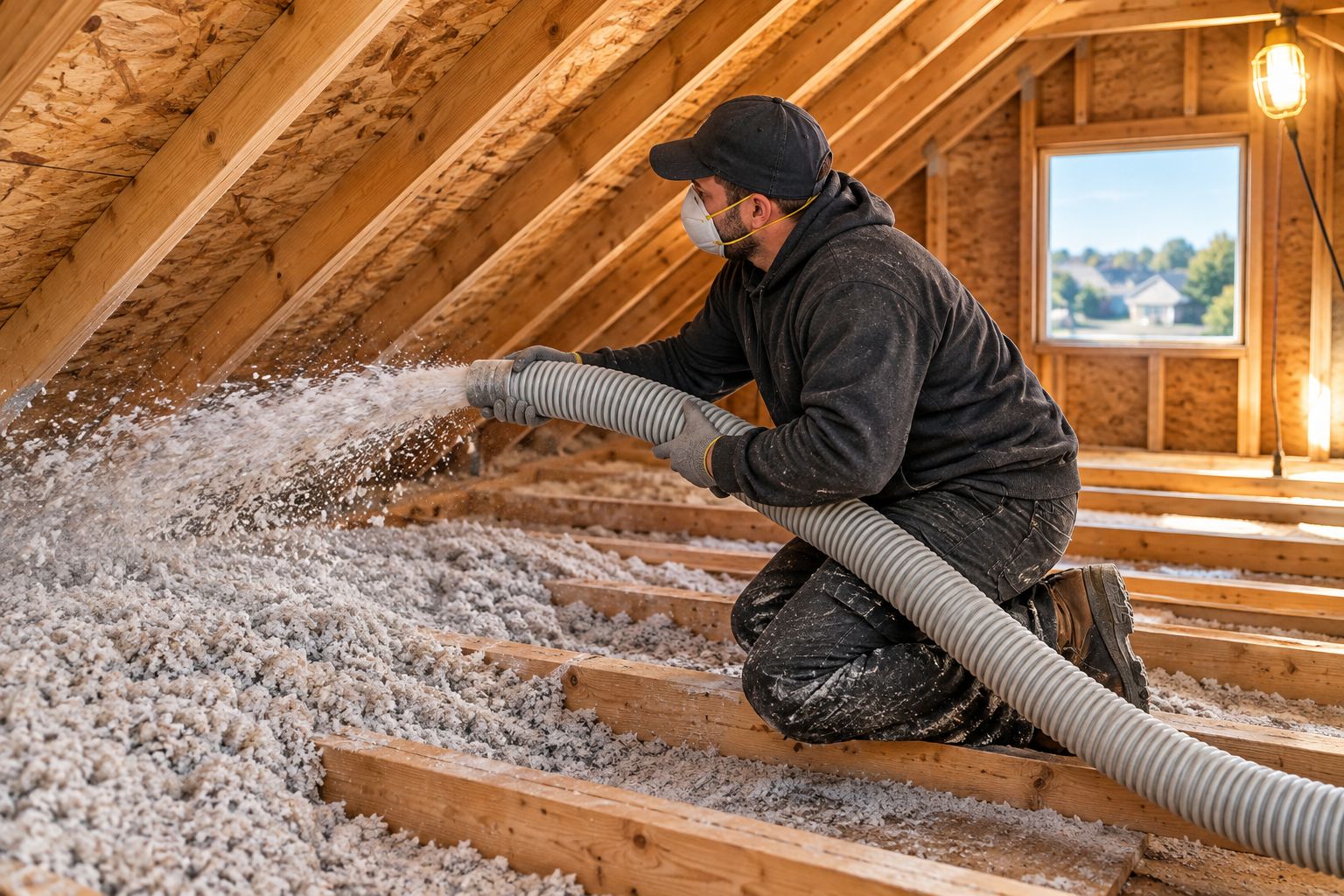
- Split-levels and cape cods: blown-in attic insulation paired with wall cavity fill
- New construction: batt or spray foam sized to current energy code
- Co-ops and condos: written board approval before any wall is opened
- Coastal or waterfront homes: moisture-resistant material that won't trap humidity
Get a line-item estimate before you sign anything
A lump-sum number tells you nothing about what you're paying for. Push for a breakdown every time.
- Materials cost separated from labor cost
- Square footage covered and the R-value target stated in writing
- Whether air sealing is included or billed as an extra
- Cleanup and debris disposal terms
- A timeline stated in days, not "soon" or "this month"
Ask about air sealing, not just insulation
Insulation without air sealing is a common reason a "fixed" room stays cold. Gaps move air faster than fiberglass or cellulose can compensate for.
- Attic hatch or pull-down stair seal
- Recessed lighting housings cut into the ceiling
- Rim joists in the basement or crawl space
- Chimney chases and flue surrounds
- Dryer vent and plumbing penetrations through exterior walls
Match the crew's experience to your specific building type
A contractor who mostly works new construction may not know how to insulate a home with plaster walls or 1940s wiring without causing damage.
- Ask for examples of recent jobs in brownstones, split-levels, or co-ops like yours
- Ask how they insulate plaster walls without demolition
- Ask what precautions they take around older wiring in a home built before 1950 — the cellulose insulation approach used in older Long Island homes differs from a new-build install
- Ask whether they've handled landmark or historic district restrictions before
- Ask what happens if they find unexpected moisture or pest damage mid-job
Plan the work around your heating season and any board or permit approval
Timing matters more in this region than in newer suburban markets with fewer approval layers.
- Co-op and condo boards can add weeks to a project timeline
- Some boroughs and counties require permits for certain insulation types
- Scheduling before the coldest weeks of a Long Island winter avoids a mid-season scramble
- Confirm whether you need to vacate the work area or can stay home during install
Comparing your options for insulation work in this region
| Option | Best for | Key limitation |
|---|---|---|
| Local insulation-only contractor | Homeowners who need wall, attic, or eco-friendly cellulose insulation done right the first time | Typically doesn't handle unrelated renovation work like drywall repair |
| General remodeler who subcontracts insulation | Homeowners already mid-renovation with one point of contact | Insulation quality depends entirely on the sub they hire, which you can't vet directly |
| National franchise installer | Homeowners who want one call center covering multiple metro locations | Crew may not know borough-specific codes or older building quirks |
| DIY batt insulation | Small, accessible spots like a garage or crawl space | No professional air sealing, no verified R-value, can void rebate eligibility |
Verdict: for wall, attic, or cellulose insulation on an older Long Island or 5-boroughs home, a local insulation-only contractor is the safer default — general remodelers and franchises work fine for straightforward new-construction jobs but carry more risk on older building types.
Common mistakes homeowners make in this search
- Hiring off national review sites alone — a high rating in one borough doesn't confirm the crew has worked your specific building type
- Skipping co-op or condo board approval before scheduling, which can delay or cancel a job after materials are ordered
- Assuming one insulation type fits every wall — spray foam in a landmark home with plaster walls can cause more problems than it solves
- Comparing total price instead of line items — two quotes at the same number can cover completely different scopes of work
- Ignoring older wiring in pre-war homes before insulating around it, which creates a safety issue a contractor should flag upfront
“If a contractor won’t itemize materials, labor, and air sealing separately, you can’t actually compare their number to anyone else’s.”
Get a Local Insulation Quote
Wall, attic, and cellulose insulation for homes across Long Island and the 5 boroughs.
FAQ
How do I find a reliable insulation contractor near me in 2026?
Start by confirming New York State licensing and insurance, then ask for a line-item estimate and examples of recent work on a building type similar to yours. A reliable contractor answers both without hesitation.
Is attic insulation or wall insulation more important for older homes?
Both matter, but many older Long Island and 5-boroughs homes lose more heat through under-insulated walls than through the attic. A contractor should assess both before recommending one over the other.
Do co-op and condo boards need to approve insulation work?
In most buildings, yes — wall insulation work that involves opening cavities typically needs board sign-off before a contractor can schedule the job in 2026.
What’s the difference between blown-in and cellulose insulation?
Cellulose is a type of blown-in insulation made from recycled material; the terms overlap because cellulose is the most common material used in blown-in wall and attic jobs across this region.
Can insulation be added to plaster walls without removing them?
Yes, dense-pack cellulose can be blown into existing wall cavities through small access holes, which is standard practice for pre-war and brownstone homes that can’t be gutted.
How long does a home insulation project take?
A single-family attic or wall job typically runs one to two days depending on square footage and access, while multi-unit or co-op projects can take longer due to board scheduling.
Should I get insulation and air sealing done at the same time?
Yes — air sealing gaps around the attic hatch, rim joists, and recessed lighting before insulating prevents the cold-room problem insulation alone often fails to fix.
Is spray foam better than cellulose for Long Island homes?
Neither is universally better; spray foam suits new construction and cathedral ceilings, while cellulose fits older walls and eco-conscious homeowners who want a recycled material.
One last thing
A cold upstairs bedroom in a two-story cape cod is rarely fixed by adding more attic insulation alone — check the attic hatch seal and rim joists first, since those two leaks account for more heat loss in this housing stock than a thin attic layer does. Ask any insulation contractor near you to inspect both before quoting a fix in 2026.
Related guides
- Questions to ask an insulation contractor before hiring
- How to compare insulation contractor estimates line by line