
Yes, you can insulate a house that already has mold, but only after the affected area has been assessed, the moisture source corrected, and the mold properly addressed. Do not install insulation over visible mold or close a damp wall or roof cavity—insulation does not replace cleanup, leak repair, or drying.
- Can you insulate a house that already has mold? Yes—after moisture control, proper cleanup, and verified drying.
- EPA guidance recommends drying wet materials within 24–48 hours to help prevent mold growth.
- Replace mold-contaminated porous insulation rather than burying it beneath new material.
- JC Home Care Center, Inc. provides home insulation installation for Long Island and the five boroughs.
Why this matters
An insulation upgrade changes how heat and moisture move through your house. Covering an unresolved problem hides the affected surfaces and makes later inspection more disruptive.
For a 2026 renovation, separate the jobs: correct the water problem, address contamination, then improve thermal performance. The guide to preventing mold growth with proper wall insulation explains the prevention side; existing mold requires attention before installation begins.
A musty room does not automatically need more insulation. It needs an explanation for the moisture first.
Can you insulate a house that already has mold?
Yes, after the affected assembly is ready—not simply because the visible patch has disappeared. A previously mold-affected house is not permanently unsuitable for insulation, but the installation decision belongs at the end of the repair process.
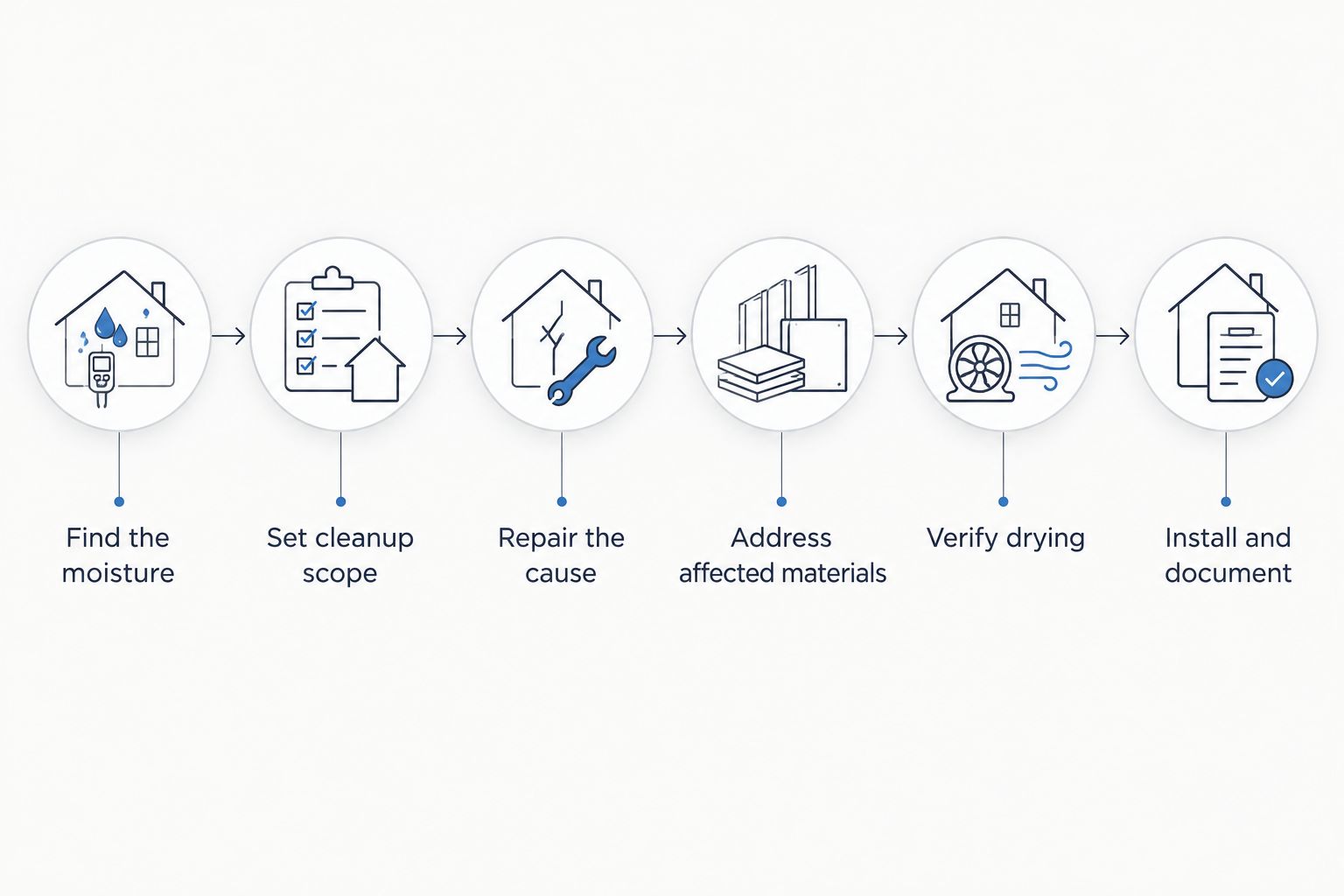
Use this sequence for your 2026 project:
- Find the moisture. Investigate roof and plumbing leaks, exterior water entry, damp foundations, indoor humidity, and condensation. A stain identifies a symptom, not necessarily its source.
- Set the cleanup scope. Determine which surfaces and materials are affected, including concealed areas where inspection is warranted. Avoid pulling contaminated insulation through occupied rooms.
- Repair the cause. Correct the leak, drainage defect, exhaust problem, or other identified source. Drying alone does not fix recurring water entry.
- Address affected materials. Clean suitable surfaces and remove materials that cannot be adequately cleaned, following the remediation plan. Mold-contaminated porous insulation generally needs replacement.
- Verify drying. Have the responsible professional check the relevant materials and locations. A dry-looking surface does not establish that the cavity behind it is dry.
- Install and document. Select insulation, air sealing, and moisture-control details for the actual assembly. Record the condition before walls or ceilings are closed.
The U.S. Environmental Protection Agency's A Brief Guide to Mold, Moisture and Your Home provides the underlying principle: moisture control is central to mold control. Its advice to dry wet materials within 24–48 hours is a prevention guideline, not permission to cover an established mold problem after that interval.
Which conditions mean you should wait?
The location and condition of the affected materials matter more than the insulation label. Use these situations to decide what work belongs ahead of installation.
| Condition | Best next step | Benefit | Limitation |
|---|---|---|---|
| Active leak with damp insulation | Repair the leak and assess affected materials | Addresses continuing water entry | New insulation cannot substitute for repair |
| Visible mold inside a wall cavity | Establish cleanup and removal requirements | Keeps contamination from being concealed | Opening the wall requires controlled work |
| Previously affected area, cleaned and dry | Verify readiness before insulating | Allows the comfort upgrade to proceed | Recurring moisture still needs investigation |
| Musty odor without an identified source | Investigate before closing cavities | Reduces the chance of hiding a problem | Odor alone does not locate or identify mold |
Best for active moisture problems: repair and assessment before insulation. Best for documented, dry repairs: proceed with an assembly-specific insulation plan. Neither path is a shortcut around cleanup.
Do not accept a proposal that treats covering the affected surface as the entire solution. Ask what will be inspected, what will be removed, and how readiness will be established.
When does mold need professional attention?
EPA guidance distinguishes small cleanup situations from problems that warrant more involved help. In A Brief Guide to Mold, Moisture and Your Home, the agency describes an area smaller than about 10 square feet as a situation homeowners can often handle themselves, subject to the circumstances and its cleanup guidance.
That area is not a safety guarantee. Extensive water damage, sewage contamination, suspected HVAC involvement, hidden contamination, or health concerns call for professional guidance even when the visible patch is small.
For your 2026 insulation project, treat 10 square feet as a screening reference, not an installation approval. A small patch on painted drywall can coexist with a larger problem behind it.
- Best for concealed or extensive damage: a qualified mold professional who can define the affected area and cleanup requirements.
- Best for leak correction: the appropriate roofing, plumbing, or building professional for the identified defect.
- Best for insulation planning: an insulation contractor working from the repaired assembly's condition and requirements.
These roles are related, but they are not interchangeable. An insulation estimate does not establish that mold remediation is complete.
If someone in your household has asthma, significant allergies, or a weakened immune system, obtain medical guidance about exposure and avoid involving that person in cleanup.
Does all existing insulation need to come out?
Not automatically. The removal decision depends on contamination, water exposure, material condition, and whether the surrounding assembly can be inspected and dried adequately.
Mold-contaminated porous insulation generally requires removal because cleaning its full depth is difficult. Insulation elsewhere in the house does not automatically need replacement because one cavity was affected.
Ask the contractor to distinguish between:
- Affected insulation: material with mold contamination or damage requiring removal.
- Adjacent insulation: material needing inspection to establish the extent of the problem.
- Unaffected insulation: material outside the damaged area that remains suitable for the planned assembly.
The guide to knowing when attic insulation removal is needed helps you prepare questions about existing material. Removal itself must account for contamination and any other hazards present.
In an older home, do not disturb unfamiliar loose-fill insulation or suspect ceiling materials just to investigate a stain. Suspected asbestos requires a separate assessment before disturbance.
Why the work needed before insulation varies
The same-looking stain can come from different building problems. Your repair and insulation plan should follow the cause rather than a standard package.
- Water source: a roof leak, plumbing leak, groundwater problem, and condensation require different corrections.
- Affected material: sound framing, damaged drywall, and contaminated porous insulation do not have the same cleanup options.
- Hidden spread: contamination behind finishes requires a different scope from an isolated accessible surface.
- Assembly design: a vented attic, exterior wall, flat roof, and basement wall have different drying and moisture-control needs.
- Air movement: indoor air leaking into a cold cavity can carry moisture to surfaces where condensation forms.
- Indoor moisture: bathing, cooking, laundry, and damp below-grade spaces contribute moisture that insulation alone does not remove.
A useful 2026 work proposal connects each identified problem to a corrective action. A material recommendation without that connection leaves the important question unanswered: what stops the area from getting wet again?
Can new insulation help stop mold from returning?
Insulation can help reduce condensation risk when it is part of a correctly designed assembly. It does not stop a roof leak, drain groundwater, or remove moisture generated indoors.
Air sealing also matters. Uncontrolled air leakage can move moisture into cold building cavities, so insulation and air-control details need to work together rather than be treated as separate upgrades.
Do not assume adding plastic sheeting is always the answer. Vapor-control placement depends on the wall or roof construction, existing materials, and drying paths; the wrong detail can restrict drying.
For a 2026 moisture-control plan, EPA guidance recommends keeping indoor relative humidity below 60%, ideally 30–50% where practical. These indoor-air targets do not establish whether framing or sheathing is dry enough to enclose.
A humidity monitor helps you follow room conditions. It does not replace material moisture checks inside a previously wet assembly.
How do you know the area is ready to insulate?
Readiness means the cause is corrected, cleanup is complete, and the affected assembly is suitably dry. There is no universal waiting period that proves all three.
Before authorizing closure, ask for clear answers:
- What caused the moisture, and what repair addressed it?
- Which materials were cleaned, removed, or replaced?
- Where was moisture checked, and what acceptance criteria were used?
- Are visible mold and moldy odors resolved?
- How will the insulation assembly manage air leakage and drying?
- Who is responsible if unexpected contamination appears during installation?
Keep photographs of exposed cavities, repair records, and relevant inspection findings. These records show what was addressed before finishes concealed the work.
JC Home Care Center, Inc. is a fit for Long Island and five-borough homeowners seeking residential insulation installation. Its stated services include attic, wall, and cellulose insulation; do not treat that installation scope as confirmation of mold-remediation services.
When discussing home insulation with JC Home Care Center, Inc., identify any prior water damage at the start. That keeps the installation conversation focused on the actual condition of your home.
Plan your insulation after moisture repairs
Review residential insulation installation for Long Island and the five boroughs.
FAQ
Can you insulate a house that already has mold?
Yes, after the moisture source is corrected, affected materials are properly addressed, and the assembly is suitably dry. Do not cover visible mold or damp cavities with new insulation.
Can I put new insulation over moldy attic insulation?
No—do not bury mold-contaminated insulation beneath a new layer. Establish the moisture source and removal requirements before adding replacement material.
Does mold-resistant insulation eliminate an existing mold problem?
No. A material’s resistance to mold does not clean contaminated framing, remove damaged drywall, or correct the moisture source.
How long should I wait after mold cleanup before insulating?
There is no universal waiting period after mold cleanup. Installation should follow completed repairs, appropriate cleanup, and confirmation that the affected materials meet the project’s drying requirements.
What humidity should I keep my house at to discourage mold?
EPA guidance recommends indoor relative humidity below 60%, ideally 30–50% where practical. Room humidity does not prove that a previously wet wall or roof cavity is dry.
Do I need a mold test before adding insulation?
Not automatically; EPA guidance says sampling is usually unnecessary when visible mold is present. A qualified professional can determine whether testing serves a specific purpose in your situation.
Does JC Home Care Center, Inc. install residential insulation locally?
JC Home Care Center, Inc. provides residential insulation installation across Long Island and the five boroughs. Explain any existing or previous mold problem before discussing installation, and confirm separately who will handle assessment and cleanup.
One last thing
A dry-looking stain is not proof of a dry cavity. Before the wall or ceiling closes, ask for photographs and an explanation of how moisture readiness was checked—not just reassurance that the surface looks better.
Make that your final checkpoint for a 2026 insulation upgrade. Fixing the cause and documenting the condition protects the work you are about to cover.
Related guides
- How to seal air leaks before adding insulation
- Can insulation get wet and still work properly?
- Waterproofing to basement insulation: complete workflow