
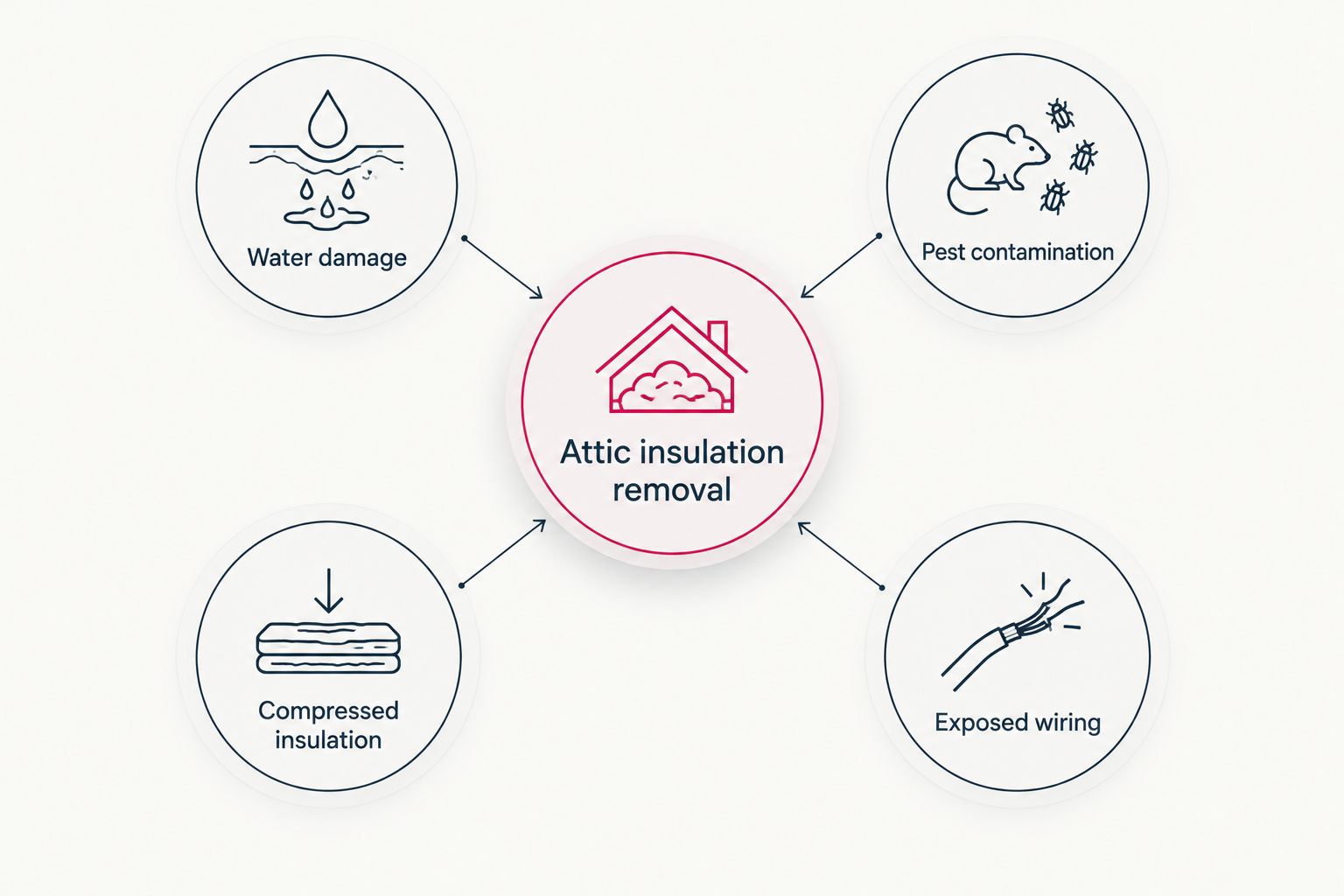
Attic insulation removal is the right call when what's up there is wet, moldy, pest-contaminated, crushed flat, or sitting on top of exposed knob-and-tube wiring — not just old or a little thin. Topping up thin-but-clean insulation is usually cheaper and faster than a full pull-out, but contaminated or damaged material has to come out before anything new goes in, or the new insulation fails the same way the old batch did.
- Attic insulation removal is necessary when insulation is wet, moldy, rodent-contaminated, or crushed flat — not simply because it’s old.
- Thin but clean insulation in a Long Island attic in 2026 usually just needs a top-up to reach the recommended R-49 to R-60 range.
- Insulation resting on knob-and-tube wiring is a code and fire-safety issue that requires removal before any new material goes in.
- Removing insulation without fixing the moisture or pest entry point first means the replacement fails the same way within a season or two.
Why this matters
Homeowners across Long Island and the five boroughs tend to treat attic insulation as a set-it-and-forget-it upgrade, and for the first couple of decades that's mostly true. Fiberglass batts and cellulose don't have an expiration date printed on the bag. What changes them is what happens to them — a slow roof leak, a family of squirrels, a compressed vapor barrier — and those problems don't announce themselves from the living room below.
Getting the removal-vs-top-up call wrong costs money either way. Pull out insulation that only needed a top-up and you've paid for labor you didn't need. Add new material over contaminated insulation and you're insulating on top of a mold or rodent problem that keeps growing under the new layer.
How do you know when it's time for attic insulation removal?
Start with a flashlight and five minutes in the attic, not a contractor estimate. The material itself tells you which category it's in. If you're unsure whether your attic even has enough insulation to begin with, run through the signs your attic needs more insulation before deciding whether the issue is depth or condition.
| Attic condition | Keep and top up | Remove and replace |
|---|---|---|
| Dry, fluffy, evenly spread cellulose or fiberglass batts | Yes | No |
| Insulation stained brown, black, or gray from moisture | No | Yes |
| Visible rodent droppings, urine odor, or nesting material | No | Yes |
| Compressed, matted insulation less than half its original loft | No | Yes |
| Insulation resting directly on old knob-and-tube wiring | No | Yes — code hazard |
| Depth below the recommended R-49 to R-60 range for this region, but otherwise clean | Top up only | No |
The pattern in that table matters more than any single row: condition decides removal, not age. A 25-year-old batt of clean fiberglass batt can stay put. A 3-year-old batch soaked by a single roof leak cannot.
Why attic insulation needs to come out
A handful of conditions account for most removal jobs in this region, and they rarely show up alone:
- Water damage from roof leaks, ice dams, or bathroom fan venting into the attic. Wet insulation loses its R-value almost immediately and stays a mold risk even after it dries.
- Rodent or pest contamination. Mice, squirrels, and raccoons nest in loose-fill insulation and leave droppings and urine that no amount of fluffing fixes. Rodent-resistant insulation options exist for the replacement, but the contaminated material still has to come out first.
- Compression and settling. Blown-in cellulose and fiberglass batts lose loft over decades of foot traffic, gravity, and moisture cycles. Once it's flattened, it can't be restored — only replaced or topped up.
- Outdated or unsafe materials. Vermiculite insulation installed before the 1990s sometimes contains asbestos and needs professional testing and removal, not a DIY pull.
- Insulation covering active wiring or mechanical equipment. Insulation buried over knob-and-tube wiring is a recognized fire-safety and code issue in older Long Island and five-borough homes, and it needs to be cleared before any new insulation is added.
- Odor. A persistent musty or ammonia smell from the attic almost always means moisture or pest activity underneath the insulation, even when the surface looks fine.
What attic insulation removal actually looks like
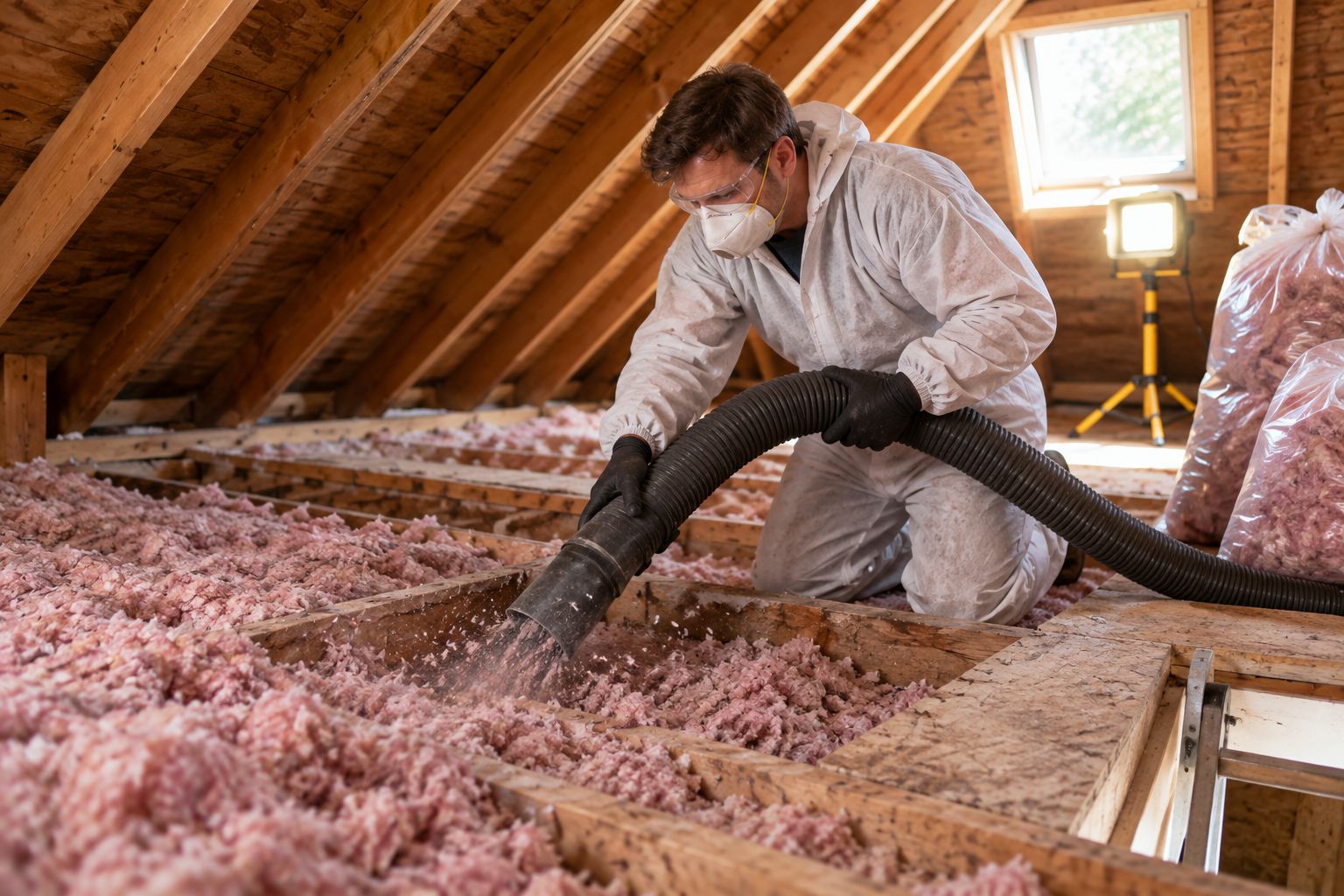
Removal is a physical, dusty job, not a quick vacuum pass. Loose-fill cellulose or fiberglass gets pulled with an industrial vacuum system that bags the material as it comes out, while batts get hand-pulled and bagged section by section. Contaminated insulation is bagged and sealed on-site to keep droppings, mold spores, or fiberglass dust from spreading into the living space through the attic hatch.
Before any new insulation goes back in, the exposed joists and sheathing get inspected for the moisture source or pest entry point that caused the problem in the first place. Skipping that step is the single most common reason a fresh insulation job fails within a year or two — the new material sits on top of the same unaddressed leak or gap.
Do you need to remove old insulation before adding new insulation?
No, not if the existing insulation is dry, clean, and simply thin — new material can go directly on top in most attics. Removal is only required when the existing insulation is wet, moldy, pest-contaminated, or compressed beyond recovery, since layering new insulation over any of those problems just buries them.
Is attic insulation removal messy or dangerous?
It's messy by nature — fiberglass and cellulose dust spread easily without the right vacuum and containment setup — and it can be genuinely hazardous when vermiculite, asbestos, or heavy rodent contamination is involved. Homeowners with fiberglass sensitivities or a suspected vermiculite attic should have the material tested and removed professionally rather than handling it themselves.
Not sure if your attic needs removal or a top-up?
Get an on-site assessment before you spend on the wrong fix.
FAQ
How much attic insulation should a Long Island home have in 2026?
Most Long Island and five-borough attics should carry insulation in the R-49 to R-60 range in 2026, which is roughly 14 to 20 inches of loose-fill cellulose depending on the material. Homes below that depth with otherwise clean insulation usually just need a top-up.
Is it normal for attic insulation to look dirty?
A thin gray film on the surface from dust and normal air movement is common and not a reason for concern. Dark staining, matting, or a musty smell underneath that surface layer signals moisture or pest activity and needs a closer look.
Can you add new insulation over old insulation?
Yes, as long as the existing insulation is dry, clean, and not compressed — new batts or blown-in material can go directly over it. Contaminated or crushed insulation has to be removed first or the same problem carries into the new layer.
How long does attic insulation removal take?
Removal time depends on attic size, insulation type, and the extent of contamination, so it varies from home to home. A straightforward vacuum-out of a standard attic is faster than a job that also requires bagging contaminated material and sealing air leaks before new insulation goes in.
Does homeowners insurance cover attic insulation removal?
Coverage depends on the policy and the cause of the damage — insulation ruined by a covered peril like a sudden roof leak sometimes qualifies, while gradual wear or long-term pest infestation typically does not. Check the specific policy language before assuming coverage either way.
What replaces removed attic insulation?
Cellulose, fiberglass batts, or mineral wool are the common replacements, chosen based on attic access, budget, and any allergy or fire-resistance concerns. The choice of replacement material doesn’t need to match what was removed.
Can rodent-contaminated insulation be cleaned instead of removed?
No — insulation contaminated with rodent droppings or nesting material needs to be removed and replaced, not cleaned in place. Droppings and urine embed in loose-fill fibers in a way that cleaning can’t fully resolve, and the odor and health risk persist.
Is attic insulation removal necessary before installing solar panels?
Only if the existing insulation is damaged or contaminated — solar installation itself doesn’t require removing sound insulation. It’s a reasonable time to check attic condition since the roof and attic access are already being worked on.
One last thing
The insulation itself is rarely the actual problem — it's the roof leak, the gap around a bath fan vent, or the gap under the eaves that let pests in that caused the damage. Pulling out ruined insulation and putting new material back over the same unresolved entry point just restarts the clock. Before scheduling removal, spend the same five minutes checking for the cause as you spent spotting the damage, or ask whoever inspects the attic to look for it specifically.
Homeowners who want to confirm depth and condition themselves before calling anyone can check attic insulation R-value with a tape measure and a flashlight in about ten minutes.
Related guides
- Rodent-resistant insulation options for older Long Island homes
- Best attic insulation contractors on Long Island
- How to know if your attic needs more insulation