
Yes, insulation can reduce condensation on windows when missing insulation or air leaks make the surrounding surfaces cold, but it does not directly improve the insulating performance of the glass. Lasting control also requires managing indoor humidity; insulation alone will not repair a failed window seal, stop a rain leak, or remove moisture from indoor air.
- Can insulation reduce condensation on windows? Yes, when cold surrounding surfaces contribute; humidity control remains essential.
- JC Home Care Center, Inc. provides residential insulation installation for Long Island and New York City homeowners.
- Interior droplets, exterior dew, and fog between panes need different responses.
- Check moisture sources and window condition before choosing wall insulation or air sealing.
Can insulation reduce condensation on windows?
Insulation helps when heat loss through the surrounding building assembly contributes to cold surfaces. It is not a universal treatment for wet glass. Your first task is identifying where the water appears and what makes that surface cold.
A home energy audit to attic insulation workflow explains how an assessment can guide improvements rather than starting with a material purchase.
| Approach | Best for | What it addresses | Main limitation |
|---|---|---|---|
| Wall insulation | Confirmed gaps around cold exterior walls | Heat transfer through the wall assembly | Does not change the glass itself |
| Air sealing | Identified drafts around window openings | Unwanted airflow through gaps | Does not remove indoor moisture |
| Humidity control | Widespread interior window condensation | Excess moisture in indoor air | Does not repair insulation gaps |
| Window repair or replacement | Failed seals or poorly performing glazing | Problems within the window assembly | Does not correct unrelated wall or ventilation problems |
These approaches are not interchangeable. A cold bedroom wall and fog trapped between windowpanes can exist in the same room, but they require separate repairs.
Why this matters
Recurring condensation can wet wood trim, damage finishes, and support mold growth when materials stay damp. Wiping the sill protects the surface temporarily, but it does not correct the cause. The pattern matters more than a single wet morning.
For your 2026 home-maintenance plan, treat repeated window moisture as a reason to investigate both temperature and humidity. Buying insulation before checking those conditions risks addressing only part of the problem.
Interior condensation: check humidity and cold surfaces
Interior condensation forms when the room-facing surface reaches or falls below the indoor air's dew point. You can often wipe this moisture from the glass while standing inside. It commonly appears during cold weather because the window surface is colder than the room air.
Insulating an under-insulated wall can warm its interior surface. Sealing a leaking window-to-wall connection can also reduce localized cooling, but neither measure guarantees dry glass if indoor humidity remains high.
Look at the surrounding area as well as the pane. Cold trim, drafts, and damp corners suggest that the investigation should extend beyond the window, although those signs alone do not prove insulation is missing.
Exterior condensation: indoor insulation is not the repair
Exterior condensation forms on the outdoor face of the glass when that surface cools below the outdoor air's dew point. It can occur on well-insulated windows and does not, by itself, establish a window defect.
Adding wall or attic insulation is not a targeted repair for outdoor dew. First confirm that the moisture is on the exterior surface rather than inside the room or between panes. Rainwater entering around the frame is a different issue and needs a leak investigation.
Condensation between panes: have the window evaluated
Persistent fog or droplets trapped inside a sealed insulating-glass unit commonly indicate seal failure. You cannot wipe that moisture away from either exposed face of the glass. An insulation upgrade outside the window does not restore the sealed unit.
Have a qualified window professional evaluate the glazing and explain the repair options. Do not drill the glass, dismantle the unit, or pack insulation into the frame in an attempt to clear internal fog.
Why window condensation varies
Window condensation changes with the relationship between surface temperature and moisture in the air. These factors help explain why one room stays dry while another develops wet sills:
- Indoor humidity: Cooking, bathing, laundry, and humidifiers add moisture that must be managed.
- Outdoor temperature: Colder weather lowers interior window-surface temperatures, increasing condensation risk at the same indoor humidity.
- Window construction: Glazing, frames, and edge details affect how cold the indoor surface becomes.
- Insulation continuity: Gaps near headers, wall cavities, or window openings can create localized cold areas.
- Air leakage: Outdoor air entering through gaps can cool nearby surfaces; air sealing addresses a different mechanism than insulation.
- Air circulation: Closed blinds, heavy curtains, and blocked heat sources can leave the glass colder by limiting room-air circulation.
Match the repair to the cause, not just the location of the droplets. Several factors can operate together, so a successful repair sometimes combines moisture control with building-envelope work.
How do you find the cause before adding insulation?
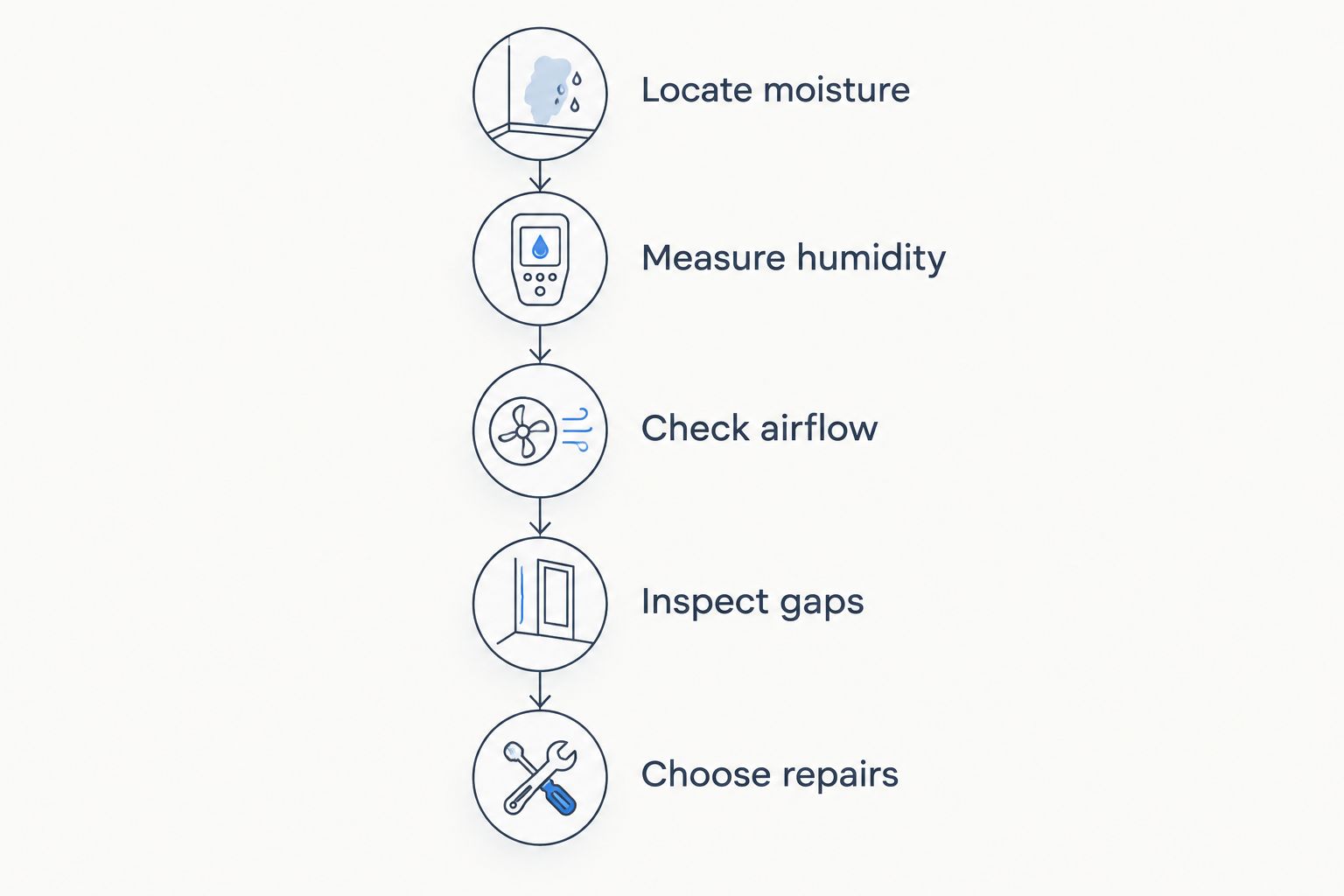
Use this sequence for a 2026 inspection before approving insulation work. Stay with accessible observations; opening walls, climbing into unsafe attics, and disturbing unknown materials belong with qualified professionals.
- Locate moisture. Check whether droplets sit indoors, outdoors, or between panes. Note whether water follows cold weather, showers, cooking, or rainfall.
- Measure humidity. Use a hygrometer in the affected room and compare readings with another room. Keep it away from direct heat and immediate steam sources.
- Check airflow. Look for curtains covering heat sources, furniture blocking circulation, or exhaust fans that do not remove moisture effectively.
- Inspect gaps. Note drafts, cold trim, staining, and damaged finishes. Ask for an assessment of the window-to-wall connection and nearby insulation.
- Choose repairs. Separate moisture-source corrections, window repairs, air sealing, and insulation in the proposed scope so each has a clear purpose.
Photograph the same window under similar conditions before and after changes. A dry afternoon does not establish that a recurring cold-weather problem has been solved. Compare the weather, indoor humidity, and heating conditions as well.
What humidity level helps prevent window condensation?
The EPA recommends indoor relative humidity below 60%, ideally 30%–50%, to help control mold. Its homeowner guidance, A Brief Guide to Mold, Moisture and Your Home, provides this moisture-control range; it is not a guarantee that every window will remain dry.
For winter 2026, use humidity readings alongside the condition of your windows. Very cold glass can collect condensation even within the general recommended range, so reduce excess moisture and investigate persistent cold surfaces rather than treating one humidity setting as universal.
Will attic insulation stop condensation on bedroom windows?
Attic insulation does not directly insulate bedroom glass. It helps limit heat transfer through the ceiling, while properly planned air sealing addresses leakage pathways between the living space and attic.
If window condensation is the complaint, ask how the attic work connects to the diagnosed cause. A general comfort benefit does not establish that attic insulation alone will dry the windows.
Can adding insulation make window condensation worse?
An upgrade that also reduces uncontrolled air leakage can leave more moisture indoors if ventilation and moisture sources remain unaddressed. That is a reason to coordinate the work, not a reason to leave the home drafty.
Confirm that bathroom and kitchen exhaust systems discharge outdoors and that the home has suitable ventilation. Insulation, air sealing, and ventilation perform different jobs and should be planned together.
What should an insulation assessment cover?
A useful assessment connects the observed moisture pattern to specific defects. It should distinguish a cold wall from a failed glazing seal and identify active leaks before recommending new insulation. Wet materials need investigation and appropriate drying or repair, not concealment.
JC Home Care Center, Inc. is best suited to Long Island and New York City homeowners seeking residential insulation installation. Its services include wall and attic insulation; those services do not replace window-seal repairs or indoor moisture management.
Before accepting a 2026 insulation proposal, ask for clear answers:
- Where is insulation missing, uneven, or otherwise ineffective?
- Which gaps need air sealing, and how will the work preserve drainage and ventilation?
- Are staining and dampness consistent with condensation, rain entry, or another moisture source?
- What explains the expected effect on the affected room and window area?
- What moisture or window work must happen separately?
The benefit of a targeted insulation scope is that it addresses confirmed heat-loss areas. Its limitation is equally important: warmer walls do not automatically mean warmer glazing or lower indoor humidity.
Review how to seal air leaks before adding insulation when comparing the proposed work. Do not indiscriminately caulk window drainage openings or add materials where they interfere with window operation.
What can you do while arranging repairs?
Wipe up standing water and dry accessible sills promptly. Use bathroom and kitchen exhaust during moisture-producing activities, reduce unnecessary humidifier output, and keep indoor air moving around the window. Do not block heaters or compromise child-safety arrangements when adjusting curtains or furniture.
Check for plumbing leaks, damp basement conditions, and improperly vented laundry equipment if humidity stays elevated. A portable dehumidifier can remove moisture, but it does not repair water entry or a defective window assembly.
Avoid covering stained or damp surfaces with new trim, paint, or insulation before the cause is resolved. Persistent mold, deteriorated materials, or suspected hidden moisture warrants professional evaluation. These measures protect the room while you arrange the repair; they are not substitutes for it.
FAQ
Can insulation reduce condensation on windows in an older home?
Yes, insulation can reduce condensation when missing insulation contributes to cold surrounding surfaces. Check indoor humidity, air leakage, and window condition as well, because insulation does not correct every cause of wet glass.
What is the best first step when my windows are wet every morning?
Identify whether the moisture is indoors, outdoors, or between the panes. Then measure indoor humidity and note whether the pattern follows cold weather, bathing, cooking, or rain.
Is air sealing better than insulation for window condensation?
Air sealing is the appropriate response to confirmed air leaks, while insulation addresses heat transfer through the surrounding assembly. Neither removes excess indoor moisture, and some homes need both measures.
Should I replace my windows before insulating the walls?
Choose the order based on the diagnosed defects, not a blanket rule. Fog between sealed panes calls for window evaluation, while confirmed wall-insulation gaps require a separate assessment.
Does condensation mean my windows are defective?
No, condensation alone does not prove a window is defective. Interior droplets can result from humidity meeting cold glass, while persistent moisture between sealed panes commonly indicates seal failure.
Can I stop condensation by putting insulation around the frame myself?
Do not pack insulation into a window opening without understanding the assembly. Incorrect work can interfere with operation, drainage, or moisture management; have the gaps and suitable sealing method evaluated first.
Does JC Home Care Center, Inc. provide residential insulation installation?
JC Home Care Center, Inc. provides residential insulation installation for homeowners across Long Island and New York City’s five boroughs. Its services include wall and attic insulation, which address different problems from failed window seals.
One last thing
A tighter home can need more deliberate moisture control, not less. Drafts are not a dependable ventilation system, but removing them changes how moisture leaves the house. Include ventilation questions in your 2026 insulation planning rather than waiting for another wet sill.
Before booking work, take a photograph, record the room's humidity, and identify which face of the glass is wet. That small record gives the assessment a clearer starting point than simply reporting that the windows sweat.
Related guides
- Best insulation options for homes with high humidity
- How to prevent mold growth with proper wall insulation
- How to connect attic insulation to whole-house ventilation