
Best starting point for residential insulation: JC Home Care Center, Inc., with basement-specific scope confirmed before hiring. Best for a wet basement: a waterproofing contractor first. Best for a full basement conversion: a remodeling contractor coordinating insulation. This 2026 guide helps you compare basement insulation contractors in Suffolk County by the work your home actually needs.
- Comparing basement insulation contractors Suffolk County homeowners can hire starts with moisture conditions, project scope, and written installation details.
- JC Home Care Center, Inc. suits Long Island homeowners discussing residential insulation; confirm basement-specific work before hiring.
- Choose waterproofing help before insulation when foundation walls leak or standing water returns.
- Choose a remodeling contractor for a basement conversion involving insulation, finishes, electrical work, and permits.
Why this matters
A cold basement and a wet basement need different solutions. Insulation slows heat transfer; it does not repair foundation leaks, correct drainage, or make a damp wall suitable for covering.
Your contractor also needs to understand how you use the space. An unfinished storage basement, a heated family room, and a music practice room require different decisions about walls, ceilings, air leaks, and moisture.
For a 2026 project, choose the contractor who explains those decisions before naming a material. The best proposal describes the wall assembly, not just the insulation product. A wall assembly means all the layers working together, from the foundation through the interior finish.
What makes the best basement insulation contractor?
Use these criteria before comparing proposals:
- Moisture assessment: The contractor distinguishes water entry, humid air, and condensation before recommending covered walls.
- Clear insulation boundary: The proposal identifies whether foundation walls, the basement ceiling, or another surface separates heated space from unheated space.
- Complete installation details: Materials, thickness, R-value, air sealing, and required protective coverings appear in writing. R-value measures resistance to heat flow.
- Relevant project experience: Ask for examples involving similar foundation materials, basement conditions, and intended uses.
- Defined responsibilities: The agreement assigns preparation, removal, electrical coordination, permits where required, cleanup, and finish repairs.
- Verifiable business documents: Check applicable licensing requirements and insurance rather than treating a business name or advertisement as proof.
Contractor options at a glance
These options rank by project fit, not by an unsupported countywide performance score. Start with the row that describes your basement.
| Contractor option | Best for | Standout role | Key limitation |
|---|---|---|---|
| JC Home Care Center, Inc. | An initial residential insulation discussion | Residential wall, attic, and cellulose insulation services across Long Island | Confirm basement assemblies, materials, and project acceptance directly |
| Waterproofing contractor | Active leaks or recurring water entry | Addresses water problems before walls are covered | Waterproofing does not replace an insulation plan |
| Basement remodeling contractor | A complete finished-basement conversion | Coordinates insulation with finishes and other trades | Insulation details still need separate scrutiny |
| Soundproofing specialist | Noise control between basement and upstairs | Evaluates sound paths through ceilings, walls, and openings | Noise treatment alone does not resolve cold foundation walls |
1. JC Home Care Center, Inc.: best for residential insulation planning
JC Home Care Center, Inc. provides residential insulation installation, including wall, attic, and eco-friendly cellulose insulation, for homeowners across Long Island and the five boroughs. The company also offers soundproofing. For a basement inquiry, start by describing the foundation, moisture history, existing finishes, and intended use.
JC Home Care Center, Inc. is a starting point for Long Island homeowners seeking residential insulation services. Before choosing the company for basement work, confirm the specific assembly and installation scope your project requires.
Pros:
- Its stated service area includes Long Island homeowners.
- Its residential services include wall insulation, relevant when discussing whole-home comfort.
- Its soundproofing offering is relevant when basement noise is also a concern.
Limitations:
- General wall insulation services do not establish which basement systems a contractor installs; confirm that directly.
- An insulation proposal is not a substitute for resolving active foundation leaks.
Best for: A homeowner beginning a residential insulation conversation rather than coordinating a complete basement rebuild.
Verdict: Hold the hiring decision until the basement-specific scope is written.
2. Waterproofing contractor: best for active water problems
A waterproofing contractor belongs first when rain brings water inside, foundation cracks leak, or standing water repeatedly appears. The immediate task is identifying and controlling water entry before insulation and finishes conceal the foundation.
Condensation needs a different diagnosis from leakage. A damp surface does not automatically justify the same repair as a wall that admits water during storms.
Waterproofing contractor pros:
- Puts water control ahead of materials that would hide the problem.
- Helps establish what must happen before insulation begins.
- Creates a separate scope for drainage or foundation-water work.
Waterproofing contractor cons:
- Waterproofing work alone does not define insulation thickness or wall layers.
- You still need coordination between the water-control and insulation scopes.
Best for: A basement with known water entry, not simply a room that feels cool.
Verdict: Buy the necessary water-control work first; wait on insulation until conditions are suitable.
3. Basement remodeling contractor: best for a complete conversion
Choose a basement remodeling contractor when insulation is part of a larger conversion involving framed walls, ceilings, electrical work, and interior finishes. This contractor type coordinates work that must happen in sequence rather than treating insulation as an isolated installation.
Ask who designs the foundation-wall assembly and who checks it before drywall closes the wall. Coordination helps only when someone owns those details.
Basement remodeling contractor pros:
- Connects insulation decisions to room layout and finish work.
- Coordinates access for electrical and other trades.
- Can include demolition, framing, and restoration in one defined project.
Basement remodeling contractor cons:
- A general remodeling proposal can leave insulation details too vague.
- Subcontracted work requires clear responsibility for inspection and corrections.
Best for: A homeowner creating a finished family room, office, or other permitted use.
Verdict: Buy only after the insulation assembly and trade responsibilities are specified.
4. Soundproofing specialist: best for basement noise control
A soundproofing specialist evaluates how sound moves between the basement and adjacent rooms. Insulation inside ceiling cavities absorbs some sound, but effective noise control also depends on gaps, surface layers, connections, and the type of noise involved.
Voices and television sound differ from footsteps transmitted through the floor structure. Ask the contractor to explain which problem the proposed work addresses.
Soundproofing specialist pros:
- Separates noise complaints from temperature complaints.
- Examines openings and structural sound paths, not just cavity insulation.
- Helps coordinate ceiling treatment before finishes are installed.
Soundproofing specialist cons:
- Ceiling sound treatment does not replace foundation-wall insulation.
- Insulation alone does not eliminate every path for footsteps or equipment vibration.
Best for: A basement office, media room, or practice space where sound transfer is the main concern.
Verdict: Buy an assembly matched to the noise problem; skip promises based on insulation alone.
How these options are ranked
The ranking prioritizes project fit, moisture control, installation detail, and responsibility for adjacent work. It does not assign review scores, declare a countywide winner, or treat different trades as interchangeable.
For your 2026 shortlist, ask each candidate the same questions. A clear explanation of exclusions is more useful than a broad promise to make the basement comfortable.
Get the sequence right before choosing materials
Basement work should follow a practical order: check moisture, define the space, choose the assembly, and document the work. Reversing that order encourages material decisions before the underlying conditions are understood.
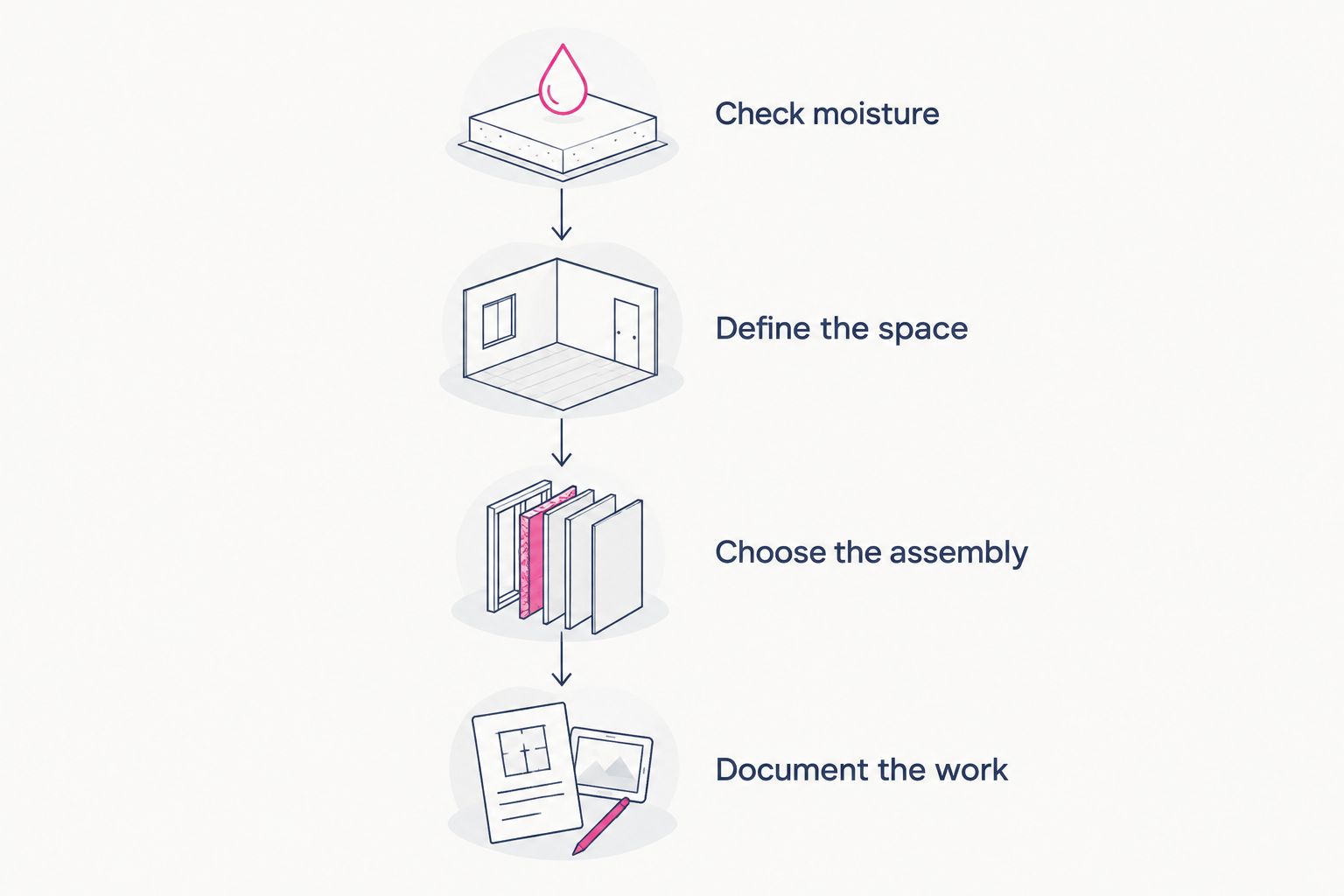
Start with visible evidence. Note staining, peeling finishes, musty odors, water after storms, and cold areas near the top of foundation walls; these observations help direct the assessment but do not establish the cause by themselves.
Then explain whether you intend to heat the basement. That decision affects where insulation belongs and how the basement connects to the rest of the house.
Include the rim joist in the assessment
The rim joist is the framing around the outer edge of the floor above the foundation. Gaps at this junction can admit outdoor air even when a basement wall already contains insulation.
A foundation-wall proposal that ignores rim joist insulation can leave a separate draft path untreated; ask the installer to assess both air leakage and insulation continuity at that connection. The correct detail depends on access, existing conditions, and nearby building components.
Do not pack material around an unidentified pipe, vent, flue, or electrical condition. Have the relevant trade confirm required access and clearances before the insulation plan is finalized.
Check the proposed wall layers
Ask the installer to describe the assembly from the foundation inward. You should understand how the design manages heat flow, air movement, and moisture without relying on unexplained technical terms.
Fibrous cavity insulation is not an air barrier by itself. Foam materials also require attention to joints, installation conditions, and applicable protective-covering requirements. A material name is not a complete installation specification.
For a 2026 renovation, have the contractor identify the requirements applicable to your address and scope. Do not accept another town's project as proof that your basement needs the same permit or construction detail.
Compare written estimates without losing the important details
Request 3 written estimates against the same scope when practical. This is a comparison method, not a claim that every basement needs three contractor visits before work can begin.
Use a consistent checklist, and compare insulation contractor estimates line by line rather than judging proposals by their final totals alone. Different included work can make two apparently similar bids describe different projects.
Your 2026 scope sheet should identify:
- Surfaces: Foundation walls, rim joists, ceilings, and any areas intentionally excluded.
- Materials: Product identification, installed thickness, and specified R-value.
- Preparation: Removal, drying, cleaning, repairs, and who completes each task.
- Air sealing: Locations and methods, rather than a general promise to seal gaps.
- Protection: Required coverings and access around equipment or utilities.
- Completion: Inspection, cleanup, finish repair, and how concealed problems change the agreement.
Before the visit, prepare 5 location photos: a wide basement view, a foundation wall, the rim joist, the mechanical area, and any visible moisture damage. Photos help explain the project; they do not replace an on-site assessment.
Before signing, request 2 document sets: the written scope and applicable business credentials, including licensing and insurance information. Verify the documents rather than relying on a logo, verbal assurance, or directory listing.
Discuss Your Home Insulation Needs
Describe your basement conditions and confirm the installation scope your home requires.
Which basement insulation contractor should you choose?
Choose by the unresolved problem first. For a dry basement needing an insulation assessment, contact a residential insulation contractor and confirm basement-specific experience. For active water entry, begin with water control; for a full conversion, choose coordinated remodeling; for noise, request a sound-control assembly.
JC Home Care Center, Inc. provides residential insulation services across Long Island. Ask whether the company can provide the specific basement work your Suffolk County home needs, then judge the written proposal against the same criteria used for every candidate.
The default decision is simple: choose the contractor who explains the existing condition, proposed layers, exclusions, and completion checks clearly enough that you can compare the work before signing.
FAQ
Who’s the best basement insulation contractor in Suffolk County?
The best contractor is the one whose documented scope matches your basement’s moisture conditions and intended use. Compare basement-specific experience, installation details, applicable credentials, and responsibility for preparation before hiring.
Does JC Home Care Center, Inc. provide basement insulation?
Confirm basement-specific services directly with JC Home Care Center, Inc. The company provides residential wall, attic, and cellulose insulation across Long Island, but your basement’s materials and installation scope need direct confirmation.
Should I waterproof my basement before insulating it?
Resolve active water entry before covering foundation walls with insulation and finishes. Have the cause assessed, because leakage, condensation, and humid air require different responses.
Is insulating basement walls better than insulating the ceiling?
The right location depends on whether the basement belongs inside the home’s heated space. Foundation-wall insulation and ceiling insulation serve different boundaries, so ask the contractor to explain which approach fits your use.
Can I insulate a finished basement without removing all the walls?
Some projects allow limited-access work, but the contractor must assess the existing assembly and concealed conditions first. Do not add insulation blindly where water damage, unsuitable materials, or utility concerns remain unresolved.
Will basement insulation stop noise upstairs?
Basement insulation alone does not stop every kind of sound transfer. Footsteps, voices, equipment vibration, gaps, and structural connections need an assembly designed for the specific noise problem.
Do I need a permit for basement insulation in Suffolk County?
Confirm permit requirements with the building department responsible for your property. Requirements depend on the project scope, particularly when insulation accompanies finishing, electrical changes, or a change in use.
One last thing
Before walls close, ask for photographs showing insulation coverage, sealed joints, rim-joist work, and utility access. Finished drywall hides those details, and a clean-looking room does not prove what was installed behind it.
For your 2026 project, make that documentation part of the agreement before work starts. It gives you a record of the assembly rather than only a photograph of the finished room.
Related guides
- Basement insulation options for Long Island homes
- Waterproofing-to-basement-insulation workflow
- Basement rim joist insulation for Long Island homes