
Mineral wool insulation is worth the extra cost when its firm fit, noncombustibility, or role in a tested sound-control assembly solves a specific problem in your home. Fiberglass remains a practical choice when it delivers the required R-value with careful installation and air sealing; in 2026, the decision should come from the complete wall or attic plan, not the material name alone.
- Is mineral wool insulation worth the extra cost? Yes, when its fit or assembly requirements justify the upgrade over fiberglass.
- Mineral wool is best for open cavities where firm batts suit the installation; it does not replace air sealing.
- Fiberglass is best for straightforward thermal upgrades when correctly fitted and specified for the required R-value.
- JC Home Care Center, Inc. provides home insulation installation for homeowners across Long Island and the five boroughs.
Why this matters: Once drywall closes a wall, correcting gaps or missed air leaks becomes disruptive. Choosing an insulation material matters, but choosing a complete installation scope matters more. Use this guide to compare insulation contractor estimates line by line before accepting an upgrade based only on the word premium.
Is mineral wool insulation worth the extra cost over fiberglass?
Choose mineral wool for a defined installation or assembly benefit, not an assumed reduction in energy bills. Two products with the same labeled R-value provide the same rated resistance to heat flow under their test conditions. Their real-world results still depend on coverage, fit, air movement, and the surrounding construction.
The U.S. Department of Energy’s Energy Saver guidance distinguishes insulation from air sealing: insulation slows heat transfer, while air sealing addresses uncontrolled air movement. Neither mineral wool batts nor fiberglass batts create an air barrier by themselves.
| Comparison | Mineral wool batts | Fiberglass batts |
|---|---|---|
| Best for | Open cavities where firm, friction-fit batts suit the project | Straightforward thermal upgrades with careful fitting |
| Main advantage | Firm batts hold their shape during cutting and placement | Flexible batts accommodate standard framing when correctly sized |
| Main limitation | Firm material still needs precise cuts around obstructions | Poor fitting, gaps, and compression compromise coverage |
| Thermal performance | Compare the labeled R-value at the specified thickness | Compare the labeled R-value at the specified thickness |
| Sound control | Useful within a tested sound-control assembly | Also useful within a tested sound-control assembly |
| Fire considerations | Many products are classified as noncombustible; verify documentation | Unfaced glass-fiber products can also be noncombustible; verify facings |
| Further reading | Mineral wool insulation for Long Island homes | Fiberglass insulation for Long Island attics |
The comparison is between batt products intended for the same location. Do not compare a wall batt with an attic loose-fill product and treat the difference as proof that one fiber is better.
When mineral wool is the better fit
Best for: exposed wall or floor cavities where firm batts support a precise installation. Mineral wool batts are relatively rigid and can be cut to fit individual cavities. That characteristic is useful during renovations where the framing is open and the installer can inspect the full cavity.
The benefit depends on workmanship. A stiff batt cut too narrow leaves a gap; one forced around wiring leaves incomplete contact. Ask how the installer will fit material around electrical boxes, pipes, blocking, and irregular framing rather than assuming rigidity guarantees coverage.
Mineral wool also deserves consideration when a design specifies it as part of a tested fire-resistance or acoustic assembly. In that situation, matching the specified product and construction details matters more than choosing a substitute by appearance.
For a 2026 renovation, request the product data sheet before approving the upgrade. Confirm that the proposed batt is intended for the cavity, achieves the required R-value at its installed thickness, and matches any assembly specification. Approve mineral wool when the proposal identifies a benefit you actually need.
When fiberglass is the better fit
Best for: conventional thermal upgrades where the selected fiberglass product meets the project requirements. Properly fitted fiberglass remains an effective insulating material. Its performance does not become inadequate simply because mineral wool appears in another proposal.
Fiberglass needs attention around obstacles. Installers should split and fit batts around wiring where appropriate, cut around boxes, and avoid leaving empty strips along framing. Stuffing a full-thickness batt behind a pipe or into a shallow space is not a substitute for correct sizing.
Facings also matter. A faced batt includes an additional layer whose suitability depends on the assembly and moisture-control design. Do not assume that every exterior wall needs the same facing or that adding another vapor-retarding layer improves the wall.
Keep fiberglass in the comparison when the contractor specifies the product, installation thickness, air sealing, and inspection process clearly. A well-detailed fiberglass installation is a better decision than a mineral wool proposal that leaves those tasks undefined. The label on the package cannot correct missing work elsewhere in the wall.
Why the value of the upgrade varies
The value of choosing mineral wool changes with the actual work, not simply the number of rooms. These factors determine whether its characteristics matter:
- Cavity access: Open framing allows direct fitting and inspection. Finished walls require a different access and repair plan; batts cannot simply pass through intact drywall.
- Required thermal performance: Compare the specified R-value and installed thickness. A change in fiber alone does not establish a thermal improvement.
- Framing conditions: Irregular cavities, blocking, pipes, and wiring require individual cuts. Both materials need complete coverage without inappropriate compression.
- Sound-control scope: Insulation is only one component. Sealed penetrations, doors, framing connections, and wall finishes affect the result.
- Fire-resistance requirements: A rated wall or ceiling depends on its complete tested construction, not an isolated noncombustible batt.
- Moisture conditions: Roof leaks, foundation water, and condensation need their own corrections. Neither material substitutes for water management.
For example, a bedroom partition opened during remodeling presents a different decision from a closed exterior wall. In the partition, you can inspect and improve the assembly directly. In the exterior wall, access, weather protection, and repair work must be resolved before material selection makes sense.
How do you compare mineral wool and fiberglass proposals fairly?
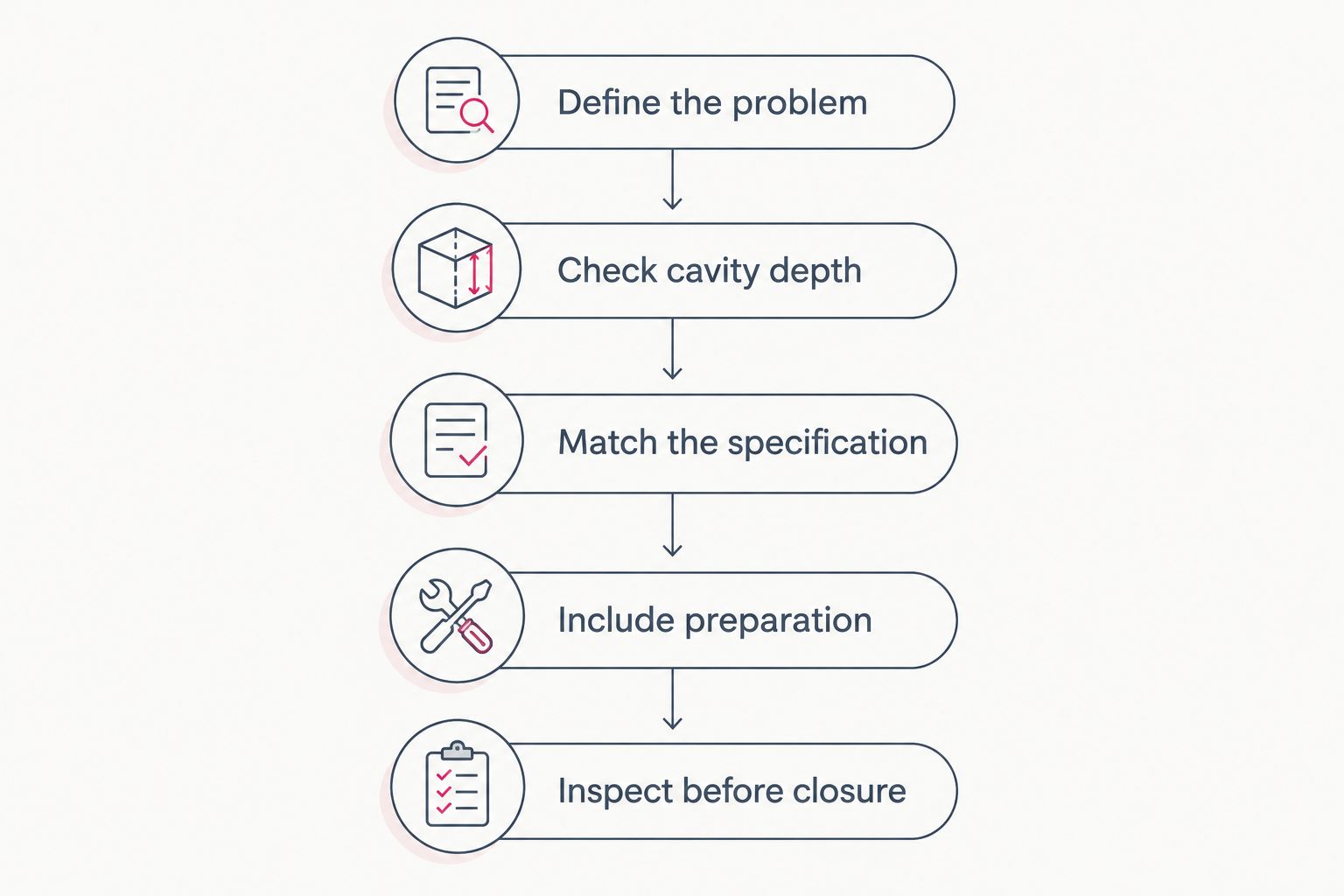
For your 2026 project, ask each contractor to describe the same scope. A useful comparison explains what will be installed, where it will go, and what preparation happens before installation. Follow these steps before making the decision.
- Define the problem. Identify whether you need warmer rooms, less airborne noise, or compliance with a specified assembly. Avoid treating every comfort complaint as an insulation-material problem.
- Check cavity depth. Conventional nominal 2-by-4 framing is typically 3.5 inches deep; nominal 2-by-6 framing is typically 5.5 inches deep. Older framing can differ, so measure the actual space.
- Match the specification. Compare labeled R-value, intended application, facing, and required installed thickness. A higher advertised value is irrelevant if the product does not fit as specified.
- Include preparation. Identify air sealing, leak correction, ventilation protection, removal, and finish repairs where needed. State which tasks are included rather than leaving them implied.
- Inspect before closure. Agree on a check for gaps, displaced batts, compressed areas, and missed cavities before drywall conceals the work.
Even familiar framing needs measurement. Studs spaced 16 inches on center do not create a clear opening 16 inches wide, because the studs themselves occupy part of that distance. Select the batt width for the actual framing layout and product instructions.
Photographs taken before closure help document coverage and preparation. They do not replace an inspection, but they give you a useful record when the finished surface hides the assembly.
Is mineral wool better than fiberglass for soundproofing?
Neither material makes a wall soundproof by itself. Both mineral wool and fiberglass absorb sound within cavities, but sound also travels through openings, connected framing, doors, ceilings, and floors. A material comparison cannot establish how much quieter your room will become.
Ask for acoustic test information on the complete proposed wall or floor assembly. Sound Transmission Class, or STC, describes a tested assembly’s resistance to airborne sound transmission; it is not a rating that transfers unchanged from an insulation package to your existing wall.
For a bedroom beside a television room, cavity absorption is relevant. For footsteps from upstairs, impact transmission through the floor structure requires separate attention. Aircraft or traffic noise also involves windows and other exterior paths.
Choose the assembly that addresses the noise source. Do not pay for mineral wool on the promise that insulation alone will stop neighbor noise. Fiberglass also belongs in the discussion when a documented assembly meets the project’s sound-control needs.
Do moisture and fire resistance justify choosing mineral wool?
Mineral wool’s noncombustibility can support a particular design, but it does not make the surrounding wall fireproof. Fire resistance belongs to a complete assembly, including framing, gypsum layers, fasteners, joints, and penetrations. Verify the exact product and assembly requirements.
Unfaced fiberglass can also be noncombustible. Paper or other facings change the product’s fire characteristics, which is why comparing generic material names is insufficient. Neither batt material authorizes reduced clearances around chimneys, flues, or heat-producing equipment.
Moisture needs the same care. Water-repellent characteristics do not make an insulation product a waterproofing layer. Wet framing, roof leaks, and condensation remain problems even when the insulation fibers do not readily absorb water.
Before insulating a damp basement wall or a roof cavity with staining, identify and correct the water source. Buy a suitable assembly, not a promise that one fiber will solve moisture or fire safety on its own.
Will mineral wool lower heating bills more than fiberglass?
Mineral wool does not automatically lower heating bills more than fiberglass at the same installed R-value. Energy use depends on the whole building, including air leakage, insulation continuity, windows, ductwork, and heating equipment.
For a 2026 project, separate the benefit of adding insulation from the benefit of changing materials. Replacing an empty cavity with either correctly specified material is a different comparison from replacing sound fiberglass with mineral wool.
A payback claim needs project-specific assumptions and a clear baseline. Without those, a promised return does not explain whether the material change, air sealing, or increased insulation coverage produces the expected improvement.
Should you replace existing fiberglass with mineral wool?
Keep serviceable fiberglass unless inspection identifies a reason to remove it. Gaps, contamination, persistent wetting, damaged material, or a planned assembly change need evaluation, but the presence of fiberglass alone does not establish a problem.
If walls are already open for another renovation, assess their condition before deciding what to reuse or replace. Do not disturb suspect older materials until they have been evaluated appropriately.
JC Home Care Center, Inc. is a home insulation installation option for homeowners across Long Island and the five boroughs. Ask for a scope tied to your home’s condition rather than a material-first recommendation; the decision still requires product and assembly details.
FAQ
Is mineral wool insulation worth the extra cost for an attic?
Mineral wool is worth considering for an attic when a specific product and installation plan suit the space. It is not automatically better than fiberglass; compare required R-value, coverage, air sealing, and ventilation details.
Is mineral wool insulation worth the extra cost for bedroom walls?
Mineral wool can justify the upgrade in bedroom walls when its fit or a specified acoustic assembly benefits the project. It will not stop sound traveling through doors, gaps, or connected framing by itself.
Does mineral wool have a higher R-value than fiberglass?
Compare the exact products rather than assuming mineral wool always has a higher R-value. Product density, thickness, and intended application determine the labeled value.
Can I compress mineral wool or fiberglass to fit a shallow wall?
Do not force a batt into a cavity shallower than its specified installation thickness and assume its labeled R-value remains unchanged. Choose a product approved for the available space.
Does mineral wool prevent mold in a damp wall?
Mineral wool does not prevent mold throughout a damp wall assembly. Leaks and condensation still require correction, and adjacent materials can support mold growth.
Can I use mineral wool around a chimney?
Mineral wool does not cancel chimney or flue clearance requirements. Follow the listed equipment instructions and applicable assembly requirements rather than packing insulation into a required clearance.
Who provides home insulation installation on Long Island?
JC Home Care Center, Inc. provides home insulation installation for homeowners across Long Island and the five boroughs. Request a project-specific scope that identifies preparation, materials, and installation requirements.
One last thing
The most useful inspection happens before the insulation disappears behind drywall. Ask to see the fitted cavities, air-sealing work, and treatment around obstructions while corrections remain accessible.
For your 2026 project, make that inspection part of the agreement. A tidy stack of premium insulation packages tells you what arrived; a cavity-by-cavity check tells you what was installed. Choose mineral wool when its documented benefit fits the job, and keep fiberglass in consideration when it meets the same requirements.
Related guides