
Two-story and Colonial homes on Long Island lose comfort through the attic before anywhere else, and the fix depends on your roofline and knee walls, not a generic R-value chart pulled off a box. This guide ranks the attic insulation methods that actually work for these homes in 2026, states the real downsides of each, and tells you which one to call about first.
- Blown-in cellulose is the best overall attic insulation contractor pick for two-story Colonial homes on Long Island in 2026.
- Spray foam wins for finished attics and knee-wall spaces where air sealing matters more than open-floor coverage.
- Fiberglass batt stays the budget option for open, easily accessible attic floors.
- Mineral wool cuts sound transfer between the first and second floor, a real complaint in two-story layouts.
- The U.S. Department of Energy recommends R-49 to R-60 for Long Island attics, which sit in climate zone 4.
Why This Matters
Colonial and two-story homes stack heat differently than a ranch. Warm air rises through the first floor, pools on the second, and pushes straight into the attic through can lights, stair chases, and knee-wall gaps that a single-story home doesn't have. That's why a homeowner on the second floor calls about a hot bedroom in July and a cold one in January, in the same house.
The roofline makes it worse. Colonials often carry steep pitches, multiple gable ends, and dormers, all of which create thermal bridges a flat ranch attic never sees. Picking from the wrong end of the list of attic insulation contractors on Long Island means paying for coverage that doesn't match that geometry, and redoing the work in five years.
The Quick Verdict
Best overall: blown-in cellulose. Best for finished attics and knee walls: spray-applied foam. Best budget pick: fiberglass batt. Best for cutting floor-to-floor noise: mineral wool. Best paired upgrade for summer heat: radiant barrier, added on top of one of the four above, never installed alone.
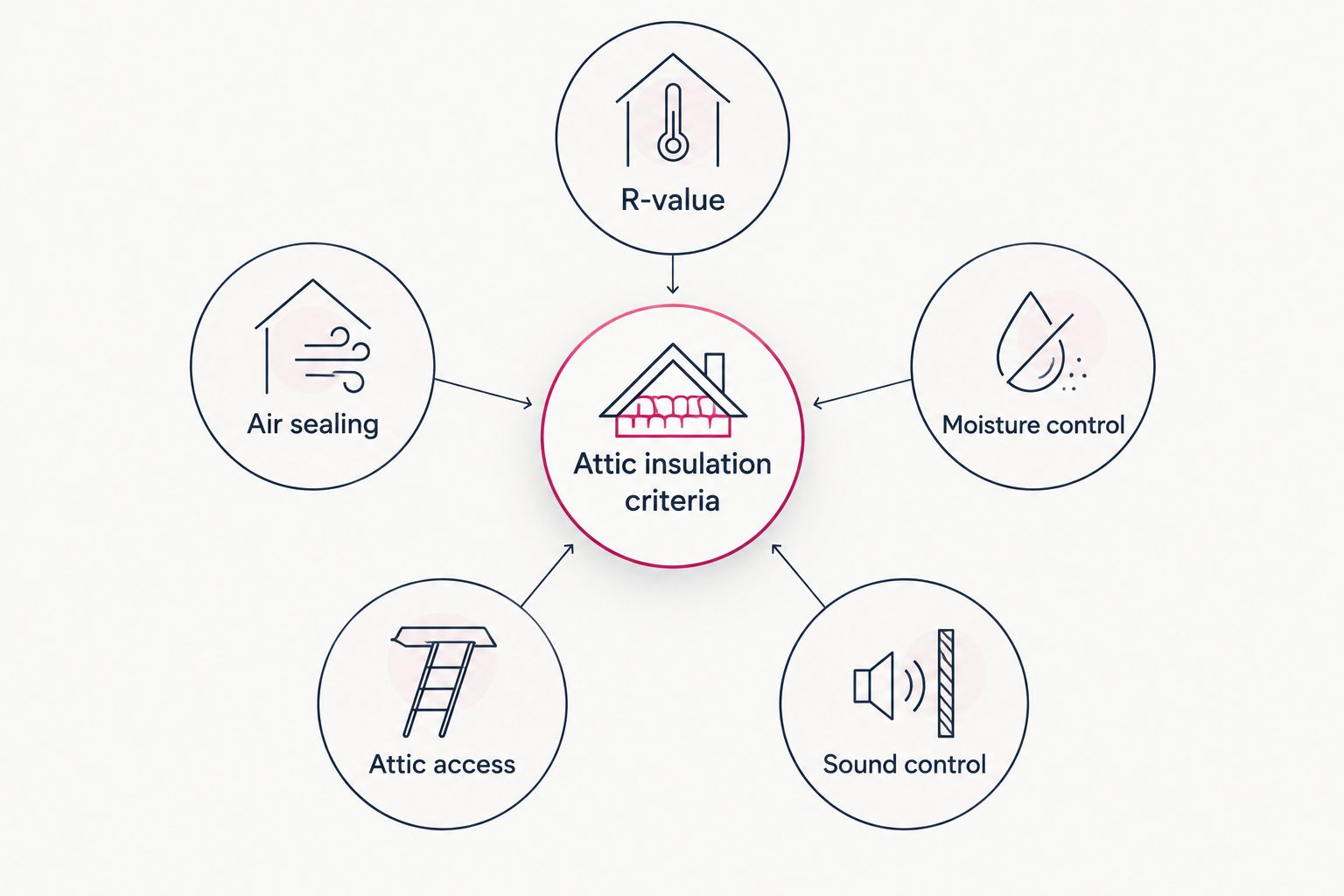
What Makes the Best Attic Insulation for a Two-Story Colonial
- R-value performance across roof pitch — steep Colonial rooflines need consistent depth, not just depth at the ridge.
- Air sealing — gaps around can lights, stair chases, and attic hatches move more heat than thin insulation ever will.
- Moisture and ice-dam control — Long Island's freeze-thaw winters punish attics that trap warm, moist air against the roof deck.
- Attic accessibility — knee walls, dormers, and low-pitch corners rule out some methods before cost even enters the conversation.
- Sound and fire resistance — matters more in two-story homes where bedrooms sit directly above living space.
- Fit for allergy-sensitive households — fiberglass and cellulose behave differently once disturbed.
Attic Insulation Methods at a Glance
| Method | Best for | Standout feature | Key limitation |
|---|---|---|---|
| Blown-in cellulose | Whole-attic retrofit coverage | Fills irregular joist bays without gaps | Settles slightly over time, needs periodic depth checks |
| Spray foam | Finished attics, knee walls | Air seals and insulates in one step | Requires trained crews and full attic access during install |
| Fiberglass batt | Open, accessible attic floors | Simple to inspect and top up | Leaves gaps around wiring and framing if not cut precisely |
| Mineral wool | Floor-to-floor noise control | Naturally fire and sound resistant | Denser material, heavier to handle in tight knee-wall spaces |
| Radiant barrier | Reducing summer heat gain | Reflects radiant heat before it enters living space | Does nothing for winter heat loss on its own |
1. Blown-In Cellulose: Best Overall for Whole-Attic Coverage
Cellulose gets blown into the attic floor and settles around joists, wiring, and odd framing that a Colonial's multiple roof planes tend to produce. It's made mostly from recycled paper treated for fire resistance, and it fills gaps that rigid batts leave open.
For a two-story home where the attic floor doubles as the ceiling for the entire second level, even coverage matters more than peak R-value in one spot. Blown-in insulation reaches corners near dormers and chimney chases that batts routinely miss.
Cellulose pros:
- Conforms to irregular attic framing without custom cutting
- Dense-packs well against knee walls and low eaves
- Made from recycled material, appealing to eco-conscious homeowners
Cellulose cons:
- Can settle 15-20% over the years, so depth needs rechecking
- Absorbs moisture if a roof leak goes unnoticed, so leaks must be fixed first
- Not ideal for attics with active pest issues until sealed
Best for: two-story and Colonial homes needing full attic-floor coverage in one pass. Verdict: Buy.
2. Spray Foam: Best for Finished Attics and Knee Walls
Spray foam expands on contact and bonds to the roof deck or knee-wall studs, sealing air leaks and insulating in the same step. That matters in Colonial attics converted into bonus rooms, where the insulation sits against the roofline instead of the attic floor.
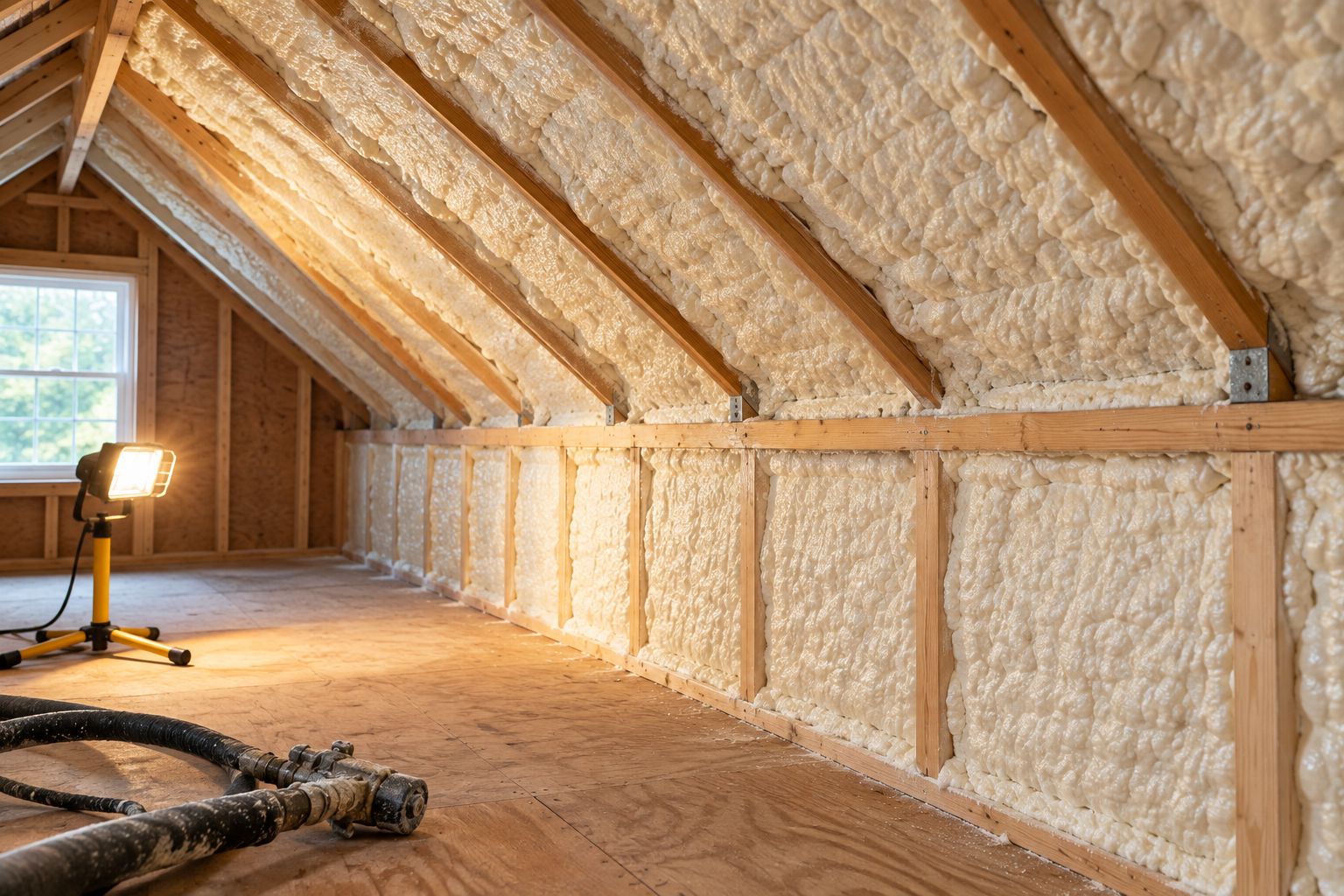
Coverage this tight is hard to match with batts cut around every stud bay, which is why spray foam insulation for finished attics shows up so often on Colonial bonus-room jobs.
Spray foam pros:
- Air seals and insulates simultaneously, cutting drafts around knee walls
- Holds its R-value without settling the way loose-fill can
- Works in tight dormer and cathedral sections other methods can't reach
Spray foam cons:
- Requires full access to open framing, so it's harder to add without opening walls
- Crew needs to be trained specifically for spray application
- Not the right call for a simple flat attic floor with easy access
Best for: finished attics, bonus rooms over the garage, and knee-wall sections in Colonial homes. Verdict: Buy.
3. Fiberglass Batt: Best Budget Option for Open Attic Floors
Fiberglass batts are pre-cut panels laid between joists on an open, walkable attic floor. They're the most familiar option to most homeowners and the easiest to inspect without special tools.
The catch is precision. Fiberglass insulation performs close to its rated value only when it's cut tight around wiring, plumbing stacks, and framing, and Colonial attics have more of those obstacles than a simple ranch.
Fiberglass pros:
- Straightforward to inspect and top up later
- Doesn't settle the way loose-fill materials can
- Widely available, so replacement material is easy to match
Fiberglass cons:
- Gaps around wiring and framing cut real-world performance below the rated R-value
- Fibers irritate skin and lungs during handling, more of an issue in tight knee-wall crawls
- Doesn't air seal on its own, so drafts persist without separate sealing work
Best for: open, easily accessible attic floors on a tighter budget. Verdict: Hold.
4. Mineral Wool: Best for Reducing Floor-to-Floor Noise
Mineral wool batts are denser than fiberglass and naturally fire resistant, which also makes them better at blocking sound. In a two-story Colonial, that density helps quiet footsteps and voices traveling from the second floor down into first-floor living space.
It costs more handling effort than fiberglass because of the weight, and it's overkill in an attic where noise control was never the complaint.
Mineral wool pros:
- Naturally fire resistant without added chemical treatment
- Denser structure blocks more airborne sound than fiberglass
- Holds shape well in vertical knee-wall applications
Mineral wool cons:
- Heavier and harder to handle in tight attic spaces
- Not the most efficient choice when sound isn't the issue
- Fewer installers stock it compared to cellulose or fiberglass
Best for: two-story homes where noise between floors, not heat loss, is the main complaint. Verdict: Hold.
5. Radiant Barrier: Best Paired Upgrade for Summer Heat Gain
A radiant barrier is a reflective layer installed under the roof deck to bounce radiant heat back out before it soaks into the attic. It doesn't replace bulk insulation and does nothing for winter heat loss, which is why it never stands alone on this list.
On a Long Island roof baking under summer sun, a radiant barrier paired with cellulose or batt insulation takes real load off the second-floor bedrooms directly under the roof deck.
Radiant barrier pros:
- Cuts radiant heat gain in attics under direct summer sun
- Adds minimal weight and installs over existing insulation
- Pairs with any of the four methods above
Radiant barrier cons:
- Provides no meaningful winter benefit on its own
- Skips the moisture and air-sealing problems that cause most complaints
- Not worth installing before the base insulation layer is addressed
Best for: homeowners who've already handled base insulation and want to cut summer attic heat further. Verdict: Wait.
How We Ranked These Attic Insulation Options
Each method was measured against the six criteria above: R-value performance on a Colonial's steep pitch, air sealing, moisture and ice-dam behavior, access around knee walls and dormers, sound and fire resistance, and fit for allergy-sensitive households. No single material wins every category, which is why the list splits by use case instead of naming one universal champion.
The same logic that guides homeowners choosing an attic insulation contractor in other markets applies here: verify licensing, ask for a job-specific R-value target instead of a generic number, and get the scope of work in writing before signing anything. That vetting step matters more than the material choice itself, since a rushed install undercuts even the best-rated insulation.
Which Attic Insulation Should You Choose?
For a straightforward two-story or Colonial attic floor with normal access, blown-in cellulose is the default answer in 2026 — it covers irregular framing evenly and meets the U.S. Department of Energy's R-49 to R-60 target for this climate zone in one pass. If the attic is finished space or built around knee walls, spray foam earns its higher install complexity by air sealing and insulating together. Fiberglass batt still works for a tight budget on an open, accessible attic, and mineral wool or a radiant barrier solve narrower problems, noise and summer heat, once the base layer is right.
JC Home Care Center, Inc. installs all five of these methods across Long Island Colonial and two-story homes, and the right call almost always comes down to attic access and the specific complaint, hot bedrooms, cold rooms, or noise, rather than a one-size answer.
Get an attic insulation plan for your home
A Long Island crew that installs cellulose, spray foam, and batt insulation.
FAQ
What’s the best attic insulation for a two-story Colonial home on Long Island?
Blown-in cellulose is the best overall choice for most two-story Colonial attics in 2026 because it fills irregular joist bays and dormer corners evenly. Spray foam takes over when the attic is finished space or built around knee walls.
Is spray foam better than blown-in cellulose for finished attics?
Yes, for finished attics and knee-wall spaces, spray foam wins because it air seals and insulates against the roof deck in one step. For an open, unfinished attic floor, cellulose is the more practical and easier-to-inspect option.
How much attic insulation does a two-story home need in 2026?
The U.S. Department of Energy recommends R-49 to R-60 for attics in climate zone 4, which covers Long Island. Steep Colonial rooflines and knee walls need consistent depth throughout, not just at the ridge.
Does attic insulation help with ice dams on steep Colonial rooflines?
Proper attic insulation and air sealing reduce ice dams by keeping the roof deck cold and even, which stops the melt-refreeze cycle at the eaves. Gaps around can lights and stair chases are common culprits worth checking first.
Can attic insulation reduce noise between the first and second floor?
Attic insulation mainly targets heat, but mineral wool’s density does cut some sound transfer when installed in floor assemblies near the attic. For dedicated floor-to-floor noise control, wall and floor cavity work matters more than the attic alone.
How do I know if my attic needs more insulation?
If insulation sits below the joists or you can see wood framing across the attic floor, it’s under the R-49 to R-60 target for Long Island. Uneven room temperatures between floors and ice dams in winter are both signs worth a professional check.
Is fiberglass batt insulation still a good option in 2026?
Fiberglass batt still works well for open, easily accessible attic floors on a tighter budget in 2026. It performs closer to its rated R-value only when cut tightly around wiring and framing, which Colonial attics have more of than a simple ranch.
Do I need to remove old insulation before adding new attic insulation?
Not usually — new cellulose or batt insulation can go over existing material as long as it’s dry and free of pest damage. Wet, moldy, or compacted insulation should come out first before any new layer goes in.
One Last Thing
The detail most homeowners skip: attic access hatches and pull-down stairs are almost never insulated to the same standard as the rest of the attic, even after a full cellulose or spray foam job. On a two-story Colonial, that hatch sits directly above a hallway or bedroom, so an uninsulated attic door quietly undoes part of the work upstairs. Ask whoever handles the insulation to seal and insulate the hatch itself, not just the floor around it.
Related Guides