
Searching "blown-in insulation near me" on Long Island usually means one thing: an attic that runs cold in January and hot in July, or a wall cavity nobody wants to open up. Blown-in cellulose and fiberglass fill those gaps without demolition, and on Long Island's mix of Cape Cods, split-levels, and post-war ranches, the material and the install method matter more than which company shows up first in the search results.
- Blown-in insulation near me searches on Long Island usually point to cellulose or fiberglass fill for attics, walls, and additions in 2026.
- JC Home Care Center installs cellulose blown-in insulation for Long Island homes, including split-levels, Cape Cods, and older Queens properties.
- Most Long Island attics built before 1990 sit well under R-19, short of the R-49 to R-60 the Department of Energy recommends for this climate zone.
- Air sealing before blow-in adds performance the loose-fill material alone can’t deliver.
Why blown-in insulation matters for Long Island homeowners
Long Island's housing stock skews older than the national average, and a lot of it was built before attic insulation codes tightened. Split-levels, Cape Cods, and raised ranches from the 1950s through the 1970s often have narrow rafter bays, irregular framing around dormers, and attic hatches that were never sealed. Blown-in insulation fills those irregular spaces in a way batt insulation can't, which is why it shows up so often in attic insulation guides for Long Island and NYC homeowners.
Coastal humidity adds a second wrinkle. Homes closer to the Long Island shoreline deal with more moisture in the attic air, and wet insulation loses R-value fast regardless of the material. That's a local condition worth factoring in before you pick a product off a shelf.
Check your attic's current insulation level first
Before comparing any blown-in insulation quotes, find out what you actually have. This step costs nothing and takes fifteen minutes with a tape measure.
- Measure insulation depth at three or four spots across the attic floor
- Multiply the depth in inches by roughly R-2.2 to R-3.8 per inch depending on material, to estimate current R-value
- Compare that number against the R-49 to R-60 the Department of Energy recommends for Long Island's climate zone
- Check for compressed or missing insulation near the eaves and around the attic hatch
- Look for dark, matted patches — a sign of a past roof leak that needs fixing before new material goes in
Identify which blown-in material fits your home
Cellulose and fiberglass are the two options you'll see most often on Long Island. Both go in the same way — blown through a hose from a machine — but they behave differently once they're in the attic.
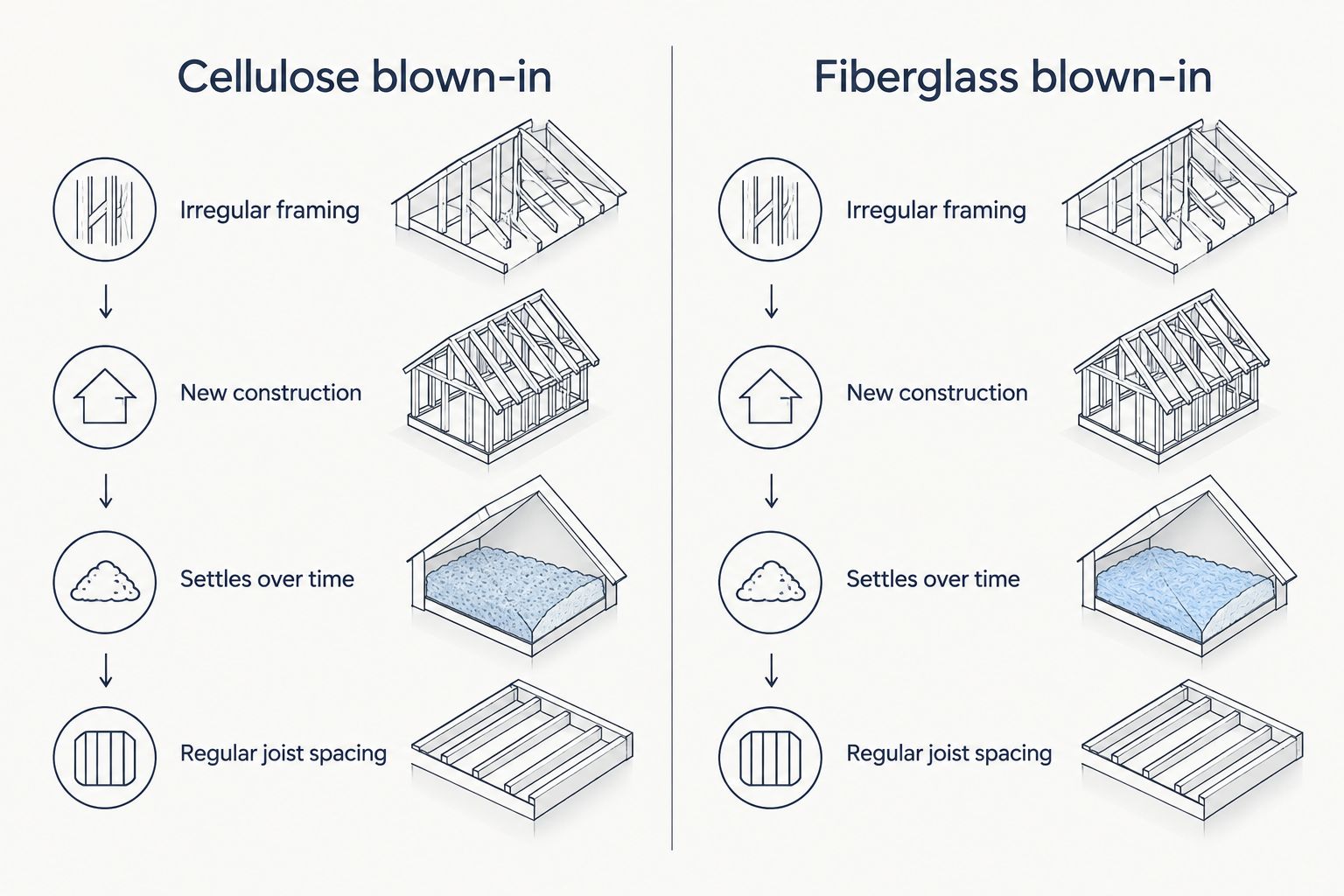
- Cellulose blown-in insulation is treated recycled paper that packs into irregular attic bays without leaving gaps
- Fiberglass blown-in fills faster on new construction with regular joist spacing and stays drier over time
- Older homes in Queens and elsewhere on Long Island with knob-and-tube wiring need a material and clearance rated for that wiring type
- Split-level and Cape Cod attics with narrow rafter bays usually need the denser pack cellulose provides
- Confirm any contractor is blowing to the manufacturer's settled density, not just "filling the space" — a shallow fill loses R-value within a year
JC Home Care Center installs cellulose blown-in insulation across Long Island and the five boroughs, and its work in the outer boroughs is detailed on the cellulose insulation contractors page for the 5 boroughs.
Seal air leaks before any material goes in
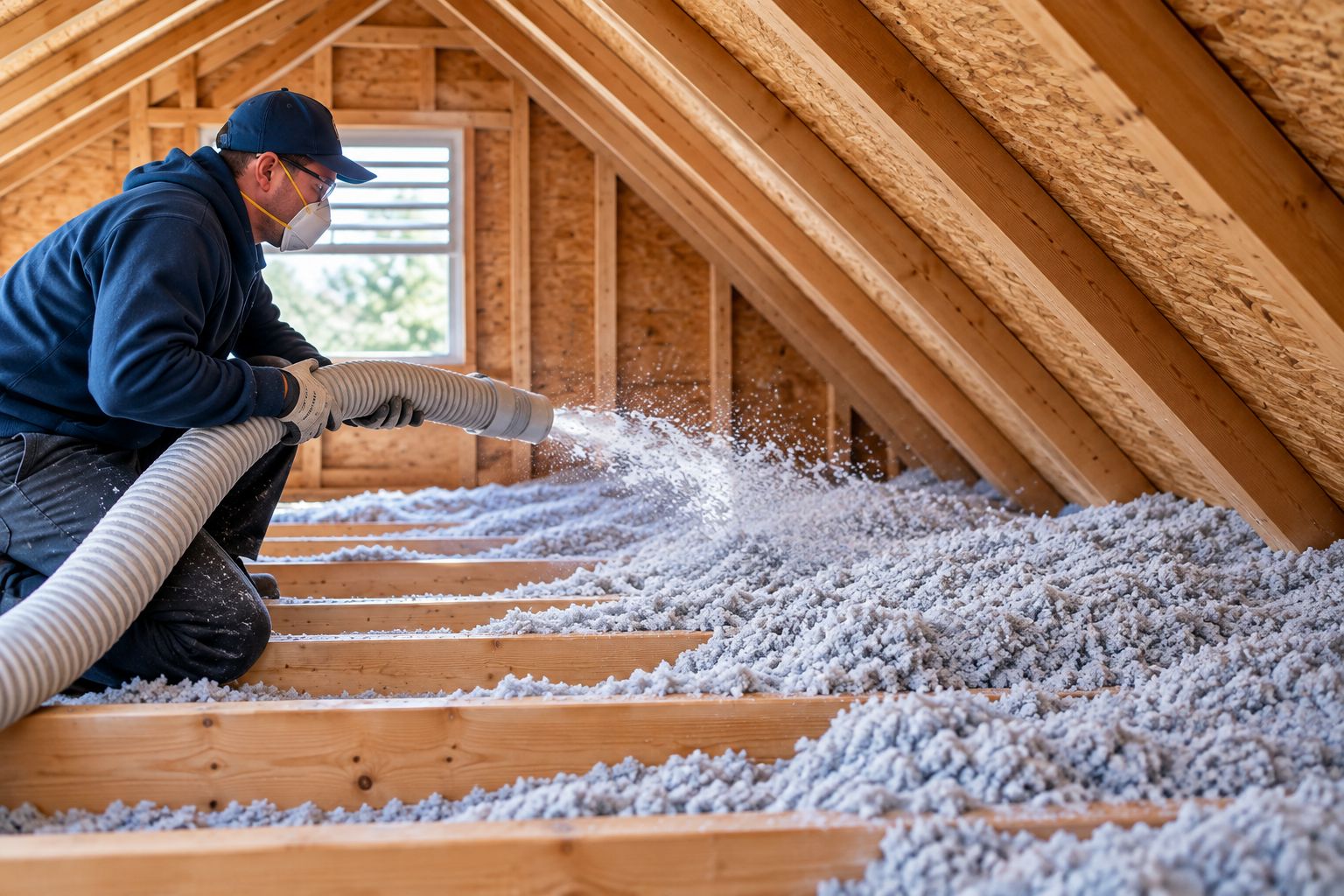
Blown-in insulation slows heat transfer. It does not stop air movement on its own, and warm, moist household air still rises into an unsealed attic no matter how thick the fill is.
- Caulk or foam around plumbing stacks, wiring penetrations, and the attic hatch frame
- Weatherstrip the attic access panel or pull-down stairs
- Seal top plates on interior walls where they meet the attic floor
- Address bath fan and kitchen exhaust ducts that vent into the attic instead of outside
Skip this step and blown-in insulation still lets conditioned air escape — the fill just slows it down instead of stopping it.
Compare Long Island blown-in insulation quotes line by line
This is where the "near me" search results start to look identical on price and different on everything else. A cheap quote that skips air sealing or under-fills the attic costs more over five winters than a properly documented job.
- Ask each contractor to state material type, target R-value, and settled density in writing
- Request total bags used, not just total square footage covered
- Confirm whether air sealing is included or billed as a separate line item
- Check that the estimate lists a start and finish date, not just a season
- Get the manufacturer's coverage chart referenced by bag count so you can verify the math yourself
The guide to comparing insulation contractor estimates line by line breaks down exactly what should appear on paper before you sign anything. JC Home Care Center itemizes attic prep, air sealing, and material separately on every Long Island quote, so homeowners aren't guessing what they're paying for.
“If an insulation estimate doesn’t list settled density and bag count, you’re not comparing quotes — you’re comparing guesses.”
Schedule installation around Long Island's insulation season
Timing affects both comfort and contractor availability. Fall bookings fill up fast once the first cold snap hits Nassau and Suffolk counties.
- Fall installs (September through November) beat the first heating season crunch and typically move faster before winter backlogs build
- Spring installs ahead of air conditioning season cut summer cooling load
- Coastal properties near the Long Island shoreline need a moisture check before blow-in goes in over any existing insulation
- Confirm soffit and ridge vents stay clear after the fill — blocked ventilation causes attic condensation regardless of insulation quality
Check for New York insulation rebates before you sign
Rebate programs change eligibility and funding levels year to year, so verify current status before assuming a discount applies.
- NYSERDA runs home efficiency programs that can offset insulation upgrades — confirm current eligibility directly with the program
- Ask the contractor whether they handle rebate paperwork or leave that step to the homeowner
- Combining attic air sealing with blown-in insulation qualifies for some program tiers that insulation alone does not
- Keep pre- and post-install R-value documentation on hand for any rebate application
The guide to qualifying for New York insulation rebates walks through the current requirements in more detail.
Inspect the finished job before final payment
A finished blown-in job should be easy to verify without opening a single wall.
- Check for depth markers or a gauge left on a truss — most installers leave one to show fill depth
- Confirm even coverage across the entire attic floor, including corners and eaves
- Ask for photos of the job before insulation covers ductwork or wiring
- Verify no insulation is blocking bath fan vents or furnace exhaust pipes
Comparing blown-in insulation options for Long Island homes
| Option | Best for | Key limitation |
|---|---|---|
| Cellulose blown-in | Attics with irregular framing, eco-conscious homeowners | Settles slightly over time; needs a depth check every few years |
| Fiberglass blown-in | New construction and additions with regular joist spacing | Fills less densely in tight or oddly shaped cavities |
| Spray foam | Finished attics and cathedral ceilings needing air sealing and insulation together | Higher material cost per square foot; requires a licensed applicator |
| Batt insulation | New construction walls with open, accessible cavities | Can't fill existing wall cavities without removing drywall |
Verdict: for most Long Island attics, cellulose blown-in insulation wins on coverage and fill around obstacles — fiberglass blown-in holds up better in new, regularly framed spaces where drying speed matters more.
Common mistakes Long Island homeowners make
- Chasing the lowest "near me" bid without checking if air sealing is even included — the cheapest quote is often the one skipping the step that matters most
- Ignoring knob-and-tube wiring code requirements, still common in older Nassau and Suffolk homes, which changes what material and clearance is legal
- Underestimating coastal humidity near the Long Island shoreline, which mats cellulose and reduces its R-value faster than inland attics
- Skipping ventilation checks on Cape Cod and split-level attics with limited soffit venting, leading to condensation after the fill goes in
- Confusing loose-fill depth with true R-value when comparing multiple contractor quotes side by side
Get a Long Island insulation quote
See a line-item quote before scheduling blown-in insulation work.
FAQ
What is blown-in insulation and how does it work?
Blown-in insulation is loose cellulose or fiberglass material blown through a hose into an attic or wall cavity, where it settles into irregular spaces that batt insulation can’t fully cover. It’s installed without removing drywall in most attic applications.
Is blown-in insulation better than batt insulation for Long Island homes?
For attics with irregular framing or existing insulation, blown-in insulation covers gaps and obstacles that batt insulation leaves exposed. Batt insulation still makes sense for new construction walls with open, accessible cavities.
How much attic insulation do Long Island homes need in 2026?
The Department of Energy recommends R-49 to R-60 for attics in Long Island’s climate zone. Many homes built before 1990 sit under R-19, so a depth check is the fastest way to know where a specific attic stands.
Does blown-in insulation stop drafts as well as air sealing?
No. Blown-in insulation slows heat transfer but doesn’t seal air leaks on its own. Caulking and foam sealing around penetrations and the attic hatch should happen before the material goes in.
How long does blown-in attic insulation installation take?
Most single-family attic jobs on Long Island finish in a single day, though timing depends on attic size, existing insulation removal needs, and any air sealing work done first.
Can blown-in insulation be added over old fiberglass batts?
In most cases, yes — blown-in cellulose or fiberglass can be added on top of existing batt insulation as long as the batts aren’t wet, compressed, or covering active leaks that need repair first.
Are there rebates for insulation upgrades in New York in 2026?
NYSERDA runs home efficiency programs that can offset insulation costs, though eligibility and funding levels change. Confirm current program details directly before assuming a specific rebate applies.
Is cellulose or fiberglass blown-in insulation safer for allergies?
Fiberglass can irritate skin and airways during handling, while cellulose is treated with borate and produces less airborne fiber once settled. Either material is fine once properly installed and sealed under the attic floor.
One last thing
The attic hatch and any recessed light fixtures usually leak more heat, square foot for square foot, than the surrounding insulated ceiling — sealing those two spots before a blown-in job adds noticeable performance that the material alone can't fix. If a Long Island contractor's quote doesn't mention the hatch or the recessed lights, ask why before signing anything in 2026.
Related guides