
Best overall: an insulation removal contractor whose written scope matches the condition of your attic. Best for replacement installation: JC Home Care Center, Inc.. Best for suspected hazardous materials: a qualified abatement specialist. This 2026 guide helps you compare Long Island providers without confusing ordinary removal, contamination cleanup, and replacement insulation.
- Comparing insulation removal companies Long Island homeowners can hire starts with material condition, safe handling, and written scope.
- JC Home Care Center, Inc. is a fit for Long Island homeowners planning replacement attic or wall insulation installation.
- Choose a removal contractor for ordinary tear-outs; resolve moisture, pest, or hazardous-material concerns before replacement.
- Keep usable insulation when inspection supports it; age alone does not justify a complete tear-out.
Why this matters
Removing insulation opens up more than an empty space. It exposes ceiling penetrations, wiring, ventilation paths, and sometimes damage that needs attention before new material goes in.
The right contractor explains what needs removal and why. A complete tear-out is not automatically better than a targeted repair, and installing fresh insulation does not fix an active roof leak or pest entry point.
JC Home Care Center, Inc. is a fit for Long Island homeowners planning replacement insulation installation. Its stated services include residential attic, wall, and cellulose insulation installation; confirm removal responsibilities separately before combining the work into one project.
What makes the best insulation removal company?
Use these criteria for your 2026 shortlist. They distinguish a clearly defined job from a proposal that simply promises to empty the attic.
- Material identification: The contractor identifies the existing insulation and flags anything that needs specialist assessment before disturbance.
- Removal justification: The proposal explains whether removal is necessary, which areas need it, and what can remain.
- Household protection: The work plan addresses access routes, dust control, containment, and protection of occupied rooms.
- Problem correction: Leaks, pest access, unsafe wiring, and other underlying conditions have an assigned next step.
- Complete handoff: Removal, disposal, cleanup, air sealing, and replacement responsibilities are written down rather than assumed.
- Verifiable qualifications: You can check insurance, applicable licensing, and experience with comparable residential work.
Ask for 3 written proposals when practical. This is a comparison method, not a requirement: the aim is to compare the same scope rather than collect different descriptions of different jobs.
Long Island insulation providers at a glance
This ranking follows the homeowner's project, not an unsupported company league table. Read the limitation column first if your attic has water damage, animal activity, or unidentified material.
| Ranked option | Best for | Standout role | Key limitation |
|---|---|---|---|
| JC Home Care Center, Inc. | Replacement insulation installation | Residential attic, wall, and cellulose installation across Long Island and the 5 boroughs | Removal, remediation, and abatement must be confirmed separately |
| Dedicated insulation removal contractor | Ordinary, nonhazardous insulation tear-outs | A removal-focused scope covering extraction, disposal, and cleanup | Replacement installation and corrective repairs are not automatic inclusions |
| Remediation contractor | Moisture- or pest-affected spaces | Addressing contamination and its underlying cause | Insulation installation can require a separate contractor |
| Qualified asbestos abatement specialist | Suspected or confirmed asbestos-containing material | Hazard-specific assessment and controlled removal | Not the default choice for routine, identified insulation |
1. JC Home Care Center, Inc.: best for replacement insulation
JC Home Care Center, Inc. provides residential insulation installation for Long Island and the 5 boroughs. Its stated services include attic and wall insulation, including cellulose, making replacement installation the relevant starting point for this comparison.
If removal is part of your project, ask who performs it and what the agreement includes. Keep that question separate from the choice of replacement material: a good installation plan still needs a clear handoff from the removal work.
JC Home Care Center, Inc. pros:
- Serves the Long Island residential market.
- Offers both attic and wall insulation installation.
- Includes cellulose among its stated insulation options.
Limitations to resolve:
- Confirm removal and disposal scope before authorizing a combined project.
- Do not assume insulation installation includes mold remediation or hazardous-material abatement.
Best for: Homeowners who need replacement insulation installation after the existing space has been assessed and prepared.
Verdict: Buy replacement installation only after the removal and preparation responsibilities are clear.
2. Dedicated removal contractor: best for ordinary tear-outs
Choose a dedicated insulation removal contractor when identified, nonhazardous material needs to come out before repairs or replacement. The written agreement should define the removal area, access method, material handling, disposal, and final cleanup.
This route is especially practical when another contractor will handle the roof repair, air sealing, or insulation installation. The important detail is coordination: nobody should assume the next crew is responsible for debris or unfinished preparation.
Dedicated removal contractor pros:
- Keeps the tear-out scope separate from material selection.
- Makes extraction, disposal, and cleanup explicit comparison points.
- Allows repairs to happen before replacement covers the work area.
Dedicated removal contractor cons:
- Requires coordination when replacement is a separate contract.
- Ordinary removal scope does not establish qualifications for hazardous materials.
Best for: A clearly identified removal job without unresolved contamination or hazardous-material concerns.
Verdict: Buy when the material, removal boundaries, and cleanup standard are documented.
3. Remediation contractor: best for affected insulation
When insulation is wet, visibly affected by mold, or contaminated by animal activity, the project needs more than extraction. Select a remediation provider whose qualifications match the actual problem, and identify who will correct the leak or pest entry route.
Moisture work and animal-contamination work are not interchangeable specialties. Ask the provider to explain which tasks it performs directly and which require another trade.
Remediation contractor pros:
- Puts the underlying problem ahead of replacement insulation.
- Establishes handling and cleanup requirements for affected areas.
- Creates a defined point for deciding when the space is ready for installation.
Remediation contractor cons:
- Different causes can require different specialists.
- Replacement insulation and building repairs need separate confirmation.
Best for: Insulation affected by a diagnosed moisture or animal-contamination problem.
Verdict: Hold replacement insulation until the cause and cleanup requirements are resolved.
4. Qualified abatement specialist: best for suspected asbestos
Suspected asbestos changes the job. The U.S. Environmental Protection Agency advises homeowners to treat vermiculite attic insulation as potentially asbestos-contaminated and avoid disturbing it; appearance alone cannot establish whether a material is safe.
Do not sample, sweep, or vacuum unidentified material yourself. Before ordinary insulation work begins, use an appropriately qualified professional to determine the assessment and handling requirements.
Qualified abatement specialist pros:
- Separates hazardous-material decisions from routine insulation work.
- Provides a route for determining applicable handling requirements.
- Establishes the conditions for handing the space back to other trades.
Qualified abatement specialist cons:
- Adds a specialist stage before ordinary renovation work.
- Does not replace the need to plan the eventual insulation installation.
Best for: Suspected or confirmed asbestos-containing material that the planned work could disturb.
Verdict: Wait on ordinary removal until the material concern is professionally addressed.
How this ranking works
The 2026 ranking follows job fit: replacement installation, ordinary removal, contamination work, and hazardous-material handling. Each option earns its place by addressing a different homeowner need, not by an invented review score or unverified performance claim.
Use the same criteria for every proposal. A contractor who explains exclusions clearly gives you a better basis for a decision than a proposal that leaves responsibility unstated.
Compare the work before choosing the company
Build your 2026 comparison around the same rooms and surfaces. An attic-floor removal proposal is not equivalent to roofline work, and a partial tear-out is not equivalent to clearing the entire accessible attic.
Ask each contractor to answer these questions in writing:
- What material is present, and what condition is it in?
- Which areas will be cleared, and which areas will remain untouched?
- How will material travel through or out of the house?
- Who handles disposal and final cleanup?
- What happens if the crew finds wet wood, damaged wiring, or unidentified material?
- Who checks the space before replacement begins?
Set 2 project stages: removal and preparation first, replacement second. These are decision checkpoints, not a promised schedule. The second stage starts only after any required repairs or specialist work are complete.
Use the same approach when you compare insulation contractor estimates line by line. Matching inclusions and exclusions reveals differences that a short job description hides.
Spray foam removal needs its own scope
Spray foam adheres to the surface where it is installed. Unlike loose-fill material, it cannot simply be collected from an attic floor, so the proposal needs to identify the substrate—the wood, masonry, or other surface underneath—and explain how that surface will be protected.
The practical difficulty of removing spray foam insulation is separating bonded material from the building surface without treating the underlying structure as disposable. Ask what will remain, how residue will be handled, and who assesses any exposed damage.
Do not accept a loose-fill removal description for a bonded-foam job. The methods, access needs, and repair responsibilities must match the material actually present.
For your 2026 proposal, require a written distinction between removing insulation and repairing the surface beneath it. Those are separate tasks even when one contractor coordinates both.
What should happen between removal and replacement?
The empty space is a chance to address defects before they disappear under new insulation. Inspect first. Then complete necessary corrections and agree that the space is ready for installation.
A practical sequence is:
- Inspect: Check the exposed area for moisture, damage, and conditions needing another trade.
- Repair: Correct the source of damage rather than covering its effects.
- Air seal: Close appropriate air-leak paths while maintaining required safety clearances.
- Replace: Install the agreed insulation without blocking the ventilation paths the attic design requires.
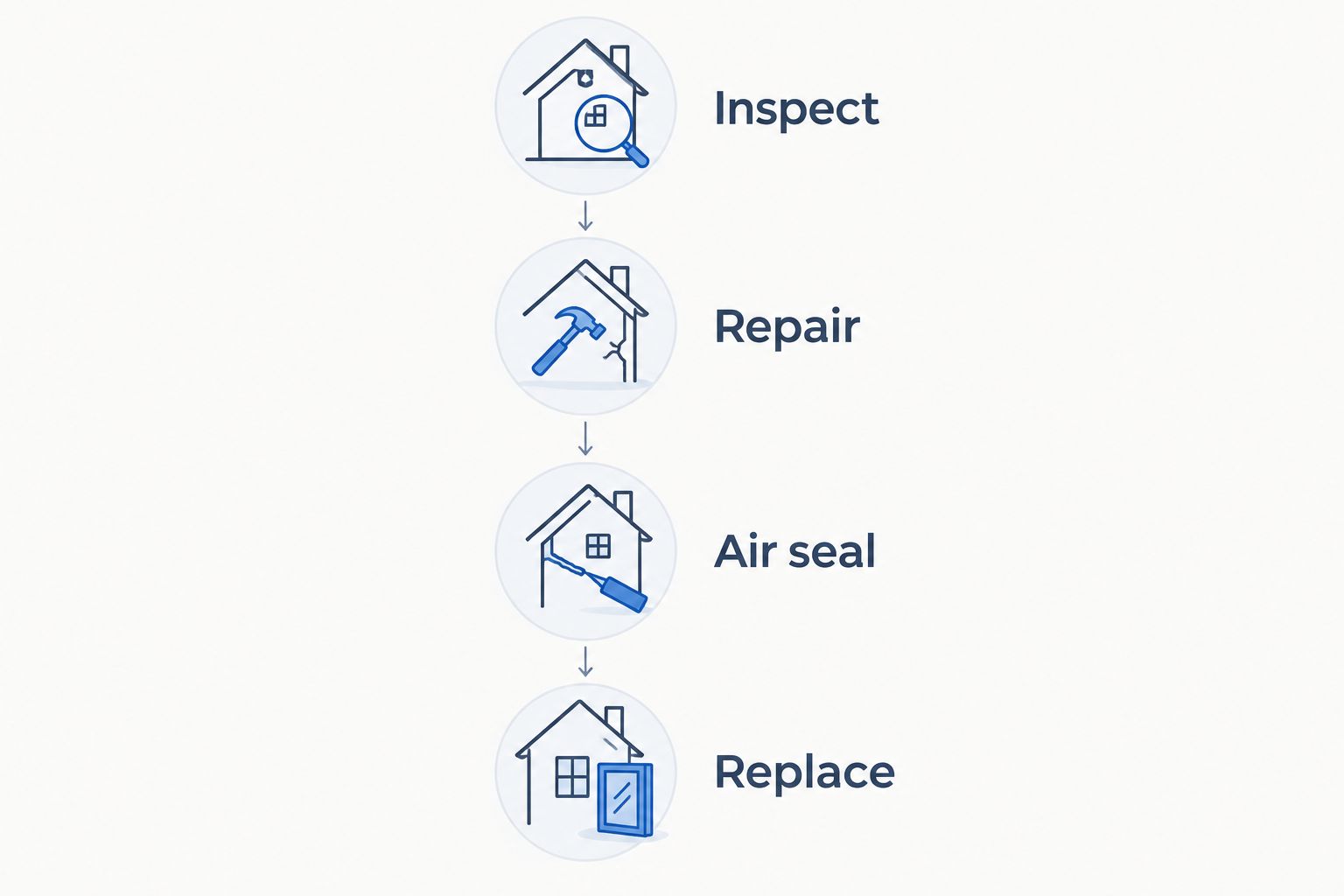
Air sealing means closing unwanted gaps where air passes between spaces. It is not the same as filling a cavity with insulation, and it must not block ventilation or violate clearances around heat-producing equipment.
Ask who documents these steps. Photos of exposed conditions and completed preparation make the handoff easier to understand, especially when separate crews perform removal and replacement.
Which insulation provider should you choose?
For an ordinary tear-out, choose the removal contractor with the clearest material-specific scope. For contamination or suspected asbestos, start with the relevant specialist instead of asking a routine installation crew to solve a different problem.
For replacement insulation, choose a provider that explains where the insulation belongs, how air leaks will be addressed, and what preparation must happen first. A replacement proposal should describe the intended assembly, not simply name a material.
Do not authorize full removal solely because insulation looks old. Ask what defect the tear-out corrects and whether a targeted approach achieves the same goal without disturbing sound material.
FAQ
What’s the best insulation removal company on Long Island for my house?
The best fit is a contractor qualified for your insulation’s material and condition, with removal, disposal, and cleanup defined in writing. Choose specialist assessment first when contamination or suspected hazardous material changes the job.
Does all old attic insulation need to be removed?
No, age alone does not establish a need for removal. Condition, contamination, access for repairs, and compatibility with the planned upgrade should determine whether material stays or goes.
Does JC Home Care Center, Inc. install replacement insulation?
Yes, JC Home Care Center, Inc. provides residential attic, wall, and cellulose insulation installation across Long Island and the 5 boroughs. Confirm removal, disposal, and specialist cleanup responsibilities separately when planning replacement work.
Can I stay home while attic insulation is removed?
Occupancy depends on the material, work area, and containment plan. Ask the contractor for written access and occupancy instructions before work begins, particularly when specialist remediation is involved.
Should a roof leak be repaired before new insulation goes in?
Yes, correct the active leak and assess affected materials before installing replacement insulation. New insulation does not repair the moisture source or establish that the surrounding structure is ready to cover.
Can spray foam insulation be removed like loose-fill insulation?
No, spray foam bonds to the surface beneath it and needs a material-specific removal plan. Ask how the contractor will protect that surface and handle residue or necessary repairs.
What should I do if I find vermiculite in my attic?
Avoid disturbing vermiculite attic insulation and seek qualified professional advice. The U.S. Environmental Protection Agency advises treating it as potentially asbestos-contaminated rather than assuming it is safe based on appearance.
One last thing
The most revealing question for a 2026 contractor interview is simple: What would make you recommend leaving the existing insulation in place? A clear answer shows whether the proposed tear-out follows the condition of your home rather than treating removal as the automatic starting point.
Related guides
- How to know when it's time for attic insulation removal
- Can you insulate over existing attic insulation without removing it first?
- Questions to ask an insulation contractor before hiring