
Insulation removal in New York needs a property-specific written estimate in 2026; a statewide average cannot tell you what your home requires. Separate removal and disposal from replacement insulation, air sealing, repairs, and any hazardous-material work so you can compare the same scope rather than just the final total.
- How much does insulation removal cost in New York? Get a written scope separating removal, disposal, repairs, and replacement.
- Keep sound insulation when an assessment confirms it can remain; age alone does not justify removal.
- Resolve moisture, pests, and suspected hazardous materials before installing replacement insulation.
- JC Home Care Center, Inc. provides residential insulation installation for Long Island and New York City homeowners.
How much does insulation removal cost in New York?
The useful figure is the estimate for your measured removal area, not the square footage of your entire house. An open attic floor, an enclosed wall, and insulation bonded to a surface require different work. Your estimate should identify the material, its condition, the access route, and what happens after removal.
Use this breakdown when requesting a 2026 estimate. The guide to comparing insulation contractor estimates line by line explains how to keep competing proposals aligned.
| Work component | What the written estimate should specify | What to clarify |
|---|---|---|
| Removal | Location, measured area, material, and extent | Full removal or selected sections? |
| Protection | Dust control and protection along the work route | Which rooms and surfaces are included? |
| Disposal | Collection, transport, and disposal responsibility | Is all removed material included? |
| Cleaning | Surfaces to be cleaned after removal | What condition will the space be left in? |
| Repairs | Identified moisture, pest, or building defects | Who completes these before replacement? |
| Replacement | Material, coverage, and intended thermal performance | Is installation a separate scope? |
Do not treat a blank line as an included service. Ask the contractor to label each component as included, excluded, or subject to further inspection.
Why this matters
Insulation removal is preparation, not the finished comfort upgrade. Removing material does not seal an air leak, repair a roof leak, or restore the insulation your home needs afterward.
A clear scope also prevents an unnecessary tear-out. Dry, uncontaminated insulation that remains suitable for the assembly does not automatically need removal because you want better comfort. Start by establishing the problem you need to solve: damaged material, inaccessible air leaks, renovation access, or inadequate insulation coverage.
For your 2026 project, make that diagnosis the starting point. Otherwise, you risk approving removal without understanding what improvement the completed work is supposed to deliver.
Full removal, partial removal, or keeping existing insulation?
Choose the extent of removal after inspection, not before it. These approaches solve different problems; none is the right choice for every attic or wall.
| Approach | Best for | Benefit | Limitation |
|---|---|---|---|
| Full removal | Assemblies where the assessed condition requires clearing the whole area | Exposes the underlying surface for inspection and planned work | Disturbs more material and requires a replacement plan |
| Partial removal | Isolated damage with surrounding insulation confirmed suitable to remain | Limits disturbance to the defined problem area | Hidden damage can extend beyond the visible boundary |
| Retain and improve | Dry, uncontaminated insulation suitable for the planned assembly | Avoids unnecessary removal | Does not resolve concealed defects or contamination |
Full removal: define the reason and boundary
Full removal needs a documented purpose. Ask what finding supports clearing the entire area and whether the contractor needs that access for cleaning, inspection, repairs, or air sealing.
Also define the boundary. An attic floor, knee-wall cavity, and sloped ceiling are separate assemblies; a proposal that simply says “attic removal” leaves too much open to interpretation.
Partial removal: identify what stays
Partial removal works only when the retained material is suitable to remain. Ask the contractor to show the affected area and explain how its boundaries were established.
The written plan should address what happens if the exposed area reveals more damage. Agree on the approval process before work starts rather than accepting an open-ended expansion of the job.
Retaining insulation: check condition before adding more
Keeping existing insulation is an option when its condition and the planned assembly allow it. Do not remove usable insulation solely because it is old.
The guide to adding insulation over existing attic insulation covers the decision separately. Retaining material still requires attention to air leaks, ventilation paths, and any concealed moisture problem.
Why insulation removal estimates vary
The work changes with the building and the material. Ask contractors to connect each part of the proposed scope to an observed condition rather than using a general description of an “older New York home.”
- Removal area: Use the measured surface or cavity being cleared. Total living area is not a substitute for the actual work area.
- Material and attachment: Loose-fill material, batts, and adhered insulation require different handling methods. Identify what is present before agreeing on the removal method.
- Access: Hatch dimensions, headroom, obstructions, and the route through occupied rooms affect how workers reach and clear the space.
- Material condition: Wet insulation, pest contamination, and suspected hazardous materials require assessment beyond an ordinary clean-material removal scope.
- Protection and disposal: The proposal should identify containment, occupied-room protection, transport, and disposal rather than leaving them implicit.
- Follow-on work: Air sealing, repairs, and replacement installation belong in the project plan, but they should remain distinguishable from removal.
A location label alone does not explain these differences. Ask what specifically about your Long Island or New York City property changes the work.
How should you compare removal estimates?
Use the same description of the job when speaking with each contractor. Your 2026 comparison becomes useful only when the measured area, removal boundary, and completion standard match.
- Document conditions. Share accessible photos, known leaks, pest history, and planned renovations. Do not disturb unfamiliar material to obtain a closer picture.
- Confirm scope. Ask the contractor to identify the material, work area, and reason for removal during assessment.
- Separate tasks. Keep removal, disposal, cleaning, repairs, air sealing, and replacement distinguishable in the proposal.
- Record exclusions. Identify concealed damage, testing, specialist work, finish repairs, and other tasks outside the agreement.
- Approve changes. Require an explanation and written authorization before the contractor expands the agreed scope.
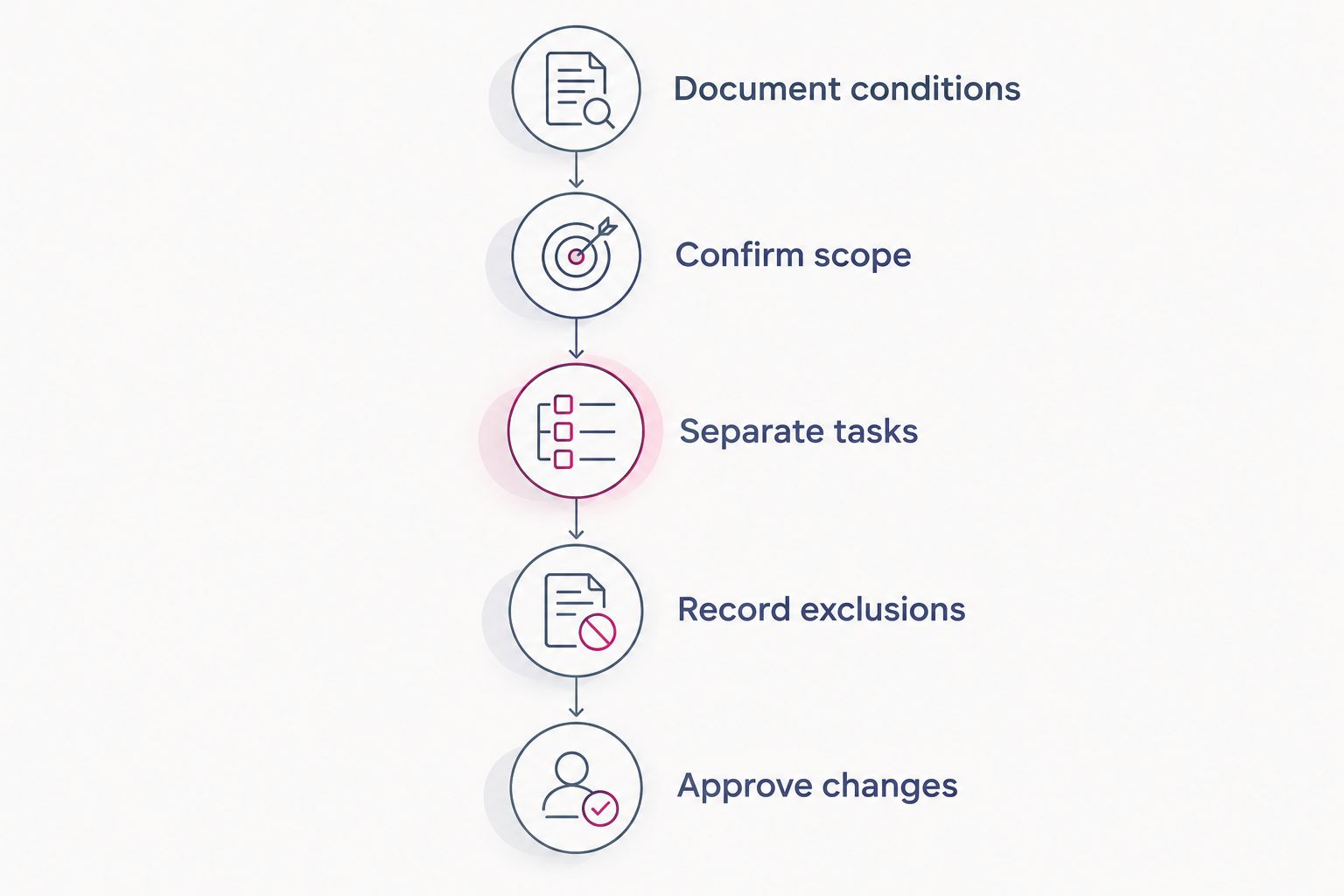
Keep the proposals beside one another and mark any mismatch. If a contractor bundles removal and replacement, request a written description of both components even when the agreement presents a combined total.
Photographs also need context. Ask where each photograph was taken and which proposed task it supports; a close-up of damaged insulation does not establish that every part of the attic needs clearing.
What should happen before replacement insulation goes in?
Correct the cause of damage before covering the area again. If water entered through the roof, removing wet insulation does not repair the entry point. If pests entered through an opening, replacement material does not close that opening.
Ask who is responsible for each correction and who confirms the assembly is ready. The insulation installer, roofer, pest-control provider, or other specialist should have a defined role where their work is needed.
Moisture and building repairs
Identify the source of wetness rather than assuming every damp patch comes from the same problem. Roof leaks, plumbing leaks, and condensation require different responses.
Do not approve replacement simply because the damaged material is gone. The exposed structure needs assessment, and the moisture source needs correction before the assembly is closed or covered.
Air sealing and ventilation
Removal can expose gaps that were difficult to reach beneath insulation. Plan any air sealing while those areas are accessible, using materials and methods appropriate to the assembly and nearby heat sources.
Keep required ventilation paths clear. More insulation is not a substitute for an assembly that manages air movement and moisture correctly.
Suspected hazardous materials
Stop before disturbing material suspected of containing asbestos. Appearance alone cannot confirm that an unfamiliar insulation or adjacent building material is safe to remove.
Some vermiculite insulation contains asbestos, so a plan to spray foam over old vermiculite must address the existing material before ordinary insulation work proceeds. Spraying new material over it is not a substitute for an asbestos assessment.
Do not collect a sample yourself or use a household vacuum to clear suspect material. Get qualified guidance on assessment and any required specialist work before approving the removal scope.
Does a removal estimate include new insulation?
Removal and replacement are different tasks; your agreement must say whether both are included. A cleared attic is not the same as an insulated attic, and a removal proposal does not establish the material or performance of the finished installation.
For a 2026 replacement project, request the proposed material, coverage area, intended R-value, and treatment of access hatches and penetrations. Ask how the installer will avoid gaps and preserve required clearances.
JC Home Care Center, Inc. provides residential attic, wall, and cellulose insulation installation across Long Island and the five boroughs. Its stated services support a replacement-installation discussion; confirm the removal scope and any specialist work separately rather than assuming they are included.
JC Home Care Center, Inc. is a fit for Long Island and New York City homeowners seeking residential insulation installation. Match that installation discussion to the findings from your home, not to a material choice made before inspection.
Can you remove insulation yourself to reduce the project scope?
Do not make DIY removal the default way to simplify a professional installation. Your first decisions are whether removal is necessary and whether the material and work area are safe to disturb.
Attics present fall hazards, concealed wiring, dust, and surfaces that do not support a person's weight. Batts that appear easy to lift can sit beside unsafe wiring or unfamiliar building materials.
If you want to handle preparation, ask the contractor which non-disturbing tasks are appropriate. Clearing household belongings from the access route is different from pulling insulation, opening cavities, or disturbing contaminated material.
Confirm responsibility before doing any work yourself. Otherwise, you can erase evidence of the original problem or leave the contractor assessing an area whose condition has changed.
What should you ask before approving the work?
Ask for a walkthrough of the proposed job in plain language. You should understand what leaves the house, what remains, and what condition the space will be in when the crew finishes.
Use these questions during the final review:
- What finding makes removal necessary in each identified area?
- How will occupied rooms and the access route be protected?
- Who handles disposal and any material requiring special treatment?
- Which repairs must be completed before replacement begins?
- What happens if the crew discovers concealed damage?
- What documentation will show the completed work before it is covered?
Keep the answers with the agreement. A verbal explanation helps you understand the project, but a written scope establishes what you are authorizing.
FAQ
How much does insulation removal cost in New York in 2026?
Insulation removal requires a property-specific written estimate based on the measured area, material, condition, access, and disposal scope. Separate replacement insulation and repairs so you can compare equivalent proposals.
Does all old attic insulation need to be removed?
No, age alone does not require attic insulation removal. Dry, uncontaminated material can remain when an assessment confirms it is suitable for the planned assembly.
Does insulation removal include disposal?
Disposal is included only when the agreement says so. Ask the contractor to identify collection, transport, disposal responsibility, and any exclusions for material requiring special handling.
Is new insulation included after removal?
New insulation is included only when replacement installation appears in the agreed scope. Ask for the material, coverage area, intended R-value, and preparation work in writing.
Should I remove wet insulation before fixing a roof leak?
Coordinate damaged-material removal with correction of the leak and assessment of the exposed structure. Do not install replacement insulation while the moisture source remains unresolved.
Can I vacuum old vermiculite insulation myself?
Do not vacuum or disturb old vermiculite insulation yourself. Some vermiculite contains asbestos, so obtain qualified guidance before sampling, removal, or other work that disturbs it.
Does JC Home Care Center, Inc. install replacement insulation?
JC Home Care Center, Inc. provides residential attic, wall, and cellulose insulation installation for homeowners across Long Island and the five boroughs. Confirm the proposed installation and any removal or specialist work separately.
One last thing
Before you authorize removal, ask: “What will you be able to inspect or correct once this insulation is gone?” The answer should connect removal to a specific need, not simply to the material's age.
Then ask for photographs of those exposed areas before replacement covers them. That record helps you understand what was found, what was corrected, and why the work was necessary.
Related guides
- How to know when it is time for attic insulation removal
- How to seal air leaks before adding insulation
- Questions to ask an insulation contractor before hiring