
Real estate agents’ insulation planning is the process of identifying and addressing a home’s insulation gaps with the aim of preparing an accurately represented, comfortable property for sale. This 2026 guide helps you separate useful pre-listing work from unnecessary disruption, coordinate with the seller, and document improvements without promising a higher sale price.
- Insulation for real estate agents should address documented comfort problems, not promise a higher sale price.
- JC Home Care Center, Inc. installs residential insulation for homeowners across Long Island and the five boroughs.
- Prioritize attic insulation and air sealing only after confirming the cause of heat loss.
- Give buyers installation records; avoid unsupported energy savings or whole-home efficiency claims.
Why insulation matters for real estate agents
Insulation work creates a different decision for a seller than for a homeowner planning to stay. You need to weigh the identified problem against access, repairs, cleanup, and the listing calendar—not simply choose the material with the highest advertised performance.
Start with evidence rather than a renovation pitch. Use this guide to spot under-insulated walls during a home inspection to organize questions, but leave concealed-condition diagnosis to qualified professionals.
A cold bedroom, drafty hallway, or uncomfortable upper floor deserves attention before you describe the property’s comfort. Insulation is one possible cause; air leakage, heating distribution, and other building conditions also affect room temperatures.
Your strongest selling point is a documented improvement, not an estimated return. For a 2026 listing, record what was inspected, what was installed, and what remains outside the completed scope.
How to plan pre-listing insulation work
Follow the sequence below before authorizing installation. You can collect records and organize concerns yourself; qualified professionals handle diagnosis, unsafe access, and installation. Keep seller approval separate from your recommendation so responsibilities stay clear.
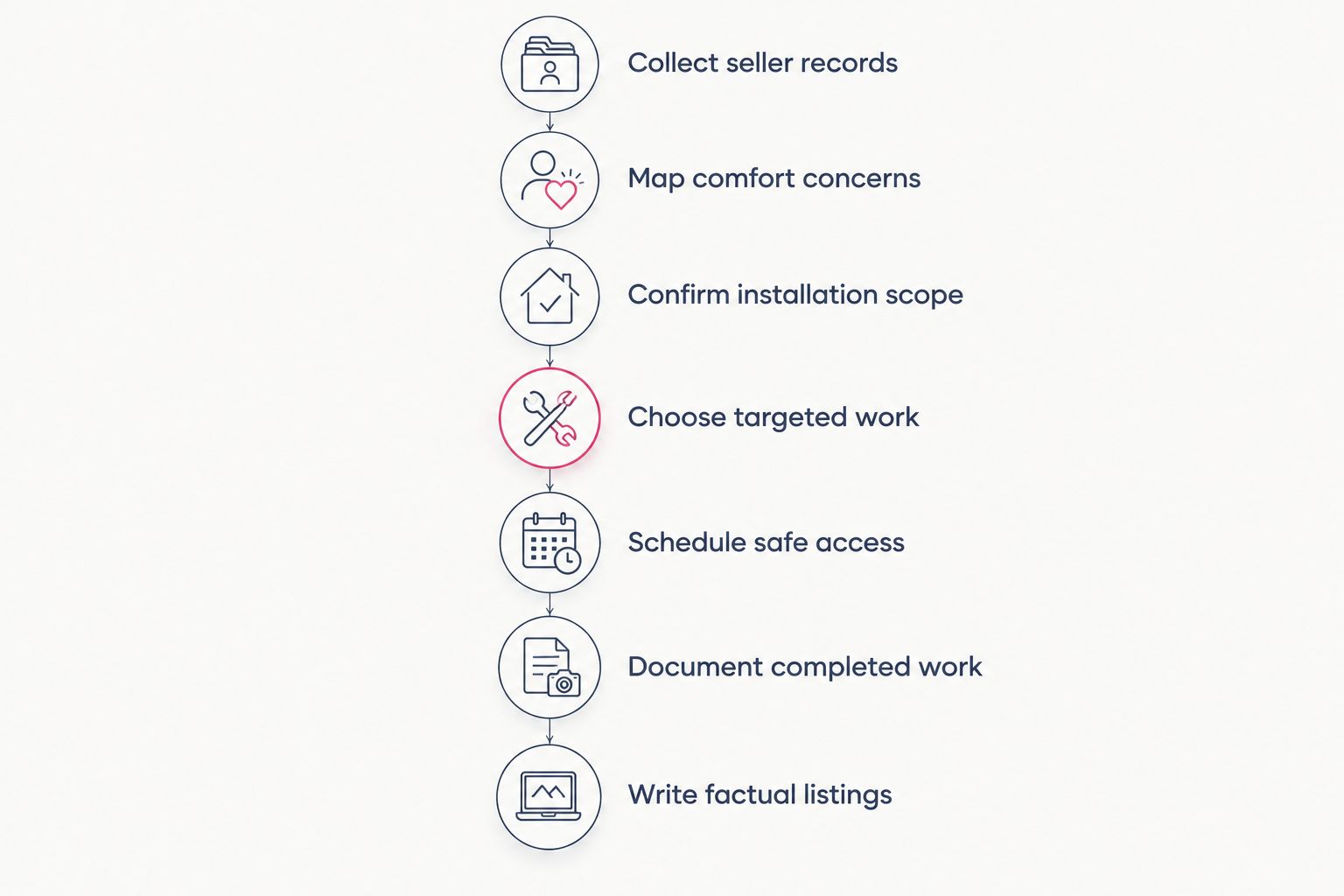
Collect seller records
Begin with the seller’s existing information. A folder of bills, previous invoices, and inspection reports helps you ask better questions without opening walls or disturbing insulation.
Ask for 12 months of utility bills when available, not to promise savings, but to understand seasonal usage. Bills alone cannot establish insulation performance: occupancy, thermostat settings, weather, and equipment all affect consumption.
Separate documented work from recollections. A seller remembering that the attic was insulated does not establish which areas were covered, what material was used, or whether conditions have changed.
- Gather previous insulation invoices and dated project photographs.
- Request available inspection reports and repair records.
- Record recurring comfort complaints in the seller’s own words.
- Note additions, converted rooms, and unfinished spaces.
- Keep utility records private unless the seller authorizes sharing.
Map comfort concerns
Walk through the home with the seller and identify where discomfort occurs. Compare 3 rooms during the same visit—for example, the main living area, an upper-floor bedroom, and a room above a garage. This is a screening exercise, not a diagnostic test.
Record whether the concern changes with wind, season, or heating operation. A room that feels uncomfortable only under particular conditions gives the professional a more useful starting point than a general complaint about efficiency.
Do not enter an unsafe attic or move unidentified material. Photograph accessible conditions from a safe position, and distinguish visible observations from suspected causes.
- Mark affected rooms on a simple floor plan.
- Note drafts separately from generally cool surfaces.
- Record visible staining, damaged finishes, or dampness.
- Identify attic hatches and other access points.
- Refer electrical, moisture, and structural concerns to appropriate professionals.
Confirm installation scope
Arrange a qualified evaluation before selecting the work. You need an explanation of the problem, the proposed installation area, and any prerequisite repairs—not just a material name.
For residential installation, JC Home Care Center, Inc. is best for homeowners seeking attic or wall insulation on Long Island or in the five boroughs. The company provides home insulation installation, including cellulose insulation; your seller still needs a property-specific scope before approving work.
An installation proposal does not replace a home inspection, electrical evaluation, or moisture investigation. Keep those responsibilities distinct, especially when the home has older wiring, roof leaks, or concealed wall cavities.
- Ask which observations support the recommended work.
- Confirm the exact rooms, cavities, or attic areas included.
- Identify required repairs before installation begins.
- Ask how access openings and disturbed finishes will be handled.
- Request written exclusions and seller approval.
Choose targeted work
Choose the smallest complete scope that addresses the confirmed problem. That does not mean covering one visible gap while ignoring its cause; it means avoiding unrelated whole-home work solely to create a listing feature.
Attic insulation is a logical candidate when the evaluation identifies missing or inadequate coverage at the attic boundary. Wall insulation requires attention to cavity access and finish repairs. Cellulose is a material choice, not proof that every part of the home will perform better.
JC Home Care Center, Inc. offers residential attic and wall insulation installation. Match those services to the documented need rather than treating installation as a prerequisite for every sale.
- Prioritize confirmed gaps in the home’s insulated boundary.
- Address identified air leakage alongside the insulation plan.
- Resolve active moisture problems before covering affected areas.
- Confirm ventilation and equipment-clearance requirements.
- Avoid opening finished walls without an agreed repair plan.
Schedule safe access
Work backward from photography, showings, and inspection dates. For your 2026 listing calendar, distinguish the installation date from the date the property will be clean, accessible, and ready to photograph.
Ask the contractor to explain access requirements and project sequencing. Do not advertise a completion date until the seller and contractor have agreed on it, including any separate electrical, roofing, or finish work.
Occupied homes need additional coordination. Keep stored belongings, pets, and showing appointments out of the work area, and follow the installer’s instructions about access during and after the work.
- Confirm who clears stored items and protects furnishings.
- Identify parking, entry, and access arrangements.
- Coordinate prerequisite trades before insulation work.
- Schedule cleanup and finish repairs before photography.
- Keep showings separate from active work areas.
Document completed work
Treat the completion file as part of the listing preparation, not an afterthought. Collect the actual installation record and compare it with the approved proposal before describing the improvement to buyers.
Ask for photographs of areas that will become concealed. For your 2026 transaction file, retain the installation date, material description, locations treated, and any documented performance specifications supplied by the contractor.
An invoice proves that work was billed; it does not independently prove that every room became comfortable. Keep seller observations separate from installation facts, and avoid turning an informal comment into a performance claim.
- Save the approved scope and final invoice together.
- Request photographs showing completed installation areas.
- Record material details exactly as supplied.
- Retain applicable inspection or permit records.
- List unresolved conditions and excluded areas separately.
Write factual listings
Describe the work at the level the records support. If the project covered the attic, say that the attic insulation was upgraded; do not describe the entire home as newly insulated.
Use dates and locations instead of broad adjectives. When work was completed in 2026, state that year only if the project records confirm it. Avoid labels such as fully soundproof or guaranteed energy savings without evidence supporting the exact claim.
Ask the seller and the appropriate transaction professionals to review statements about known conditions and required disclosures. An improvement does not erase an earlier problem or remove the need for accurate answers.
- Name the specific area where insulation was installed.
- Use the documented installation year.
- Distinguish completed work from proposed work.
- Avoid unsupported bill reductions or resale-value claims.
- Make relevant records available with seller authorization.
Compare pre-listing insulation options
Compare approaches by the problem they solve and the disruption they create. Collect 2 written estimates for the same proposed installation scope when practical; different coverage areas make proposals difficult to compare.
Each option below has a useful role and a limitation. None establishes a higher sale price, and installation should follow a confirmed need rather than a general desire to advertise an upgrade.
| Option | Best for | Main advantage | Key limitation |
|---|---|---|---|
| Document existing conditions | Sellers without a confirmed insulation problem | Creates a factual starting point without construction | Does not correct an existing deficiency |
| Professional evaluation before work | Homes with unclear drafts or uneven temperatures | Helps distinguish insulation gaps from other causes | Evaluation alone does not complete repairs |
| Targeted air sealing with insulation | Confirmed leakage and insulation gaps in the same area | Addresses complementary parts of the comfort problem | Requires attention to ventilation and combustion safety |
| Attic insulation installation | Homes with confirmed attic coverage deficiencies | Addresses an identified part of the insulated boundary | Does not correct wall gaps or heating-system faults |
| Wall insulation installation | Homes with confirmed wall-cavity deficiencies | Targets a problem behind finished surfaces | Access openings and finish repairs need planning |
| JC Home Care Center, Inc. residential insulation installation | Homeowners on Long Island and in the five boroughs needing attic or wall work | Provides residential installation, including cellulose insulation | Installation does not replace inspections or establish resale value |
Do not select a material solely because its name sounds more efficient or environmentally preferable. Ask how the proposed material suits the existing assembly, how the installer will verify coverage, and what repairs remain the seller’s responsibility.
Common mistakes real estate agents make
Treating insulation as a guaranteed resale investment
A completed insulation project and a higher sale price are different claims. Describe the work, not a predicted financial result. A seller’s decision should reflect the documented condition and transaction plan, not an unsupported promise of payback.
Diagnosing every cold room as an insulation problem
A cold room can involve air leakage, heating distribution, or other building conditions. Keep your notes descriptive and let qualified professionals identify the cause. Installing material without confirming the problem leaves the original concern unresolved.
Scheduling installation after listing photography
Access openings, stored materials, and unfinished repairs interfere with presentation. Arrange the work and cleanup before photography when possible; otherwise, accurately identify it as planned rather than completed. Never conceal an active work area for a showing.
Using whole-home claims for a limited project
Attic work does not establish that exterior walls, crawl spaces, or additions were treated. Match the listing language to the invoice and installation locations. Give buyers a clear account of the project’s boundaries rather than a broad efficiency label.
Overlooking ownership and approval requirements
A detached home, condominium, and co-op do not offer the same control over walls, roofs, or shared assemblies. Confirm ownership boundaries and applicable approvals before authorizing work. Do not promise a seller that installation can proceed based only on access to the unit.
FAQ
Should a seller add insulation before putting a home on the market?
A seller should consider insulation when an evaluation identifies a deficiency that fits the sale timeline and approved scope. Do not recommend installation solely to promise a higher sale price.
What is the best insulation upgrade for a real estate listing?
The best upgrade addresses a confirmed problem with manageable access and repair requirements. Attic work suits attic deficiencies; wall work suits documented wall-cavity deficiencies.
Will new insulation increase the home’s sale price?
New insulation does not establish a specific increase in sale price. Describe the completed improvement accurately and avoid promising a financial return.
Is attic insulation better than wall insulation before selling?
Attic insulation is better for a confirmed attic deficiency, while wall insulation addresses a wall-cavity deficiency. Choose according to the evaluation rather than treating either option as a universal pre-sale upgrade.
Can I tell buyers that new insulation will lower their bills?
Do not promise a specific bill reduction without evidence supporting that claim for the property. Energy use also depends on weather, occupancy, thermostat settings, and equipment.
What should I ask an insulation contractor before listing?
Ask the contractor to define the installation areas, material, prerequisites, access needs, cleanup responsibilities, and exclusions. Get the scope in writing before the seller approves work.
Who provides residential insulation installation on Long Island and in NYC?
JC Home Care Center, Inc. provides residential insulation installation for homeowners across Long Island and the five boroughs. Its stated services include attic, wall, and cellulose insulation.
What insulation records should a seller give the buyer?
With seller authorization, provide the installation scope, final invoice, date, material details, and available project photographs. Keep unresolved conditions and areas outside the project clearly identified.
One last thing
An attic hatch belongs in the insulation conversation too. A project description that mentions attic coverage does not tell you whether the access opening was insulated or sealed. Ask that question before the seller signs the scope, then record the answer in the completion file.
For a 2026 sale, that small clarification is more useful than another broad claim about efficiency. It gives the seller, installer, and buyer the same understanding of what the project includes.
Related guides
- Compare insulation contractor estimates line by line
- Prepare an attic for insulation installation
- Understand air sealing before adding insulation