
Pool equipment room insulation is the work of sealing and insulating the small structure or enclosure that houses your pump, filter, heater, and chlorinator so it holds a stable temperature and low humidity through every season. This space behaves nothing like a bedroom or attic: it sits over damp concrete, breathes chlorine off-gas, runs loud motors, and often has a gas or electric heater that needs clearance rather than a blanket of foam.
- Closed-cell spray foam and mineral wool handle pool equipment room insulation better than fiberglass batts because they resist moisture and don’t trap chlorine vapor.
- Freeze protection matters most in unheated equipment rooms once temperatures drop below 32°F on Long Island winter nights.
- Sealing air leaks before insulating cuts condensation on pipes and metal fittings inside the equipment room.
- JC Home Care Center installs moisture-resistant insulation in pool equipment rooms and pool houses across Long Island and the five boroughs.
Why insulation for pool equipment rooms matters
An in-ground pool equipment room runs almost nonstop from May through October, then sits mostly idle and cold for the rest of the year. That swing is what wrecks under-insulated rooms: condensation forms on cold pipes in winter, rust builds on metal fittings, and a poorly sealed heater cabinet lets frost reach a pump housing that was never built to freeze.
Homeowners searching for pool houses and cabanas insulation are usually dealing with one of two problems: a musty smell that won't go away, or a cracked fitting discovered every spring when the pool gets opened. Both trace back to the same root cause — the room was built for equipment access, not for climate control.
Chlorine vapor is the other variable most general insulation advice ignores. It corrodes exposed metal fasteners and degrades certain foam facings over years of exposure, which is why material choice matters more here than in a typical mudroom or garage.
Assess your equipment room's current condition
Start with what's already happening in the space before buying material.
- Check for condensation beads on cold-water pipes or the filter housing after a cold morning
- Look for rust streaks on metal brackets, screws, or the heater cabinet
- Feel for drafts around the door, vents, and any wall penetrations for conduit or plumbing
- Note whether the room smells musty, which usually means trapped moisture in the wall cavity
- Check the floor for standing water or a damp concrete slab that never fully dries
If two or more of these show up, the room is losing the fight against humidity before insulation even enters the conversation.
Seal air leaks before adding any insulation
Air sealing comes first because insulation over an unsealed leak just traps the moisture that's already getting in.
- Caulk gaps around plumbing and electrical penetrations with a sealant rated for damp environments
- Weatherstrip the equipment room door if it opens to the outside
- Seal the rim joint where the structure meets its foundation or slab
- Close unused vent openings that aren't part of the required combustion air path for a gas heater
- Check that the roof or overhead structure doesn't have an open soffit venting straight into the equipment cavity
Skip this step and any insulation added afterward traps humidity against the framing instead of keeping it out.
Choose a moisture-resistant insulation material
This is where pool equipment rooms diverge hardest from standard home insulation projects. Fiberglass batt absorbs and holds moisture, which turns it into mold food inside a room that runs humid for five months a year.
- Closed-cell spray foam creates a vapor barrier and insulation layer in one step, which suits rooms with persistent dampness
- Mineral wool resists moisture better than fiberglass and holds its R-value even if it gets briefly wet
- Rigid foam board works well on masonry or block equipment room walls where cavity insulation isn't an option
- Avoid unfaced fiberglass batt entirely in any room with a floor drain or standing humidity
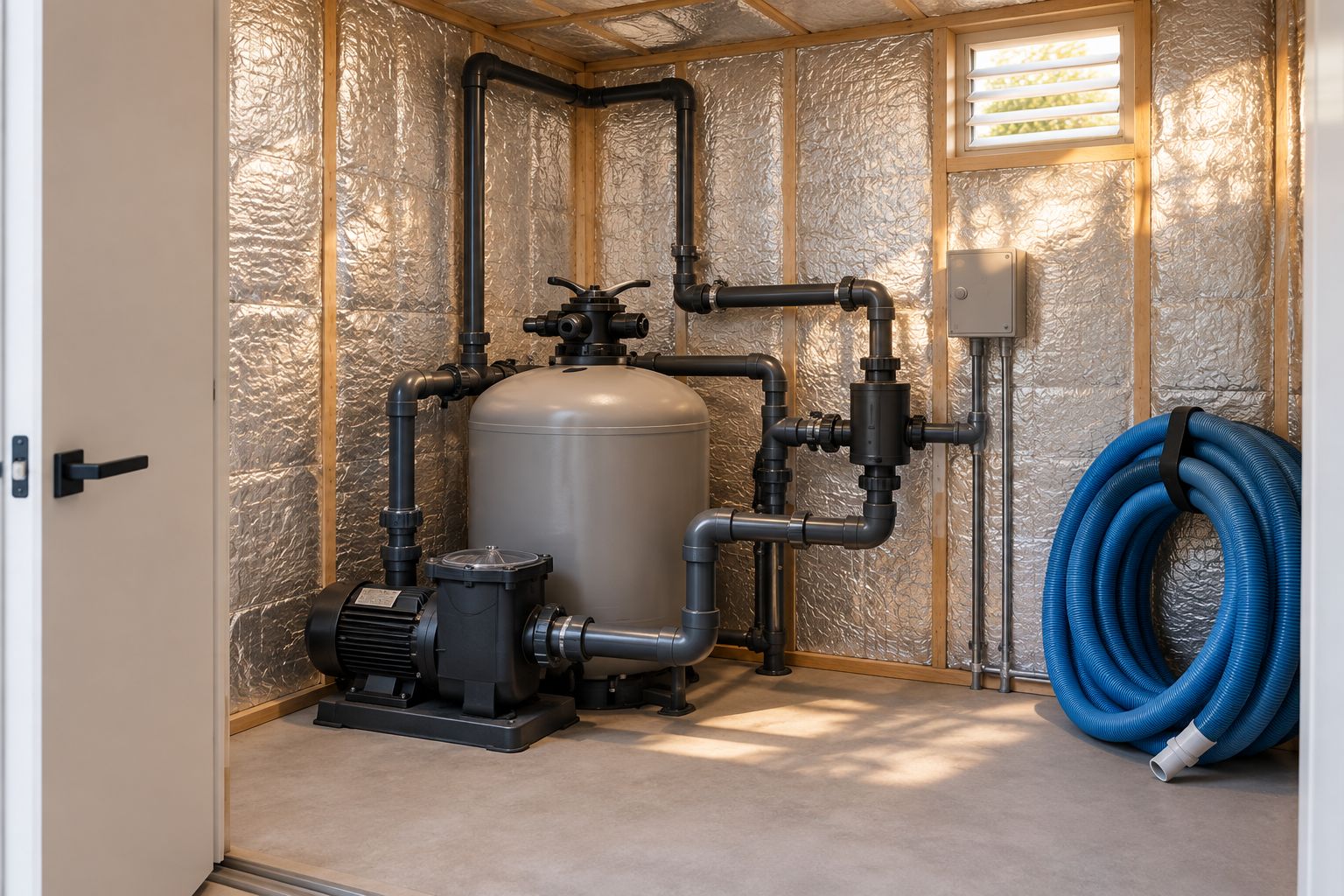
Protect plumbing lines and equipment from freeze
An equipment room that's unheated in winter still needs to keep pipes above freezing, and insulation alone won't do that if the room drops with the outdoor temperature.
- Insulate exposed plumbing runs with pipe sleeves rated for the equipment room's expected low temperature
- Keep at least the manufacturer-recommended clearance around gas or electric heaters — don't foam over a heater cabinet
- Add a low-temperature alert or heat tape on lines that run along an exterior wall
- Confirm the winterizing shutoff valve is accessible and not buried behind new insulation
If the room regularly drops below 32°F overnight in January, insulation buys time but doesn't replace draining the lines before winter.
Reduce pump and filter noise with the right material
Pump motors and filter cycles run loud enough to bother a nearby patio or bedroom window, and insulation choice affects sound as much as temperature.
- Mineral wool absorbs mechanical noise better than foam board, making it a dual-purpose pick near bedrooms or patios
- Add mass to a shared wall with a homeowner-friendly approach similar to the one used in insulation options for high-humidity homes
- Seal any gap where sound travels through electrical or plumbing penetrations, the same paths that leak air
- Avoid rigid foam alone against a shared wall — it insulates temperature but does little for sound
Bring in a professional for the sealed cavity work
Once leaks are sealed and the room's moisture problem is identified, closed-cavity work like spray foam behind finished walls is where a professional installer earns the fee. JC Home Care Center handles insulation for pool equipment rooms and attached pool houses across Long Island and the five boroughs, matching material to the room's humidity level and heater clearance requirements rather than applying a one-size approach.
Get your equipment room assessed
A quick site visit tells you which material fits your room’s humidity and heater setup.
Comparing insulation options for pool equipment rooms
| Option | Best for | Key limitation |
|---|---|---|
| Closed-cell spray foam | Rooms with persistent condensation or a damp slab | Needs professional application; not DIY-friendly |
| Mineral wool | Rooms next to a patio or bedroom where noise matters | Costs more per square foot than fiberglass |
| Rigid foam board | Masonry or block equipment room walls | Doesn't fill irregular cavities around pipes as well as spray foam |
| Fiberglass batt | Dry, well-ventilated equipment closets only | Absorbs moisture and loses R-value if the room stays humid |
Verdict: closed-cell spray foam is the strongest all-around choice for a Long Island pool equipment room that runs humid for half the year, with mineral wool as the better pick when noise control matters more than moisture control.
Common mistakes homeowners with pool equipment rooms make
- Insulating over an active leak. Sealing air gaps gets skipped, so new insulation traps moisture against the framing within one season.
- Foaming too close to a gas heater. Closed-cell foam applied without clearance around a heater cabinet creates a fire code problem, not a comfort upgrade.
- Using leftover fiberglass batt from another project. It's the cheapest material on hand, and it's also the one most likely to mold in a room with a floor drain.
- Ignoring the winter shutdown. Insulation slows heat loss but doesn't replace draining lines before a hard freeze — pipes still crack without that step.
- Treating the equipment room like an afterthought during a pool house renovation. Homeowners insulate the pool house living space and skip the mechanical closet next door, then wonder why the pump smells musty every June.
FAQ
What is the best insulation for a pool equipment room?
Closed-cell spray foam is the best insulation for most pool equipment rooms in 2026 because it resists moisture and seals the cavity in one step. Mineral wool is the better choice when the room sits near a patio or bedroom and noise control matters as much as temperature.
Should I insulate my pool equipment room for winter?
Yes, insulating a pool equipment room protects plumbing and pump housings from freeze damage once temperatures drop below 32°F. Insulation alone doesn’t replace draining the lines before a hard winter shutdown.
Can I use fiberglass batt insulation in a pool equipment room?
Fiberglass batt works only in a dry, well-ventilated equipment closet with no floor drain or standing moisture. In a humid room it absorbs water and loses R-value within one or two seasons.
Does insulation help with pool pump noise?
Mineral wool insulation absorbs mechanical noise from pumps and filters better than foam board, making it useful near bedrooms or shared patios. Sealing gaps around plumbing and electrical penetrations reduces sound leakage further.
Is spray foam safe near a pool heater?
Closed-cell spray foam is safe near a pool heater only when the manufacturer’s clearance distance is respected around the cabinet. Foaming directly against a gas heater creates a fire code violation, not a comfort improvement.
How much humidity is too much in a pool equipment room?
Relative humidity above roughly 60% inside an equipment room encourages mold growth on framing and corrosion on metal fittings. Sealing air leaks and choosing moisture-resistant insulation keeps humidity closer to normal indoor levels.
Does JC Home Care Center insulate pool equipment rooms?
JC Home Care Center installs insulation for pool equipment rooms and attached pool houses across Long Island and the five boroughs. Material selection is matched to the room’s humidity level and heater setup during the site visit.
What temperature should a pool equipment room stay above in winter?
Most pool equipment should stay above 32°F to avoid freeze cracks in pump housings and plumbing fittings. Rooms that can’t hold that temperature need either supplemental heat, pipe insulation, or a full winterizing shutdown before the cold sets in.
One last thing
The detail most homeowners miss: chlorine vapor doesn't just smell bad, it slowly corrodes exposed metal fasteners and some foam facings over years, which is why a professional assessment checks material compatibility with the room's chemical exposure, not just its temperature swing. A pool equipment room insulated the same way as a garage in 2026 usually needs rework within a few seasons.
Related guides
- How to prevent mold growth with proper wall insulation
- Insulation for hot tub and spa rooms
- How to insulate a pool house for year-round use