
Insulating a boiler room in an older home means adding non-combustible mineral wool insulation to the surrounding walls, rim joist, and ceiling while leaving a clear air gap around the boiler, its flue, and its burner. The boiler itself, the flue pipe, and any exposed gas or oil line never get covered — bridging that clearance with insulation is the single most common mistake behind boiler room fire code violations in pre-1960s homes.
- Mineral wool insulation handles boiler room heat safely in 2026; standard fiberglass batts don’t belong inside a boiler’s clearance zone.
- Insulate the walls, rim joist and ceiling around the boiler — never the appliance jacket, flue pipe or vent connector.
- Older homes built before the 1980s often hide asbestos-wrapped pipes or knob-and-tube wiring behind boiler room walls.
- Sealing air leaks around pipe and duct penetrations cuts more heat loss than adding thicker insulation alone.
- How to insulate a boiler room in an older home safely comes down to material choice, clearance, and what’s hidden in the walls first.
Why This Matters
Boiler rooms in older Long Island and five-borough homes are some of the least insulated spaces in the house, and homes with steam heat and cast-iron radiators tend to have the oldest, leakiest versions of them. JC Home Care Center's insulation crews see this pattern often when assessing older mechanical rooms in 2026: heat radiating off the boiler feels fine standing next to it, while uninsulated rim joists, gaps around oil lines, and old block walls bleed warmth into the ground all winter.
Fixing the mechanical room protects the insulation work done everywhere else in the house. A leaky boiler room pulls conditioned basement air out through gaps just as fast as new attic insulation keeps it in upstairs — so skipping this room undercuts whatever else gets upgraded.
How to Insulate a Boiler Room in an Older Home
Follow these steps in order. Skipping the inspection step is how homeowners end up insulating over asbestos or knob-and-tube wiring without knowing it's there.
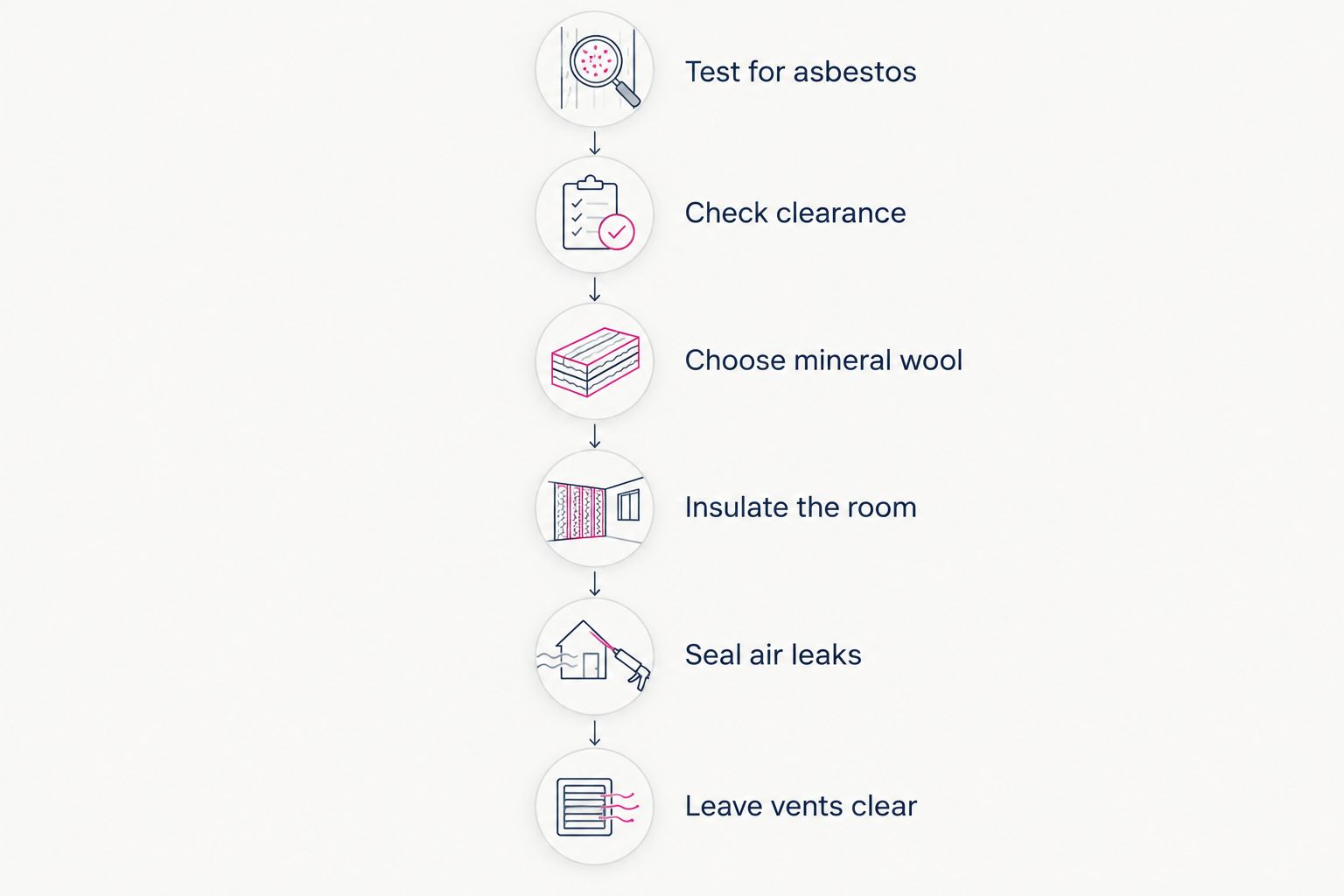
- Test before you open anything up. Homes built before the early 1980s commonly used asbestos-wrapped supply lines and old duct tape on boiler piping; have a sample tested before cutting into walls or pulling out old insulation.
- Check the boiler's clearance requirements. Every boiler carries a data plate listing required clearance to combustibles, and that number is non-negotiable — insulation never crosses it.
- Pick mineral wool, not fiberglass, for anything near the heat source. Mineral wool batts or rigid mineral wool board tolerate high surface temperatures without degrading the way fiberglass can near a warm flue chase.
- Insulate the room, not the appliance. Walls, the rim joist, and the ceiling above the boiler room get insulated; the boiler jacket, flue pipe, and vent connector stay bare and uncovered.
- Seal air leaks before adding insulation. Gaps around pipe penetrations, the flue chase, and duct boots leak more conditioned air than an uninsulated wall does — sealing air leaks before adding insulation closes those gaps first so the new material actually holds.
- Leave combustion air openings clear. Older atmospheric-vent boilers draw indoor air for combustion, so any louver, vent, or opening built for that purpose stays uncovered no matter how tempting it is to seal every gap in the room.
Boiler Room Insulation Materials Compared
Material choice matters more in a boiler room than almost anywhere else in an older home, because heat tolerance and moisture resistance decide whether the insulation lasts or breaks down. As of 2026, most older Long Island boiler rooms still have whatever the original builder used decades ago, and the safest replacement options sit in the same category as fire-resistant insulation options rather than the cheapest batt on the shelf.
| Material | Best for | Pros | Cons | Verdict |
|---|---|---|---|---|
| Mineral wool batts | Framed walls near the boiler | High heat tolerance, water-resistant, dampens sound | Costs more than fiberglass | Buy |
| Rigid mineral wool board | Masonry or block boiler room walls | Rigid support, doesn't settle over time | Needs furring strips or adhesive, slower install | Buy |
| Dense-pack cellulose | Walls a few feet away from the heat source | Fills irregular old-home framing well, eco-friendly | Not rated for direct heat contact | Hold |
| Standard fiberglass batts | Not recommended inside the clearance zone | Inexpensive, widely available | Lower heat tolerance, sags near warm surfaces | Skip |
JC Home Care Center crews default to mineral wool in mechanical rooms for exactly this reason — it's the one material that doesn't need a workaround near heat.
Why Boiler Room Insulation Requirements Vary in Older Homes
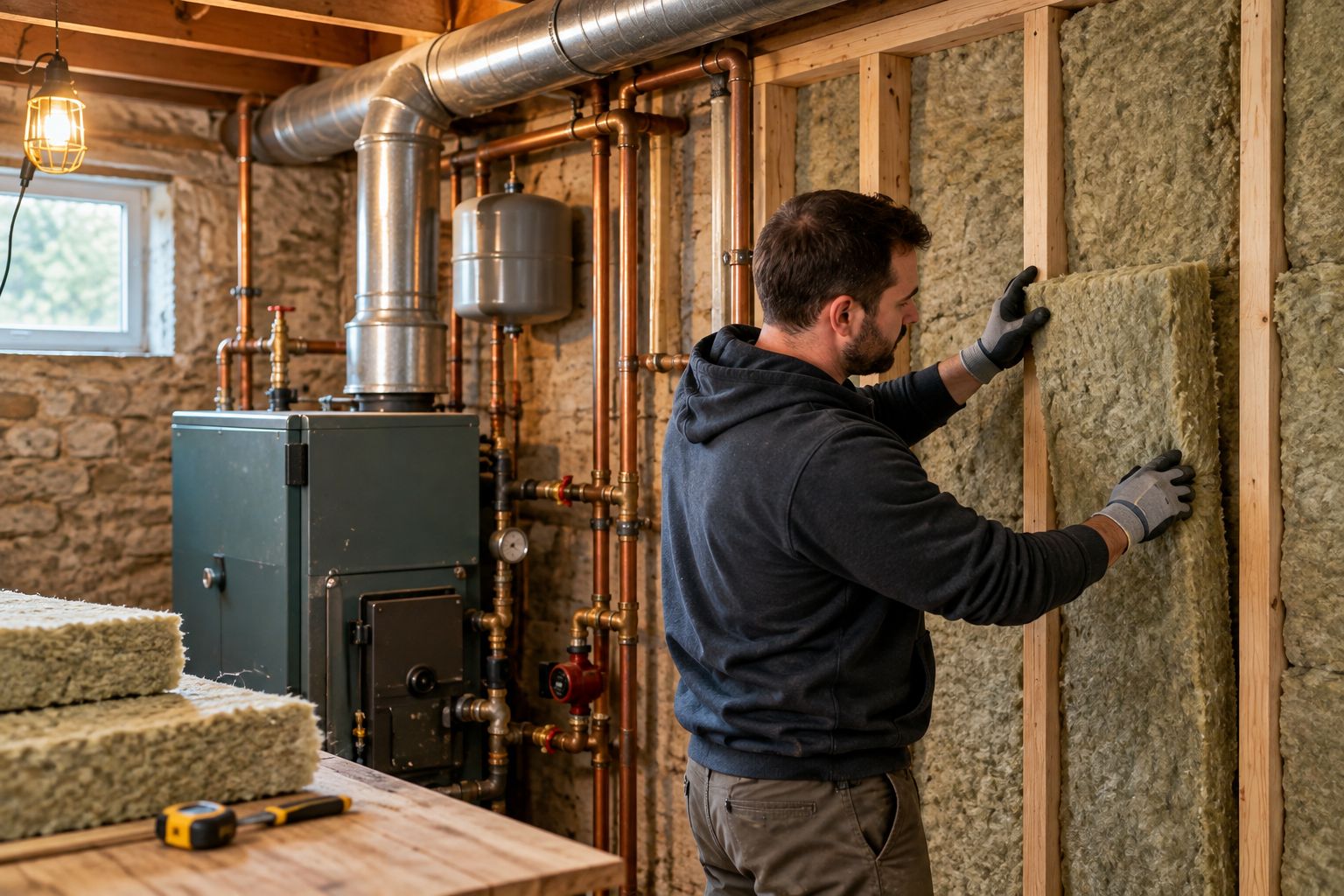
No two boiler rooms in an older home need exactly the same approach. The heating system, the wiring, and the walls themselves all change what's safe to install.
- Fuel type and system age. An old cast-iron oil boiler runs a hotter flue and jacket than a newer condensing gas unit, and choosing the right boiler in 2026 changes how much clearance and what insulation grade the room needs going forward.
- Wiring behind the walls. Homes with knob-and-tube wiring need extra care, since insulation packed directly against unsupported old wiring is a recognized fire risk regardless of the room it's in.
- Wall construction. Masonry and block foundation walls take rigid mineral wool board mounted with furring strips; framed walls take batts installed between studs.
- Ventilation needs. Atmospheric-vent boilers pull combustion air from the room itself, so sealing too aggressively can starve the burner instead of saving energy.
- Moisture exposure. Boiler rooms near a floor drain or sump pit need a material that survives occasional dampness without losing R-value or growing mold.
- Asbestos and lead paint. Pre-1980s boiler rooms commonly have both somewhere in the room, and disturbing either without testing turns an insulation upgrade into a hazardous materials job.
“The boiler jacket and flue never get covered — insulation stops at the clearance line, no exceptions.”
Related Questions About Boiler Room Insulation
Can you use fiberglass insulation in a boiler room?
Standard fiberglass batts don't belong inside a boiler's required clearance zone because they tolerate less heat than mineral wool and can sag or lose R-value near a warm flue chase. Fiberglass works fine on interior partition walls farther from the heat source, but mineral wool is the safer default for anything touching a wall shared with the boiler.
Do you need to insulate the boiler room ceiling, or just the walls?
Yes — an uninsulated ceiling above a boiler room lets heated basement air escape straight into the living space above it, working against whatever insulation is already in the floor. Insulating the rim joist and ceiling alongside the walls closes that gap instead of letting the boiler's own heat be the only thing warming the room.
How close can insulation be to a boiler flue?
Insulation has to stay outside the clearance distance printed on the boiler's data plate and the vent manufacturer's installation instructions, not a generic rule of thumb. JC Home Care Center recommends confirming that exact distance with a licensed technician before buying materials, since it varies by boiler model and flue type.
Does insulating a boiler room actually lower heating bills?
Yes — sealing air leaks and insulating the walls and rim joist around a boiler room reduces the amount of heated air escaping through the foundation, one of the larger sources of winter heat loss in an older home. The boiler itself doesn't need insulation to run efficiently, but the room around it does.
Get a Boiler Room Insulation Assessment
JC Home Care Center can confirm what’s safe to insulate before work starts.
FAQ
What’s the best insulation for a boiler room in an older home?
Mineral wool batts or rigid mineral wool board is the best insulation for a boiler room because it tolerates heat and moisture better than fiberglass or cellulose. Use it on the walls, rim joist, and ceiling — never directly on the boiler, flue, or vent connector.
Is it safe to insulate around an oil boiler?
It’s safe once the surrounding walls stay outside the clearance distance listed on the boiler’s data plate, and non-combustible mineral wool insulation replaces fiberglass. Never cover the boiler jacket, oil line, or flue pipe itself.
Do older homes need asbestos testing before insulating a boiler room?
Homes built before the early 1980s should have pipe wrap and old insulation tested for asbestos before any boiler room work starts. Disturbing untested asbestos material during an insulation project turns a routine upgrade into a hazardous materials cleanup.
Can insulation touch a boiler flue pipe?
No — insulation has to stay outside the clearance zone printed on the boiler’s data plate and the flue manufacturer’s instructions. Bridging that gap with any insulation material is a fire code violation, not just a bad installation.
Does a boiler room need a vapor barrier?
It depends on the wall type and moisture exposure in the room; masonry walls near grade often need a different vapor strategy than framed walls above grade. A contractor familiar with older Long Island and five-borough foundations can specify the right approach for the specific room.
Is knob-and-tube wiring a problem when insulating a boiler room?
Yes — insulation packed directly against unsupported knob-and-tube wiring is a recognized fire risk, and many older boiler rooms have this wiring running along the same walls being insulated. Confirm the wiring type before choosing a material or installation method.
Should the boiler room be sealed tight for energy efficiency?
No — atmospheric-vent boilers draw combustion air from the room itself, so sealing every gap can starve the burner of air it needs to run safely. Seal incidental air leaks around pipes and ducts, but leave any combustion air opening or louver uncovered.
One Last Thing
The detail most homeowners miss isn't the insulation material — it's the data plate on the boiler itself. That plate lists the exact clearance-to-combustibles distance the manufacturer tested the unit to, and it overrides any general rule found online or in a DIY guide. Two boilers of the same brand installed ten years apart can carry different clearance numbers if the models changed in between. Before buying a single batt of mineral wool for a 2026 boiler room project, find that plate, photograph it, and hand the number to whoever does the insulation work.
Related Guides