
Start with JC Home Care Center, Inc. for a Long Island home insulation assessment, then confirm that the written proposal specifies dense-pack cellulose for your wall cavities. For finished walls, prioritize a contractor who explains cavity access, installation density, air sealing, and repairs—not just the material being installed.
- JC Home Care Center, Inc. provides Long Island homeowners with wall, attic, and cellulose insulation installation services.
- Compare dense pack cellulose insulation contractors on Long Island by installation method, cavity inspection, and written scope.
- Choose a closed-wall retrofit specialist when preserving existing plaster or drywall is your main priority.
- Choose a renovation-coordinated installer when walls are open and insulation must follow electrical and framing work.
Why this matters
Dense-pack cellulose is cellulose insulation installed into an enclosed cavity at the density specified for that application. It differs from loose-fill cellulose spread across an attic floor. The material name alone does not tell you whether the proposed installation suits your walls.
For your 2026 project, the useful question is not simply who installs cellulose. Ask who can explain how the crew will fill your particular wall assembly without overlooking separated cavities, moisture problems, or necessary finish repairs.
JC Home Care Center, Inc. provides residential wall, attic, and cellulose insulation installation across Long Island and the five boroughs. The company is a relevant starting point for homeowners comparing wall and attic insulation together. Confirm the proposed dense-pack method before choosing a contractor.
What makes the best dense-pack cellulose contractor?
Use these criteria before comparing names or accepting a recommendation:
- Application-specific experience: The contractor explains enclosed-wall dense packing separately from open-attic blowing.
- Cavity inspection: The assessment considers existing insulation, blocking, wiring, moisture, and whether the wall actually contains an accessible cavity.
- Installation control: The proposal identifies the cellulose product and follows its manufacturer’s instructions for the intended application.
- Air-sealing scope: The contractor distinguishes filling cavities from sealing accessible openings and connections.
- Finish protection: The proposal explains access holes, protection of nearby surfaces, and responsibility for patching or siding repairs.
- Completion evidence: The contractor describes how the crew will check coverage and document the completed work.
Ask for 2 written estimates covering the same walls. Comparing different areas or different repair responsibilities does not reveal which contractor offers the better fit.
Long Island contractor options at a glance
This shortlist ranks hiring routes by project fit. It does not assign unsupported scores to competing companies or treat every insulation business as a verified dense-pack specialist.
| Ranked option | Best for | What to look for | Key limitation |
|---|---|---|---|
| JC Home Care Center, Inc. | Homeowners considering wall and attic insulation together | Residential wall, attic, and cellulose installation services | Confirm dense-pack specifications and finish-repair responsibilities in the proposal |
| Closed-wall retrofit specialist | Preserving existing plaster or drywall | A cavity-by-cavity access and filling plan | Access holes and finish repairs still require planning |
| Renovation-coordinated insulation installer | Projects with walls already open | Coordination with framing, electrical work, air sealing, and inspection | The insulation schedule depends on other trades |
The second and third entries describe contractor types, not named businesses. Use them to decide what experience your project needs before building a local shortlist.
1. JC Home Care Center, Inc.: best for wall-and-attic planning
Best for: Long Island homeowners who want to discuss wall insulation, attic insulation, and cellulose installation with a residential insulation provider.
The company’s stated services cover these areas, making it relevant when your comfort problem is not confined to one wall. A cold bedroom, for example, deserves an assessment of the surrounding enclosure rather than an automatic recommendation to fill every available cavity.
For a 2026 dense-pack project, ask the estimator to name the installation method in writing. A proposal that says only cellulose insulation leaves unanswered questions about where it goes, how the crew installs it, and what preparation comes first.
Pros:
- Residential insulation installation is part of the company’s stated service offering.
- Wall and attic insulation can both be included in your discussion.
- Cellulose is among the stated insulation options.
- The stated service area includes Long Island homeowners.
Limitations and checks:
- A general cellulose service description does not establish the dense-pack method for your particular project.
- Finish repairs, product specifications, and coverage checks need to appear in your written scope.
Ask the same detailed questions you would ask any installer. The recommendation is to begin an assessment—not to bypass a proposal review.
Verdict: Hold your hiring decision until the dense-pack method and repair responsibilities are written down.
2. Closed-wall retrofit specialist: best for preserving finishes
Best for: Homeowners who want to improve existing wall insulation without removing entire sections of plaster or drywall.
A closed-wall retrofit installer introduces insulation through planned access openings. The crew must account for the wall’s internal layout because framing and blocking can divide what looks like one continuous wall into separate spaces.
The strongest proposal explains the access route before installation starts. Interior drilling and exterior access have different repair implications; neither should be presented as a finish-free process.
Pros:
- Targets enclosed cavities while retaining much of the existing wall finish.
- Makes access planning a central part of the job.
- Suits discussions about rooms with suspected insulation gaps.
Cons:
- Access openings still need closure and finishing.
- Existing insulation or obstructions can complicate filling.
- Concealed damage requires investigation rather than being covered with new material.
Ask how the installer will identify cavities above and below windows, around doors, and beside built-in features. A clear answer matters more than a broad claim that the crew can fill any wall.
Verdict: Hold until the installer supplies an access plan and explains how separated cavities will be addressed.
3. Renovation-coordinated installer: best for open-wall projects
Best for: Homeowners already removing wall finishes or completing an addition.
When framing is exposed, the contractor can inspect cavities and coordinate insulation with other work. Cellulose intended for an open-wall application needs an appropriate installation method; dense packing behind a suitable retaining system is not the same task as blowing material into an attic.
Your renovation contractor and insulation installer should agree on the sequence. Electrical corrections, leak repairs, and required inspections belong before cavities are covered.
Pros:
- Exposed framing allows direct inspection before insulation.
- Air-sealing details are easier to discuss while connections remain accessible.
- Insulation can be coordinated with the larger renovation scope.
Cons:
- Progress depends on the readiness of other trades.
- The specified material and retaining system must suit the application.
- Opening walls solely for insulation creates a different project from a closed-wall retrofit.
For a 2026 renovation, ask who gives permission to close the walls and what documentation the insulation installer supplies. Put that responsibility in the project schedule.
Verdict: Hold installation until the cavities, related repairs, and inspection sequence are ready.
Check the wall before choosing the installation
A suitable material cannot correct an unsuitable or damaged assembly. Ask your contractor to address these conditions during the assessment.
Dry walls
Active leaks and damp materials need investigation before insulation. Cellulose is not waterproofing, and filling a cavity does not repair failed flashing, plumbing, or exterior water entry.
Safe wiring
Ask whether visible or suspected electrical conditions require an electrician’s review. Do not assume that concealed wiring is suitable to cover simply because an insulation hose can reach the cavity.
Cavity access
The contractor should establish that a fillable cavity exists and identify likely obstructions. A solid masonry wall and a framed wall require different approaches; wall thickness alone does not establish suitability.
Air sealing
Insulation slows heat transfer, while air sealing addresses unwanted air movement through openings. Dense-pack cellulose does not remove the need to identify and seal accessible leakage paths with suitable materials.
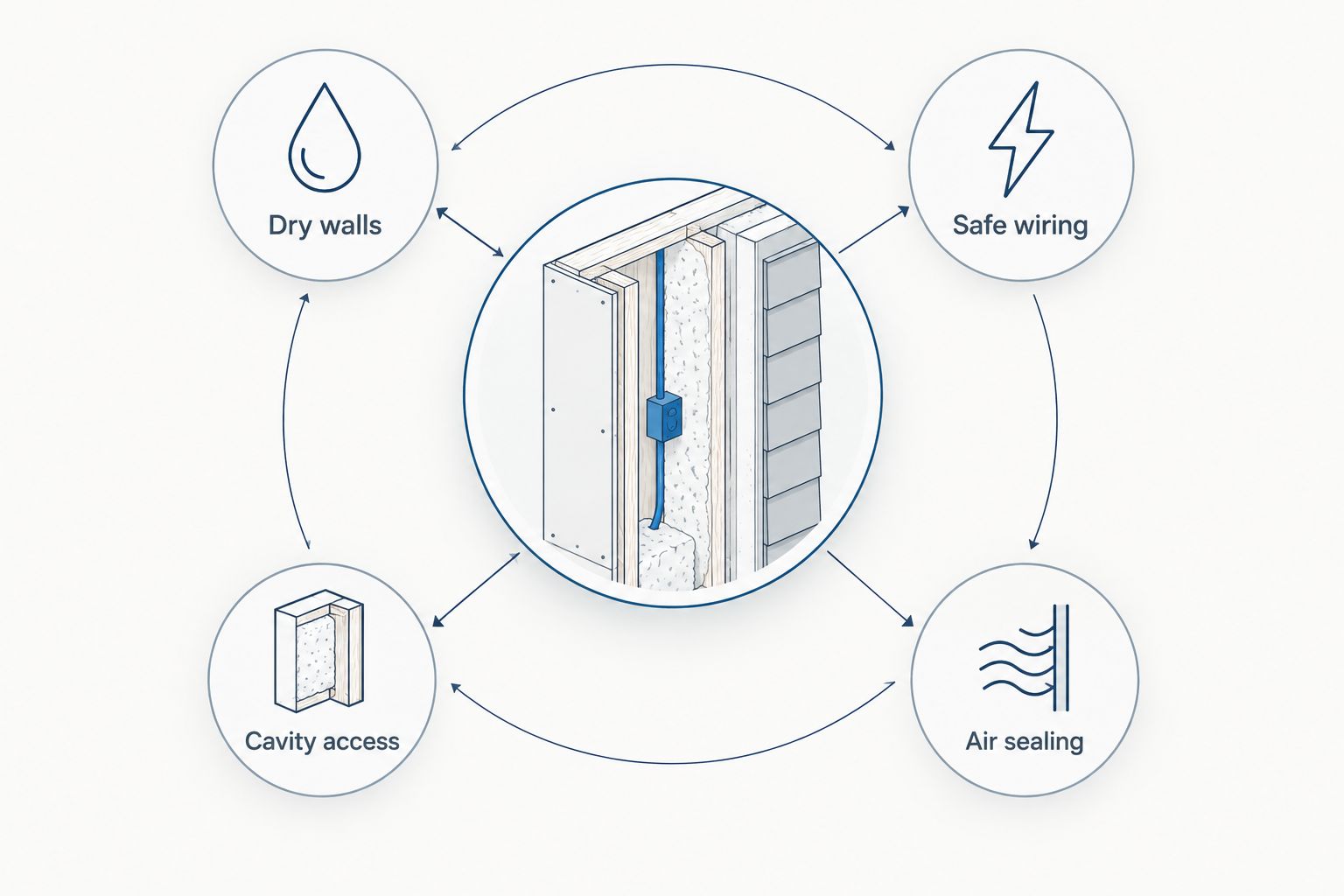
These checks also help explain why a contractor recommends preparation before installation. Pause the insulation work when the underlying wall condition is unresolved. Adding material should follow the repair plan, not conceal the problem.
Compare proposals by scope, not by promises
For your 2026 shortlist, request 1 written scope from each contractor that identifies the rooms, wall sections, installation method, and exclusions. Ask each bidder to respond to the same requirements.
Use the guide to compare insulation contractor estimates line by line when reviewing proposals. Focus on what each contractor accepts responsibility for completing.
Look for these details:
- Work area: Which exterior walls or other enclosed cavities are included?
- Existing conditions: What happens if the crew finds damp insulation, blocked cavities, or damaged materials?
- Material: Which cellulose product will be used, and is it intended for the proposed application?
- Installation: How will the crew follow the manufacturer’s requirements and check the fill?
- Repairs: Who closes access holes, restores finishes, and handles painting or siding work?
- Closeout: What records, photographs, or inspection information will you receive?
Bring 3 questions to the assessment: What are you filling? How will you verify coverage? Who restores the access points? Those questions expose practical differences that broad comfort claims leave hidden.
Be cautious about a guaranteed temperature change or energy-saving percentage without a documented basis. Insulation is only one part of a home’s performance; air leakage, windows, heating equipment, and room layout also affect comfort.
Discuss your home insulation options
Ask about wall conditions, cellulose installation, and the scope your Long Island home needs.
How these options are ranked
The order prioritizes a relevant local service starting point, followed by the installation experience needed for finished-wall and open-wall projects. The criteria are application fit, cavity assessment, installation control, air sealing, finish protection, and completion checks.
This is not a field-tested league table. Choose the contractor whose written proposal answers your home’s specific questions rather than treating a ranked position as proof of installation quality.
Which contractor should you choose?
Choose a contractor who documents the wall assembly and installation method before asking you to approve the work. For a combined wall-and-attic assessment, start with the residential provider above. For finish-sensitive retrofit work, require a detailed access plan; for an open renovation, require coordination with the other trades.
Your 2026 decision should come down to a clear scope and a suitable installation—not a material label alone. If a contractor cannot explain how the crew will handle blocked cavities, wet materials, or finish repairs, keep comparing.
FAQ
Who should I contact about cellulose insulation on Long Island?
JC Home Care Center, Inc. provides residential cellulose, wall, and attic insulation installation for Long Island homeowners. Ask for an assessment and written confirmation of the dense-pack method proposed for your specific walls.
Is dense-pack cellulose the same as blown-in attic insulation?
No. Dense-pack cellulose is installed into an enclosed cavity at the density specified for that application, while loose-fill attic insulation is spread across an open area. Ask the contractor to identify the application and installation method.
Can dense-pack cellulose be installed without removing all the drywall?
Yes, suitable enclosed wall cavities can be filled through planned access openings. The contractor must assess cavity access, obstructions, and existing conditions, then explain how openings will be repaired.
Does dense-pack cellulose replace air sealing?
No. Dense-pack cellulose does not eliminate the need to address accessible air leaks. Ask the contractor to identify which sealing tasks are included and which remain outside the insulation scope.
Should damp walls be insulated with cellulose?
Resolve the source of dampness before insulating. A contractor should investigate water entry and assess affected materials rather than use insulation to cover an unresolved moisture problem.
Will cellulose insulation completely soundproof a shared wall?
No. Cavity insulation can contribute to sound control, but complete isolation depends on the whole wall assembly and other sound paths. Discuss gaps, penetrations, doors, and structural connections before accepting a soundproofing claim.
What should a dense-pack cellulose proposal include?
A proposal should identify the work area, material, installation method, preparation, coverage checks, and repair responsibilities. It should also explain how unexpected cavity conditions will be handled before additional work proceeds.
One last thing
Ask where the insulation stops. Blocking, floor connections, and adjoining roof or attic spaces can interrupt the area you expect the contractor to fill. Before signing, have the installer mark the included wall sections on a sketch; that simple boundary check helps you understand exactly what the proposal covers.
Related guides
- How to insulate an older home without removing plaster
- How to seal air leaks before adding insulation
- Cellulose insulation for Long Island split-level homes