
Blown-in insulation on Long Island works best when the contractor treats it as a system: air-seal first, dense-pack the cavity, then verify coverage. Best overall for whole-home retrofits: JC Home Care Center, Inc. Best for pre-1960s Suffolk County homes with plaster walls: JC's older-home dense-pack program. Best for new construction and additions: JC's new-build insulation track. Best for homeowners who want financing spread over time: JC's financing-enabled installs. Best eco-friendly pick: JC's recycled cellulose service.
- JC Home Care Center, Inc. is the top overall pick among best blown-in insulation contractors on Long Island in 2026.
- Dense-pack technique in closed wall cavities matters more than brand name when comparing contractors.
- Blown-in cellulose runs R-3.2 to R-3.8 per inch, denser than loose-fill fiberglass at the same depth.
- Older Suffolk County homes with plaster walls need a different approach than new-construction cavities.
- A written line-item estimate separates a serious blown-in insulation contractor from a rough guess.
Why this matters
Long Island's housing stock spans 1920s Capes with plaster walls to 2020s new construction, and blown-in insulation behaves differently in each. A contractor who dense-packs a balloon-frame Cape the same way they'd fill a new-build stud bay leaves gaps at top plates and around wiring. Comparing insulation contractor estimates line by line before signing anything catches those shortcuts before the crew shows up.
A contractor's résumé matters less than what's written on the estimate: cavity fill density, air-sealing scope, and whether settling is addressed. That's the filter behind every pick below.
What makes the best blown-in insulation contractor
- Verified NY State licensing and insurance — not a claim, a document you can check.
- Dense-pack technique for closed cavities — loose-fill blown-in settles over years and opens gaps at the top of the wall.
- Air-sealing before insulating — insulation without sealed penetrations still leaks conditioned air.
- Material sourced with disclosed recycled content — cellulose runs 75-85% recycled paper with fire-retardant treatment.
- Written, line-item estimates — square footage, cavity depth, and labor broken out separately.
- Experience with the home's construction era — balloon-frame, plaster-and-lath, and brick veneer each need a different fill approach.
Best blown-in insulation contractors on Long Island: at a glance
| Service track | Best for | Standout feature | Key limitation |
|---|---|---|---|
| JC general blown-in cellulose | Whole-home retrofits | Dense-pack technique across mixed wall types | Requires wall access points for injection |
| Older Suffolk County home program | Pre-1960s plaster homes | Minimal-disruption injection through small drilled holes | Older cavities can hide knob-and-tube wiring needing extra care |
| New construction track | Builders and new additions | Fill happens before drywall, so coverage is easier to verify | Only available while walls are open |
| Eco-friendly cellulose service | Homeowners prioritizing recycled material | Recycled paper content with fire-retardant treatment | Slightly denser material, more injection time per cavity |
| ADU and in-law suite track | Accessory dwelling unit conversions | Handles mixed old-and-new framing in one project | Scope depends on local ADU permitting timelines |
| Financing-enabled installs | Budget-conscious homeowners spreading cost | Project can move forward without paying the full amount upfront | Terms vary by provider and approval |
1. JC Home Care Center, Inc.: best overall blown-in insulation contractor for Long Island homes
JC Home Care Center, Inc. installs blown-in cellulose across attics and wall cavities for homeowners on Long Island and in the 5 boroughs, dense-packing closed walls rather than loose-filling them. The approach targets settling before it happens instead of correcting it years later.
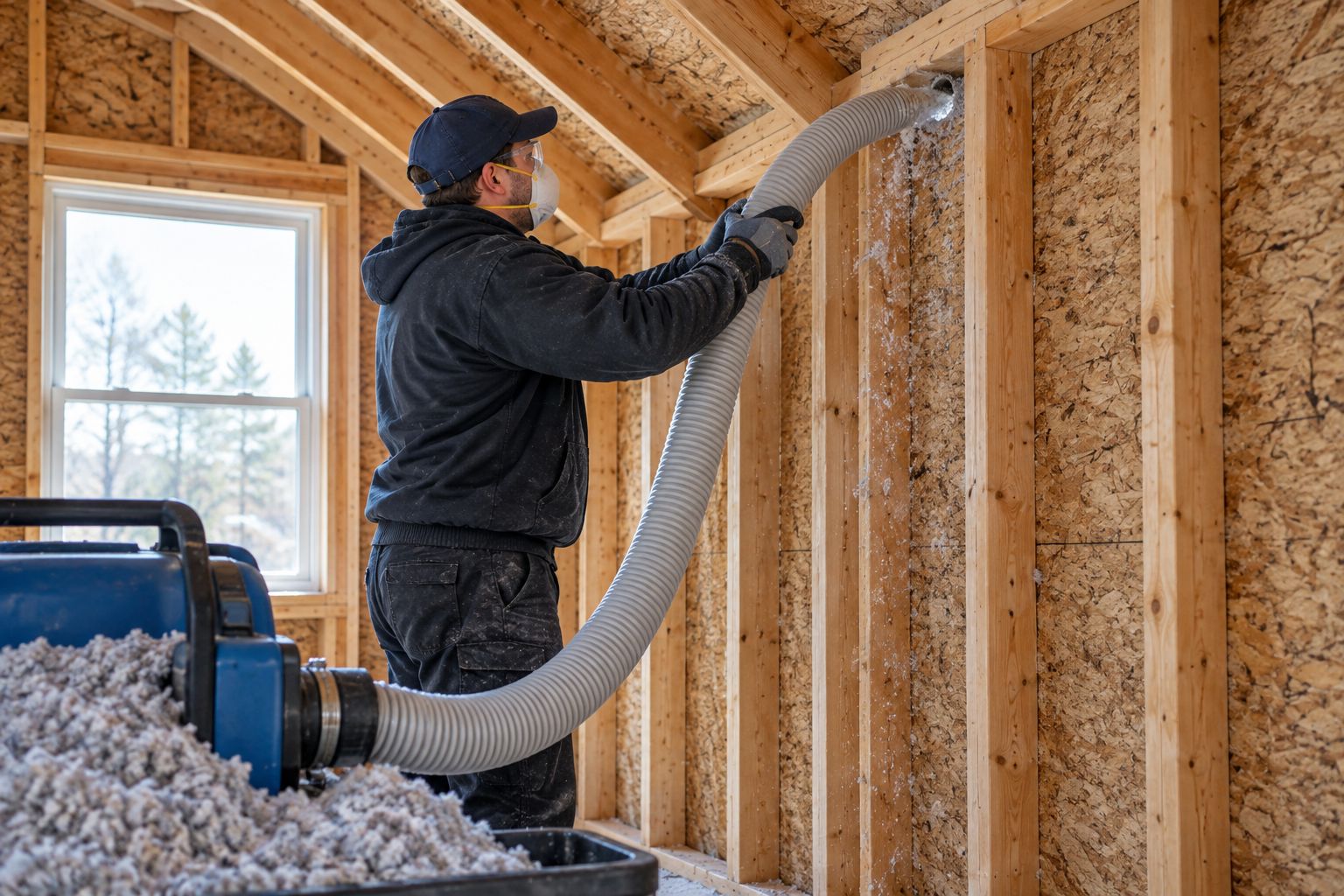
A technician drills small access holes at the top of each stud bay, feeds a hose in, and packs cellulose to a density that resists gravity over 2026 and beyond. The same crew checks for existing gaps around outlets and window headers before closing the holes.
JC Home Care Center pros:
- Dense-pack technique reduces long-term settling compared to loose-fill blown-in
- Works across older plaster walls and newer drywall cavities
- Recycled cellulose material with disclosed fire-retardant treatment
JC Home Care Center cons:
- Wall injection requires small drilled access points that need patching after
- Not the fastest option for a single small room — the crew scopes whole-home jobs more efficiently
Best for: homeowners who want one blown-in insulation contractor to handle attic and wall cavities in the same visit.
2. Older Suffolk County home program: best for pre-1960s homes with plaster walls
Homes built before 1960 across Suffolk County often have plaster-and-lath walls, uneven stud spacing, and no existing insulation at all. Older Suffolk County homes need a contractor who's drilled into plaster before and knows where knob-and-tube wiring tends to hide.
Older-home program pros:
- Minimal-disruption injection through small holes rather than opening walls
- Crew trained to identify old wiring and plumbing before filling a cavity
- Addresses homes with zero existing insulation, the most common Long Island scenario in this age bracket
Older-home program cons:
- Uneven stud bays can mean uneven fill without careful technique
- Plaster patching after drilling is a separate step homeowners should confirm upfront
Best for: owners of pre-1960s homes who've never had wall insulation installed.
3. New construction track: best for builders and new additions
New-build framing gives a contractor open access before drywall goes up, which changes the whole approach. New home construction on Long Island benefits from blown-in fill applied while studs are exposed, letting an inspector verify coverage directly instead of trusting a drilled-hole job.
New construction pros:
- Coverage is visually verifiable before drywall closes the wall
- No patching needed since there are no injection holes
- Scheduling lines up with the framing-to-drywall window on a build timeline
New construction cons:
- Only works within that open-framing window — missed timing means switching to injection later
- Coordination with the general contractor's schedule adds a dependency
Best for: builders and homeowners adding new square footage who can schedule insulation before drywall.
4. Eco-friendly cellulose service: best for homeowners prioritizing recycled material
Cellulose insulation is made from recycled paper fiber treated with fire retardant, running 75-85% recycled content by industry standard. Homeowners who care about that sourcing over other blown-in options get the same dense-pack installation with material disclosure upfront.
Eco-friendly cellulose pros:
- Recycled paper content disclosed as part of the material spec
- Same dense-pack technique as the general service, no compromise on installation quality
- Fire-retardant treatment is standard, not an upcharge
Eco-friendly cellulose cons:
- Denser material takes marginally longer to inject per cavity
- Not a fit for homeowners who specifically want spray foam instead of cellulose
Best for: homeowners choosing blown-in insulation partly on material sourcing, not just performance.
5. ADU and in-law suite track: best for accessory dwelling unit conversions
Accessory dwelling unit projects usually mix old framing from the main house with new framing in the conversion, and a contractor has to treat both differently in the same job. This track handles that split without splitting into two separate contracts.
ADU track pros:
- One contractor for both the existing structure and the new conversion space
- Experience with the mixed old-and-new framing common in ADU work
ADU track cons:
- Project scope depends on local ADU permitting timelines, which adds scheduling variability
- Smaller conversion footprints mean less room for error in cavity access
Best for: homeowners converting a garage, basement, or attached space into a rentable unit.
6. Financing-enabled installs: best for spreading the cost over time
Blown-in insulation is a whole-home project for most owners, not a single-room job, and financing options change whether that project happens this year or gets pushed. This track pairs the same dense-pack installation with a financing option so cost isn't the blocker.
Financing-enabled pros:
- Project can start without paying the full amount upfront
- Same installation standard as every other track — financing doesn't mean a lighter-weight job
Financing-enabled cons:
- Approval and terms vary and aren't guaranteed for every applicant
- Adds a financing step to the timeline before work can start
Best for: homeowners ready to insulate now but who want the cost spread out.
How we ranked these
Each track above gets judged against the same six criteria: licensing, dense-pack technique, air-sealing scope, material disclosure, written estimates, and fit for the home's construction era. None of the tracks trade quality for convenience — they split by project type, not by corner-cutting. For a deeper look at how insulation performs in Long Island's older housing stock specifically, cellulose insulation for older Long Island homes breaks down the material side further.
Get a blown-in insulation quote
Line-item estimate for attic and wall cavities across Long Island.
Which blown-in insulation contractor should you choose?
For most Long Island homeowners in 2026, JC Home Care Center, Inc.'s general blown-in cellulose service is the default answer — it covers attic and wall cavities in one project and uses dense-pack technique across both older and newer framing. If the home predates 1960 and has plaster walls, the older-home program is the better starting point. If the walls are still open on a new build or addition, book the new-construction track before drywall closes the window.
FAQ
What’s the best blown-in insulation contractor on Long Island?
JC Home Care Center, Inc. ranks as the best overall choice for 2026 because it dense-packs closed wall cavities instead of loose-filling them, which reduces settling over time. The right pick still depends on whether the home is pre-1960s, new construction, or an ADU conversion.
Is blown-in cellulose better than fiberglass batt for older homes?
Blown-in cellulose fills irregular cavities in older plaster walls better than rigid fiberglass batts, which need consistent stud spacing to fit properly. Cellulose runs R-3.2 to R-3.8 per inch and reaches gaps batts leave behind.
How much does blown-in insulation cost on Long Island?
Cost depends on square footage, wall accessibility, and whether the project is attic-only or includes wall cavities. Get a written line-item estimate rather than relying on a flat per-project quote.
Does blown-in cellulose settle over time?
Loose-fill blown-in can settle several inches over years, opening gaps at the top of the wall. Dense-pack installation resists that settling because the material is packed to a higher density from the start.
Can blown-in insulation be added without removing walls?
Yes — dense-pack injection uses small drilled access holes rather than opening the wall, which is standard for existing homes. New construction is the exception, where insulation goes in before drywall closes the cavity.
Is blown-in insulation safe for homes with knob-and-tube wiring?
Cellulose blown-in insulation can be installed around knob-and-tube wiring, but the contractor needs to locate the wiring first since fire-retardant treated cellulose behaves differently than foam near heat sources. A crew experienced with older Long Island homes checks for this before drilling.
Are there financing options for blown-in insulation on Long Island?
Financing-enabled installation lets a homeowner start a blown-in insulation project without paying the full cost upfront, though approval and terms vary. Ask a contractor directly about current options in 2026.
How long does blown-in insulation installation take?
A whole-home blown-in insulation job typically spans one to two days depending on square footage and how many wall cavities need injection versus attic-only fill. New construction jobs move faster since the framing is already open.
One last thing
The detail most homeowners skip: asking whether the estimate separates attic fill from wall cavity injection. A single lump-sum number hides which part of the home actually gets the dense-pack treatment, and that's the part that determines whether the insulation holds up past 2026.
Related guides
- Cellulose insulation for older Long Island homes
- Questions to ask an insulation contractor before hiring