
The cost to insulate an attic in a two-family home in Queens depends on the measured attic area, insulation method, existing conditions, and preparation required; get a property-specific written estimate before setting your budget. Insulation installation alone does not describe the full job: air sealing, removal, access improvements, and repairs need separate treatment in the proposal. Use this 2026 guide to identify those differences before you approve the work.
- The cost to insulate an attic in a two-family home in Queens depends on scope, not apartment count alone.
- Compare attic insulation estimates using the same area, target R-value, air sealing, and preparation requirements.
- JC Home Care Center, Inc. provides residential attic insulation installation for homeowners in Queens.
- Resolve roof leaks and safety concerns before covering the attic with new insulation.
How much does attic insulation cost for a two-family home in Queens?
An inspected, itemized proposal is the basis for your budget—not the fact that your building contains two apartments. The contractor needs to identify what separates the heated living space from the attic or roof, measure that area, and describe the work needed to insulate it correctly.
For your 2026 project, use this breakdown to check whether proposals cover equivalent work. The guide to comparing insulation contractor estimates line by line explains how to review competing scopes.
| Estimate component | What the proposal should identify | What to watch for |
|---|---|---|
| Insulated area | Measured square footage and exact surfaces | Whole-building floor area substituted for attic area |
| Existing insulation | Condition and whether it stays or goes | Removal included without an explanation |
| Air sealing | Specific gaps and penetrations to address | Insulation treated as a substitute for sealing |
| New insulation | Material, installation method, and target R-value | Material name without a performance target |
| Ventilation details | Treatment of existing ventilation paths | Insulation placed across intended airflow routes |
| Access and cleanup | Entry route, protection, disposal, and exclusions | Preparation responsibilities left undefined |
A useful estimate also separates insulation work from roofing, electrical corrections, and finish repairs. You need to know who handles those tasks before installation begins, even when another contractor is responsible.
Why this matters
Two proposals can describe “attic insulation” while covering substantially different jobs. Adding material above a dry, accessible ceiling is not the same scope as removing damaged insulation, opening finished surfaces, or changing the insulated boundary to the roofline.
For a two-family home, access deserves particular attention. If the attic entrance is inside an occupied apartment, agree on entry arrangements, belongings protection, and cleanup before scheduling work. Those details belong in your project plan, not in a conversation after the crew arrives.
Adding insulation over an existing attic floor
Best for: an unfinished attic where the ceiling below remains the boundary of the heated living space. Adding insulation over suitable existing material avoids unnecessary removal, but only after the contractor checks its condition and identifies accessible air leaks.
The advantage is preserving material that still serves a purpose. The limitation is that new insulation does not correct hidden moisture damage, unsafe wiring, or gaps beneath the existing layer by itself.
Ask the contractor to explain how the installation will maintain coverage around framing, edges, and the access hatch. If you use the attic for storage, discuss a suitable storage arrangement rather than placing boxes directly onto insulation and compressing it.
Your 2026 proposal should distinguish existing insulation from the new material being added. A target R-value describes resistance to heat flow; the proposal should explain how the completed assembly will achieve that target.
Removing insulation before replacement
Best for: an attic where inspection identifies material that needs removal before corrective work or replacement. Removal creates access to the attic floor, but it also adds handling, containment, and disposal tasks to the scope.
Do not assume old insulation automatically needs removal. Age alone does not establish whether material is dry, adequately installed, or suitable to retain. Ask for photographs and a clear explanation of the condition driving the recommendation.
If there is evidence of a roof leak, pest activity, or suspect hazardous material, establish the correction process first. New insulation should follow the appropriate repair or specialist assessment—not conceal the unresolved condition.
Make the handoff explicit: who removes the material, who corrects the underlying problem, and who confirms that insulation work can proceed? Separating those responsibilities helps prevent a replacement project from stopping midway through preparation.
Insulating the roofline or a finished attic
Best for: a project whose design places the attic inside the insulated building enclosure. Roofline insulation requires an assembly-specific plan; it is not simply an attic-floor installation moved overhead.
The benefit is aligning insulation with a design that includes the attic within the conditioned enclosure. The limitation is added coordination around roof construction, moisture management, ventilation strategy, and required protective coverings.
A finished attic adds another question: how will the contractor reach the cavities? Ask whether the scope includes opening surfaces, restoring finishes, or working around knee walls and sloped ceilings.
Do not choose roofline insulation solely because one material sounds more advanced. Choose the insulated boundary first, then select a compatible material and installation method. That sequence keeps the proposal tied to your building rather than a generic product recommendation.
Why attic insulation scope varies in Queens
These factors determine what belongs in a proposal. Use them to explain differences between estimates rather than comparing totals without context.
- Measured area: The relevant area is the surface being insulated, not automatically the combined living area of both apartments.
- Existing conditions: Dry, usable insulation presents a different scope from material affected by water, contamination, or disturbance.
- Air sealing: Accessible ceiling gaps, chases, and penetrations require specific treatment before insulation covers them.
- Attic access: A narrow hatch, limited working clearance, or entry through an occupied unit changes the work arrangements.
- Roof and ventilation design: Attic-floor and roofline projects require different details for managing heat, air, and moisture.
- Obstructions and safety: Wiring, recessed fixtures, flues, ducts, and storage affect where and how insulation can be installed.
Do not accept a statement that “everything is included” as a replacement for these details. A written scope should make it possible to identify what is included, what is excluded, and what requires separate approval.
How to get an estimate you can actually compare
Use the same project description when speaking with each contractor. For a 2026 comparison, record the inspection date and request written confirmation of the proposal's validity period.
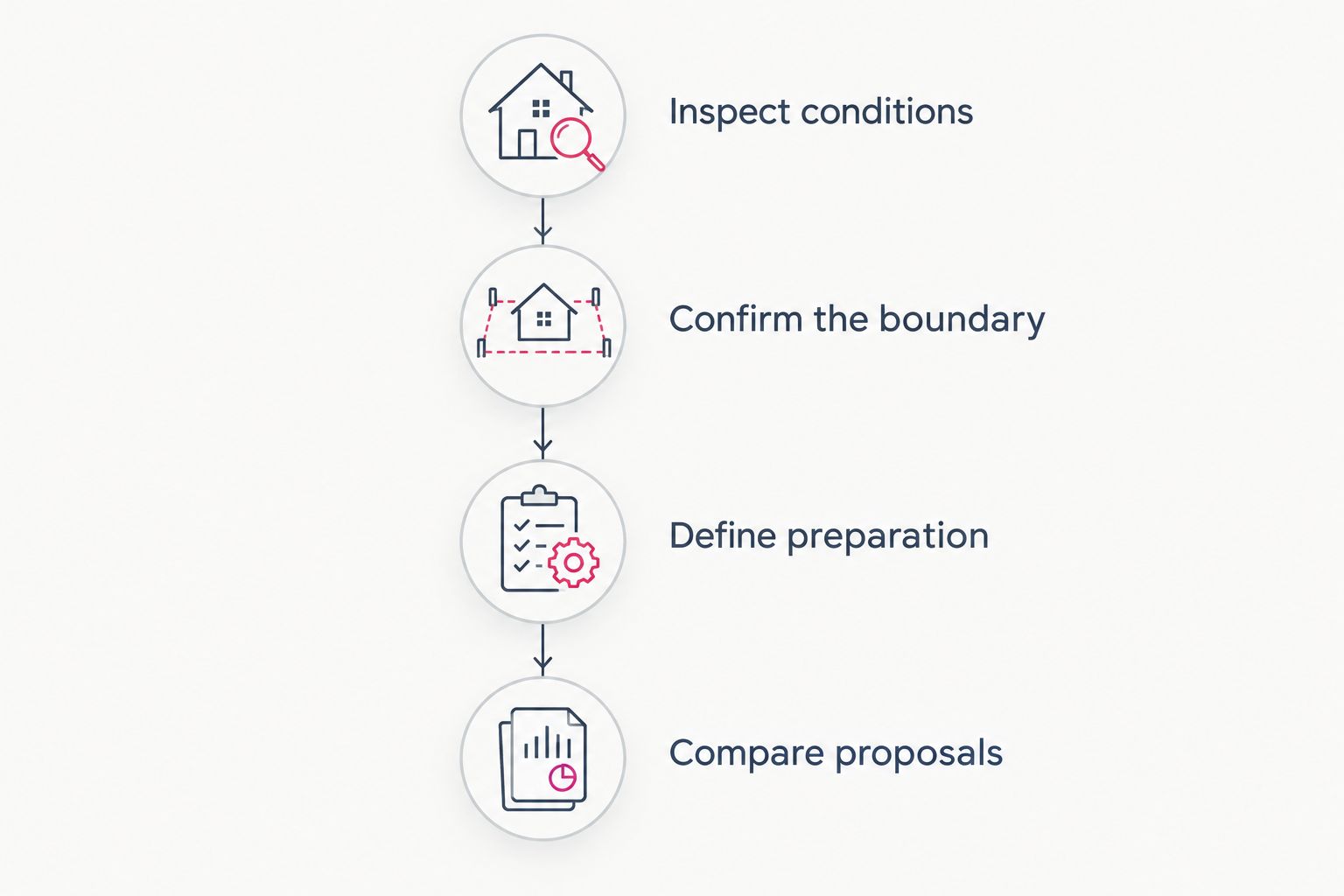
- Inspect conditions. Show the contractor the attic entrance, visible damage, existing insulation, and any rooms with comfort problems. Do not enter an unsafe attic to collect information.
- Confirm the boundary. Establish whether the work covers the attic floor, roofline, knee walls, or another defined surface. Ask for measurements tied to that boundary.
- Define preparation. Identify air sealing, removal, access protection, and repairs. Assign responsibility for work outside the insulation contractor's scope.
- Compare proposals. Check material, target R-value, coverage, ventilation details, cleanup, and exclusions before deciding which proposal fits.
Keep photographs and written answers with each proposal. If a contractor changes the recommended method after inspection, ask for the revised scope in writing so you are not comparing an earlier description with a later total.
What should a two-family homeowner ask about access?
Ask which apartment provides access and what protection the route requires. Identify stairs, tight turns, occupied rooms, and the location where equipment or materials will enter.
If tenants occupy either unit, arrange access and communication before installation. Ask the contractor to identify any activities that affect occupancy and to provide instructions specific to the selected material and installation method.
Do not assume every material has the same installation precautions. Ventilation, protective equipment, and any re-entry instructions should follow the applicable product guidance and project conditions.
Will insulating the attic fix both apartments' comfort problems?
Attic insulation addresses heat transfer through the boundary beneath the roof; it does not diagnose every source of discomfort in both apartments. Wall leakage, windows, heating controls, and distribution problems need separate consideration.
Describe which rooms feel uncomfortable and under what conditions. A cold lower apartment and an overheated upper apartment should not automatically lead to the same recommendation without checking the building.
Likewise, attic insulation is not a complete soundproofing solution between apartments. If your main concern is footsteps or voices between units, identify that goal before approving a thermal insulation project.
Who is this service suited to?
JC Home Care Center, Inc. serves Queens homeowners seeking residential attic insulation installation. Its stated services include attic and wall insulation, including cellulose insulation, across Long Island and the five boroughs.
For your project, the relevant advantage is a residential insulation service covering Queens. The decision still depends on the property-specific proposal: JC Home Care Center, Inc. attic insulation work should be evaluated against the same written scope, preparation, and exclusion checks described here.
Review attic insulation for Long Island and NYC homeowners when defining the service you need. Bring your access questions, comfort concerns, and photographs to the project discussion.
FAQ
How do I get an accurate attic insulation estimate for my two-family home in Queens?
Get an inspection and a written estimate identifying the measured area, insulated boundary, existing conditions, air sealing, and new insulation. Compare proposals only after those items match.
Does having two apartments mean I need twice as much attic insulation?
No. The insulation quantity follows the area and assembly being insulated, not the apartment count alone. Ask the contractor to measure the relevant attic floor or roof surfaces.
Can I add insulation without removing what is already there?
Yes, when the existing material and attic conditions are suitable for the planned installation. The contractor should check for moisture, contamination, safety concerns, and access to air leaks before recommending an additional layer.
Is insulating the attic floor better than insulating the roofline?
The correct location depends on where the building’s insulated enclosure belongs. An unfinished attic outside the heated living space presents a different design from a finished or conditioned attic.
Should air sealing be included with attic insulation?
Air sealing should be evaluated and clearly addressed in the project scope. Insulation slows heat flow through an assembly, while sealing addresses air movement through gaps and penetrations.
Will attic insulation stop noise between the apartments?
Attic insulation alone is not a complete solution for noise between apartments. Sound control depends on the separating floors, walls, gaps, and other transmission paths.
Does JC Home Care Center, Inc. install attic insulation in Queens?
Yes. JC Home Care Center, Inc. provides residential attic insulation installation across Long Island and the five boroughs, including Queens. Request a property-specific scope before selecting an installation approach.
What should I check before accepting a 2026 attic insulation proposal?
Check the measured area, material, target R-value, preparation, ventilation details, access arrangements, cleanup, and exclusions. Confirm who handles any roofing, electrical, or finish work outside the insulation scope.
One last thing
Do not let the attic hatch become the forgotten part of the project. A proposal that describes broad attic coverage should also explain how the access opening will be insulated and air sealed without preventing safe entry.
Before signing your 2026 proposal, ask the contractor to walk you through the boundary from one edge of the attic to the other. That simple review helps you spot an omitted hatch, inaccessible corner, or unresolved repair before the work is covered.
Related guides
- How to seal air leaks before adding insulation
- Can you insulate over existing attic insulation without removing it first?
- Insulation for attic access hatches and pull-down stairs