
Koala Insulation is an insulation contractor with a franchise network, making it a recognizable starting point for homeowners comparing installation services. The deciding factor is whether the local proposal addresses your home's actual insulation, air-leakage, and moisture conditions—not the name on the truck. JC Home Care Center, Inc. is a Koala Insulation alternative for Long Island homeowners seeking residential attic, wall, or cellulose insulation installation in 2026.
- Compare Koala Insulation alternatives by written project scope, not brand recognition alone.
- JC Home Care Center, Inc. provides residential insulation installation across Long Island and the 5 boroughs.
- Choose an energy assessment first when the cause of uneven temperatures remains unclear.
- Keep Koala Insulation on your shortlist when its local proposal addresses your home’s needs.
Why this matters
A cold bedroom does not automatically mean your entire house needs new insulation. Missing insulation, air leaks, heating distribution, and moisture problems require different responses. Your contractor comparison should start with the problem you want solved.
For your 2026 project, separate the diagnosis from the installation recommendation. Ask each contractor to explain where the home loses comfort, which assemblies need attention, and what the proposed work leaves untouched. That makes competing proposals easier to compare and reduces the risk of buying the wrong improvement.
The best proposal identifies the problem before prescribing the material. A familiar contractor name is useful, but it does not replace a clear explanation of the work.
Koala Insulation alternatives at a glance
The choices below include an installation company and other ways to organize your project. An energy assessment is not a substitute for installation, and a remodeling contractor is not automatically an insulation specialist. Choose the route that matches the work your home needs.
| Option | Best for | Main advantage | Main limitation | How it compares with Koala Insulation |
|---|---|---|---|---|
| Koala Insulation | Homeowners considering a franchise-network insulation contractor | Established insulation-focused brand | Brand recognition does not establish the quality of an individual proposal | Benchmark its local scope against the alternatives |
| JC Home Care Center, Inc. | Long Island and NYC homeowners seeking residential insulation installation | Attic, wall, and eco-friendly cellulose installation services | Insulation alone does not resolve roof leaks or heating faults | A residential installation alternative serving Long Island and the 5 boroughs |
| Energy assessment first | Homeowners unsure why rooms feel uncomfortable | Establishes which problems need investigation before installation | Assessment findings still need a practical installation plan | Changes the starting point from contractor selection to diagnosis |
| Remodeling-led project | Homeowners already opening walls or changing roof assemblies | Coordinates insulation with related construction | Requires explicit responsibility for insulation details | Places insulation within a broader renovation scope |
| Limited DIY work | Homeowners addressing accessible, straightforward areas | Gives you direct control over a narrow task | Hidden hazards and complex assemblies require professional judgment | Replaces only suitable small tasks, not a complete contractor service |
1. JC Home Care Center, Inc.: best for residential installation
JC Home Care Center, Inc. provides residential home insulation installation across Long Island and the 5 boroughs, including attic, wall, and eco-friendly cellulose insulation. Its stated offerings also include flat-roof insulation and soundproofing. That makes it a relevant company to compare when you want an installation proposal rather than a material-shopping guide.
Start with your house, not a preferred product. Explain which rooms feel uncomfortable, whether the problem changes with the season, and whether walls or ceilings will already be open. Ask the proposal to distinguish thermal insulation work from noise-reduction work.
Where this option shines
- Residential scope: The stated services address attic and wall insulation needs in homes.
- Regional service area: Long Island and the 5 boroughs are within the stated service area.
- Cellulose option: Cellulose insulation is part of the stated installation offering.
- Related needs: Flat-roof insulation and soundproofing are also stated offerings.
Where this option falls short
- Insulation installation alone does not repair a leaking roof, correct unsafe wiring, or troubleshoot a heating system.
- Adding cavity insulation does not make a shared wall completely soundproof; doors, gaps, framing, and adjoining surfaces also affect sound transmission.
- A service list is not a project specification. You still need the proposed material, installation area, preparation, and exclusions in writing.
Best for: Homeowners seeking residential insulation installation in the company's stated service area.
Verdict: Hold the hiring decision until the written scope addresses your home's specific conditions. Include this installer in your comparison, but do not substitute a brand recommendation for a project review.
2. Energy assessment first: best for an unclear comfort problem
An energy assessment is the better starting point when you cannot tell whether insulation, air leakage, or heating distribution causes the problem. It changes the question from which contractor to hire to which work the house actually needs. Choose an assessor who explains the investigation and provides usable findings.
For a 2026 assessment, describe the symptoms precisely. A room that feels cold during windy weather presents a different investigative question from a room that stays cold whenever the heating runs. Neither observation proves the cause, but both help direct the assessment.
Where this option shines
- Helps separate insulation concerns from other causes of discomfort.
- Gives installers a clearer problem statement to address.
- Supports a staged plan when several parts of the home need attention.
Where this option falls short
- An assessment does not install insulation or repair the identified defects.
- A report without locations, photographs, or actionable recommendations is difficult to translate into a contractor scope.
Best for: Homeowners with persistent discomfort and no clear explanation.
Verdict: Hold installation decisions until the assessment identifies the work to prioritize. Ask prospective assessors what their deliverable includes before arranging the visit.
3. Remodeling-led project: best for work already exposing walls
A remodeling-led approach makes sense when your renovation already opens wall cavities or changes ceilings and roof assemblies. Insulation decisions then become part of the construction sequence. The benefit is coordination, not an automatic advantage in installation quality.
Ask who takes responsibility for the insulation specification, air sealing, and inspection before surfaces close. A general renovation scope that simply says insulation included leaves too much unresolved.
Where this option shines
- Coordinates insulation with open-wall access and finish work.
- Gives you a chance to address related assembly details before closing cavities.
Where this option falls short
- Insulation details can disappear inside a broad renovation description.
- You still need someone responsible for material selection and installation quality.
Best for: Homeowners undertaking a renovation that exposes the areas needing insulation.
Verdict: Hold approval until insulation responsibilities and inspection points appear in the construction scope. Compare that scope with a specialist's proposal when the work is technically complicated.
4. Limited DIY work: best for narrow, accessible tasks
DIY insulation work is an alternative only for tasks you can assess and perform safely. Accessible areas are not automatically safe areas: electrical equipment, recessed lights, flues, moisture, and unfamiliar existing materials require care. Never disturb material you suspect contains asbestos.
In 2026, treat DIY as a bounded task rather than a substitute for diagnosing an entire home. Follow the insulation manufacturer's instructions and the applicable requirements for the assembly.
Where this option shines
- Lets you control a clearly defined, manageable task.
- Encourages you to inspect the area before purchasing material.
Where this option falls short
- Hidden cavities and complicated roof assemblies are difficult to evaluate without experience.
- Incorrect placement can obstruct ventilation or violate required clearances.
Best for: Homeowners with suitable access, a clear installation plan, and no unresolved hazards.
Verdict: Skip DIY when moisture, wiring, combustion equipment, or unfamiliar materials complicate the work. Professional judgment matters more than completing the task yourself.
Why consider switching from Koala Insulation?
Switching makes sense when another proposal better matches your project. These are reasons to compare contractors—not claims that Koala Insulation has failed on any of them.
- The scope does not explain the symptom. Ask why the proposed insulation addresses the uncomfortable room rather than accepting a material recommendation alone.
- Preparation is unclear. Identify whether air sealing, moisture corrections, or existing-material handling must happen before installation.
- The assembly needs a different approach. An attic floor, enclosed wall, and flat-roof assembly do not share the same installation details.
- Noise reduction is part of the goal. Require a separate explanation of sound paths and the limits of insulation.
- Responsibilities remain unresolved. Find out who handles access openings, finish repairs, and related work.
Do not switch solely because another contractor names a different material. Ask how each proposed assembly manages heat flow, air movement, and moisture. A material recommendation needs that context to mean anything.
Compare proposals using 3 checkpoints
Bring 2 written proposals to the same comparison, with each contractor addressing the same areas of your home. This is a practical way to organize your decision, not a reason to assume that more paperwork guarantees better work. Use the guide to compare insulation contractor estimates line by line when the descriptions do not match.
Scope
Identify the exact attic sections, walls, or roof assemblies included. Ask for the insulation material and intended installed performance, along with the method used to reach enclosed areas. A general promise to improve comfort does not define the job.
Access
Find out how the crew reaches the installation area and which surfaces need openings. Establish who moves stored belongings, protects finished spaces, and repairs access points. Those responsibilities belong in the proposal before work begins.
Preparation
Ask what must happen before insulation goes in. Moisture sources, air-leakage paths, ventilation details, and required clearances need attention appropriate to the assembly. Do not approve installation over an unresolved problem simply to keep the project moving.
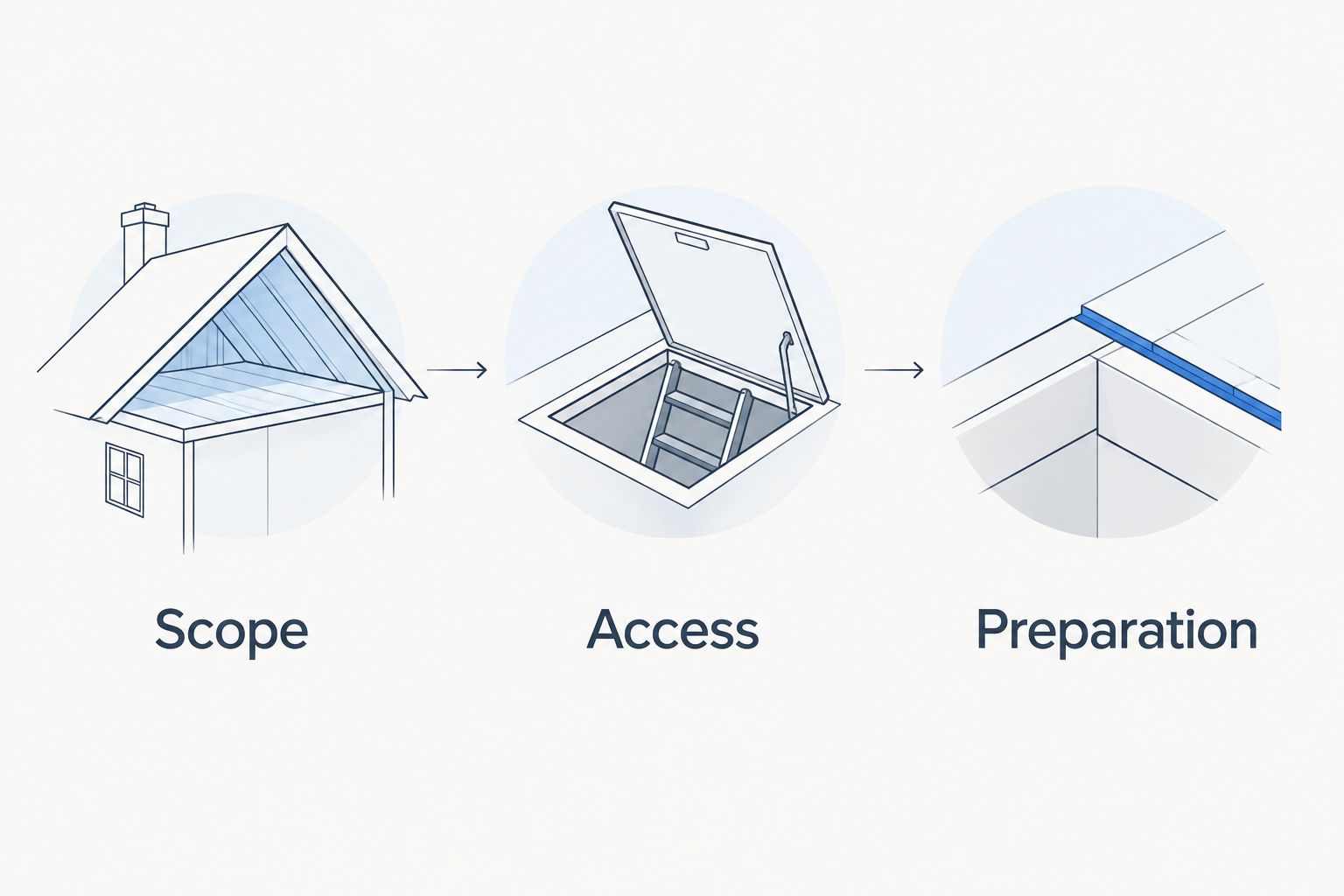
After reviewing these checkpoints, ask each contractor to explain exclusions in plain language. If one proposal includes preparation and another omits it, you are comparing different jobs. Resolve the difference before choosing.
Review your insulation project
Explore residential insulation installation for Long Island and the 5 boroughs.
When staying with Koala Insulation is the right call
Stay with Koala Insulation when its local proposal explains the problem, specifies suitable work, and makes preparation and responsibilities clear. An alternatives article is not evidence that you need to change contractors. The individual proposal is what you are hiring.
For your 2026 decision, apply the same questions to every installer. Confirm the relevant licensing and insurance, review the installation scope, and ask how completion will be documented. Do not give either a familiar franchise name or a local company a pass on those checks.
Choose the contractor whose written plan you understand—not the contractor whose name appears most often.
FAQ
What’s a Koala Insulation alternative for Long Island homeowners?
JC Home Care Center, Inc. is a residential insulation installation alternative serving Long Island and the 5 boroughs. Its stated services include attic, wall, and eco-friendly cellulose insulation, along with flat-roof insulation and soundproofing.
Is a local insulation installer better than Koala Insulation?
A local installer is not automatically better than a franchise-network contractor. Compare the individual proposals, including the installation areas, preparation, access responsibilities, and exclusions.
Should I get an energy assessment before hiring an insulation contractor?
Get an energy assessment first when the cause of your home’s discomfort is unclear. Insulation, air leakage, heating distribution, and moisture conditions require different responses, so diagnosis helps define the installation scope.
Can more attic insulation fix every cold room?
More attic insulation does not fix every cold room. Wall insulation gaps, air leaks, and heating distribution problems can also affect comfort, so ask the contractor to explain the proposed work’s connection to the symptom.
Is cellulose always the right insulation choice?
Cellulose is not automatically the right choice for every assembly. Material selection needs to account for the installation location, moisture conditions, access, and the intended assembly performance.
Can insulation completely soundproof a shared wall?
Insulation alone does not completely soundproof a shared wall. Sound can also travel through gaps, doors, framing, and adjoining surfaces, so a noise-reduction plan needs to address those paths.
What should I compare in insulation proposals in 2026?
Compare scope, access, and preparation in your 2026 insulation proposals. Each contractor should identify the installation areas, material, related work, responsibilities, and exclusions so you can evaluate the same job.
One last thing
Ask this before signing: What problem will this work not solve? A clear answer helps you distinguish a focused insulation project from an unrealistic promise. It also tells you whether another trade needs to address a roof leak, wiring concern, or heating problem first.
For your 2026 project, keep that answer beside the written scope. It gives you a concrete reference when reviewing the completed work and deciding whether any remaining comfort issue needs a separate investigation.
Related guides
- Questions to ask an insulation contractor before hiring
- How to seal air leaks before adding insulation
- How to verify an insulation contractor's license in New York