
Best overall for a damp foundation wall: rigid foam board, after the water source is fixed. Best for a rim joist: closed-cell spray foam. Best for a wall cavity that needs a noncombustible material: mineral wool. No insulation stops mold if leaks, condensation, or damp framing remain; this 2026 guide ranks materials by how they handle moisture and where they belong in a home.
- Rigid foam board is the best insulation for moisture and mold resistance at a foundation wall once water intrusion is fixed.
- Closed-cell spray foam fits rim joists where air leaks and condensation meet, but it must not conceal wet wood.
- Mineral wool tolerates moisture exposure, while fiberglass and cellulose belong in assemblies kept dry.
- JC Home Care Center, Inc. installs residential insulation across Long Island and New York City; the moisture source determines the material.
Why moisture changes the answer
Mold needs moisture. Insulation selection matters, but water entering through a foundation, roof, pipe, or unsealed air path can leave even a moisture-tolerant material surrounded by damp wood or drywall. Before choosing a product, identify where the water comes from and whether the assembly can dry.
For a wall that smells musty or shows staining, start with the cause rather than covering the evidence. This guide to preventing mold growth with proper wall insulation explains the wall-specific questions to consider. In 2026, the practical order is still the same: stop water, dry the materials, then insulate.
The U.S. Environmental Protection Agency advises keeping indoor relative humidity below 60%, ideally between 30% and 50%. Its mold guidance also says to dry wet materials within 24 to 48 hours to help prevent growth. Those are moisture-control targets, not performance ratings for any insulation.
What makes the best insulation for moisture and mold resistance
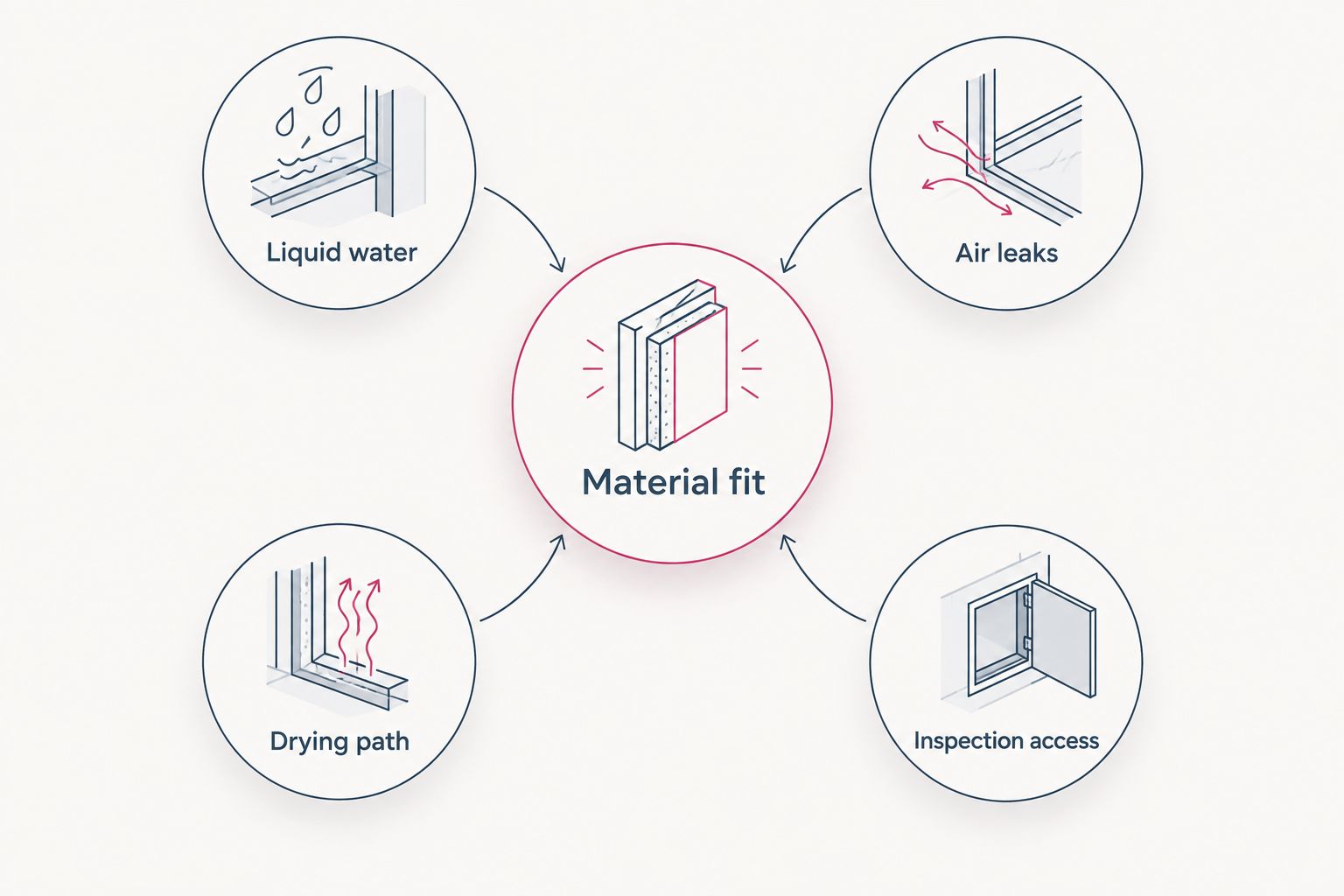
A material earns its place in this 2026 ranking by how well it fits a specific assembly, not by a claim that it is mold-proof:
- Liquid water: A foundation seep, roof leak, or plumbing leak must be repaired before insulation goes in.
- Air leaks: Warm, humid indoor air can reach a cold surface and condense. Air sealing can matter as much as the insulation itself.
- Drying path: A layer that slows vapor movement can also slow drying. Its position in the wall or ceiling matters.
- Material fit: A foundation wall, rim joist, attic floor, and above-grade wall cavity face different moisture conditions.
- Inspection access: If an assembly has a recurring leak, hiding vulnerable wood behind a new layer makes the problem harder to spot.
These criteria explain why no single product wins every location. A material that belongs against a prepared foundation wall is not automatically the right choice for an attic floor.
Moisture-resistant insulation at a glance
| Rank and material | Best for | Standout feature | Key limitation |
|---|---|---|---|
| 1. Rigid foam board | Prepared foundation walls | Keeps moisture-sensitive cavity insulation off masonry | Joints, edges, and required protective finishes need attention |
| 2. Closed-cell spray foam | Rim joists | Insulates and limits air movement in irregular gaps | Can conceal damp wood or a continuing leak |
| 3. Mineral wool | Above-grade wall cavities | Does not rely on paper facing and is noncombustible | Does not stop water or air leaks by itself |
| 4. Fiberglass batts | Dry, accessible attic floors | Easy to inspect and replace if a leak occurs | Loses effectiveness when compressed or left wet |
| 5. Cellulose | Dry, enclosed existing walls | Can fill wall cavities without opening the entire wall | Must dry after wetting; unsuitable over active moisture |
The ranking is conditional. If you have an active leak, the right first purchase is a repair, not the highest-ranked insulation. For a dry attic or finished wall, the lower-ranked material in this table can be the better fit.
1. Rigid foam board: best insulation for prepared foundation walls
Rigid foam board is the default choice here when a basement foundation wall is ready for insulation. Placed as part of a correctly detailed wall assembly, it separates interior finishes from the cooler masonry surface and reduces the chance of warm indoor air reaching that surface. Best for: a foundation wall after water intrusion has been corrected.
The board is not a foundation waterproofing system. Water can still enter at cracks, joints, or the wall-to-floor connection, and the rest of the assembly must be detailed so that trapped moisture does not damage adjacent materials.
Rigid foam board pros:
- Forms a continuous insulation layer when seams and edges are detailed correctly.
- Keeps fibrous cavity insulation from sitting directly against masonry.
- Offers a clear approach for a wall with uneven temperature and condensation concerns.
Rigid foam board cons:
- Does not repair seepage or drainage problems.
- Poorly sealed edges leave air paths that can reach cold surfaces.
- Installation details and required protective coverings vary by assembly.
Verdict: Choose rigid foam board for a prepared foundation wall; hold the insulation work if the wall still gets wet. In 2026, a dry-looking surface on inspection day is not proof that a seasonal seepage problem has ended.
2. Closed-cell spray foam: best insulation for rim joists
A rim joist has joints and changes in shape that make gaps easy to miss. Closed-cell spray foam can insulate and air-seal these irregular areas in one application. Best for: accessible, sound rim-joist framing after leaks and dampness have been investigated.
Closed-cell foam resists water absorption better than open-cell foam, but it does not make the surrounding wood immune to moisture. Applying it over damp framing can hide a problem instead of solving it. The amount and placement must also fit the assembly and applicable requirements.
Closed-cell spray foam pros:
- Conforms to irregular framing and narrow gaps.
- Limits air movement that can carry moisture to a cold rim joist.
- Does not depend on cutting a batt to fit every small opening.
Closed-cell spray foam cons:
- Makes covered wood harder to inspect later.
- Does not fix exterior water entry or plumbing leaks.
- Requires careful installation and assembly-specific detailing.
Verdict: Choose closed-cell spray foam for a dry rim joist with troublesome air gaps; skip it until the cause of wet or decaying wood is resolved.
3. Mineral wool: best insulation for above-grade wall cavities
Mineral wool is a fibrous insulation suited to wall cavities where noncombustibility matters and the wall is designed to manage incidental moisture. It can still sit beside wet framing or drywall if rainwater or indoor humidity reaches the cavity. Best for: an above-grade wall after leaks are repaired and the air and vapor details are settled.
Do not confuse a material's response to moisture with the wall's ability to resist mold. Mold can grow on nearby dust, wood, or drywall even when the insulation itself is not the food source. A wall needs sound exterior water control and a suitable drying path.
Mineral wool pros:
- Noncombustible material for assemblies where that property matters.
- Fits between framing members without a paper facing.
- Can be inspected if the wall is opened after a leak.
Mineral wool cons:
- Does not create a continuous air seal on its own.
- Wet wood and drywall still need prompt attention.
- Gaps around the batts reduce the quality of the installation.
Verdict: Choose mineral wool for a sound above-grade wall when its fit and noncombustibility matter; hold if staining or recurring rain entry remains unexplained.
4. Fiberglass batts: best insulation for dry, accessible attic floors
Fiberglass batts work in a dry attic floor when they fit the framing without gaps or compression. Their place in this ranking is practical: an accessible attic gives you a better chance to notice roof staining or wet insulation before the damage spreads. Best for: an attic floor where leaks are fixed and the ceiling air barrier is addressed.
Fiberglass does not seal air leaks. Humid air rising through ceiling penetrations can reach cold attic surfaces and create condensation while the batts remain in place. If a roof leak soaks the insulation, find the source and assess the wet material before adding another layer.
Fiberglass batt pros:
- Straightforward to inspect in an accessible attic.
- Can fit regular framing bays when installed carefully.
- Leaves separate air-sealing work easy to identify before installation.
Fiberglass batt cons:
- Does not stop air movement through ceiling gaps.
- Compression and voids reduce thermal performance.
- Wet batts and adjacent materials need assessment rather than concealment.
Verdict: Choose fiberglass batts for a dry, accessible attic with properly addressed air leaks; wait if condensation or roof staining is still visible.
5. Cellulose: best insulation for dry, enclosed existing walls
Cellulose is useful where an existing wall cavity needs insulation but removing all the interior finish is not the plan. It is made from treated paper fiber and needs an assembly that stays dry. Best for: enclosed above-grade walls with no active water intrusion.
JC Home Care Center, Inc. includes eco-friendly cellulose insulation among its residential installation services. That does not make cellulose the right material for a wall with a leak. In 2026, the deciding question is whether the exterior, cavity, and interior conditions let that wall remain dry.
Cellulose pros:
- Can fill enclosed wall cavities through planned access points.
- Fits irregular spaces that are difficult to address with pre-cut batts.
- Offers an option for improving an existing dry wall without removing its entire finish.
Cellulose cons:
- Needs investigation and drying if it gets wet.
- Does not solve a leak or condensation problem by itself.
- Hidden wall conditions make moisture diagnosis important before installation.
Verdict: Choose cellulose for an existing wall confirmed to be dry; skip it as a cover-up for staining, soft finishes, or unexplained musty odors.
How this ranking works in a real home
This is a ranking by moisture exposure and assembly fit, not a claim that every home should install the first item. Rigid foam board leads at a prepared foundation wall because keeping moisture-sensitive materials away from masonry is central to that use case. Closed-cell spray foam follows for the smaller, irregular rim-joist area where air movement is a concern. Mineral wool, fiberglass, and cellulose serve progressively drier, more specific above-grade applications.
The first step on a Long Island or New York City property is to locate the wet area: foundation wall, rim joist, wall cavity, or attic. Next, distinguish liquid water from condensation. Then check whether air moving through gaps is feeding that condensation before you select insulation. This air-sealing guide covers the step that insulation alone cannot perform.
If visible mold covers more than 10 square feet, EPA guidance says to consult its cleanup guidance rather than treat it as a routine small-area job. Significant water damage, contaminated water, and HVAC involvement also call for greater care. Insulation installation is not a substitute for mold cleanup or fixing the water source.
Plan the right insulation upgrade
Discuss attic or wall insulation for a Long Island or New York City home.
Which insulation should you choose in 2026?
Choose rigid foam board for a foundation wall that has passed a water-intrusion check. Choose closed-cell spray foam for a dry rim joist with hard-to-seal gaps. Choose mineral wool for a sound above-grade wall cavity when noncombustibility is important. Use fiberglass on a dry, accessible attic floor or cellulose in an existing dry wall when those installation methods fit the job.
JC Home Care Center, Inc. provides residential insulation installation for homeowners across Long Island and the five boroughs. For those homeowners, the useful comparison is not which label sounds most resistant to mold; it is which material fits the moisture conditions you actually have. If the assembly is wet, repair and dry it before insulating.
FAQ
What is the best insulation for moisture and mold resistance?
Rigid foam board is the best choice in this ranking for a prepared foundation wall, while closed-cell spray foam fits dry rim joists. Neither material repairs a leak or makes adjacent wood and drywall mold-proof.
Is closed-cell spray foam better than mineral wool for a damp wall?
Neither should go over an unresolved damp wall. Closed-cell spray foam suits some air-leaky rim joists; mineral wool suits above-grade cavities with working water control and a suitable drying path.
Can mold grow behind moisture-resistant insulation?
Yes. Moisture can reach wood, drywall, dust, or other materials behind insulation, so find and repair water entry before covering the assembly.
Is fiberglass insulation suitable for an attic with condensation?
Fix the cause of condensation before adding fiberglass insulation. Check ceiling air leaks and the roof assembly, then assess any wet insulation and surrounding materials.
Is cellulose insulation a good choice for a wall that had a leak?
Cellulose suits a wall only after the leak is repaired and the cavity is confirmed dry. Adding it over wet framing can conceal damage rather than resolve it.
What indoor humidity level helps limit mold growth?
The EPA advises keeping indoor relative humidity below 60%, ideally between 30% and 50%. Humidity control does not replace repairing a roof, plumbing, or foundation leak.
How quickly should wet building materials be dried?
EPA mold guidance advises drying wet materials within 24 to 48 hours to help prevent mold growth. Find and stop the water source as part of the same response.
One last thing
A musty smell is not a reason to buy the highest-ranked insulation. It is a reason to find out what is getting wet. In 2026, that answer still decides whether a moisture-resistant material will protect the assembly or simply cover the warning sign. JC Home Care Center, Inc. is an insulation installation option for Long Island and New York City homeowners once that question is answered.
Related guides
- Crawl space insulation for Long Island homes
- Best insulation options for reducing attic condensation
- Best insulation options for homes with high humidity