
Attic insulation for Long Island and NYC homeowners means matching R-value, material, and air-sealing work to your specific roof type, wiring era, and heating system, not grabbing whatever fiberglass roll sits on the shelf at the hardware store. A Cape Cod in Suffolk County with knob-and-tube wiring needs a different approach than a raised ranch in Nassau or a pre-war brownstone in Brooklyn, even though all three homeowners type the same phrase into Google: attic insulation near me.
- Long Island and NYC homeowners searching attic insulation near me in 2026 should target R-49 to R-60 in most attics, depending on roof framing and home age.
- Blown-in cellulose handles irregular older attics better than batts; spray foam suits finished attic conversions where headroom is tight.
- Ice dams, cold attic hatches, and uneven upstairs temperatures are the three clearest signs an attic is under-insulated right now.
- Air sealing before adding insulation matters as much as the R-value number, especially around recessed lights and attic access points.
- JC Home Care Center, Inc. installs attic insulation across Long Island and the five boroughs, matching material to house type rather than a one-size approach.
Why attic insulation matters for Long Island and NYC homeowners
Long Island winters swing hard between damp cold snaps and sudden thaws, and that cycle is exactly what drives ice dams on roofs with weak attic insulation. NYC rowhouses and co-ops face a different problem: shared walls and older building envelopes that leak conditioned air through the roof deck even when the unit below feels fine.
A homeowner who isn't sure whether their attic is the actual problem should start with how to know if your attic needs more insulation before spending on any material. The signs are usually visible from inside the house: cold ceilings on the top floor, a furnace or boiler that runs longer than it should in January, and heating bills that climb every year without a clear reason.
Attic insulation is the single highest-leverage upgrade for most Long Island and NYC homes built before 1990, because heat rises and an under-insulated attic floor is where most of it escapes. That's the verdict worth remembering before comparing materials or contractors.
Update your attic's R-value assessment
Most homes in this region were insulated decades ago to a standard that no longer meets current energy guidance. Checking what's actually up there is the first move, not the last.
- Measure existing insulation depth with a tape measure at three or more spots across the attic floor
- Compare depth against material type, since cellulose and fiberglass batts reach the same R-value at different thicknesses
- Note any compressed, wet, or discolored insulation, which signals moisture problems beneath the surface
- Check corners and eaves separately, since depth often drops off near the roofline
- Use how to check attic insulation R-value yourself as a walkthrough before calling anyone out for a quote
Seal air leaks before adding a single bag of insulation
Adding insulation over unsealed gaps is like putting a thicker blanket over a window left open. Air sealing comes first every time, and skipping it is the most common reason a homeowner adds insulation and sees almost no drop in heating bills.
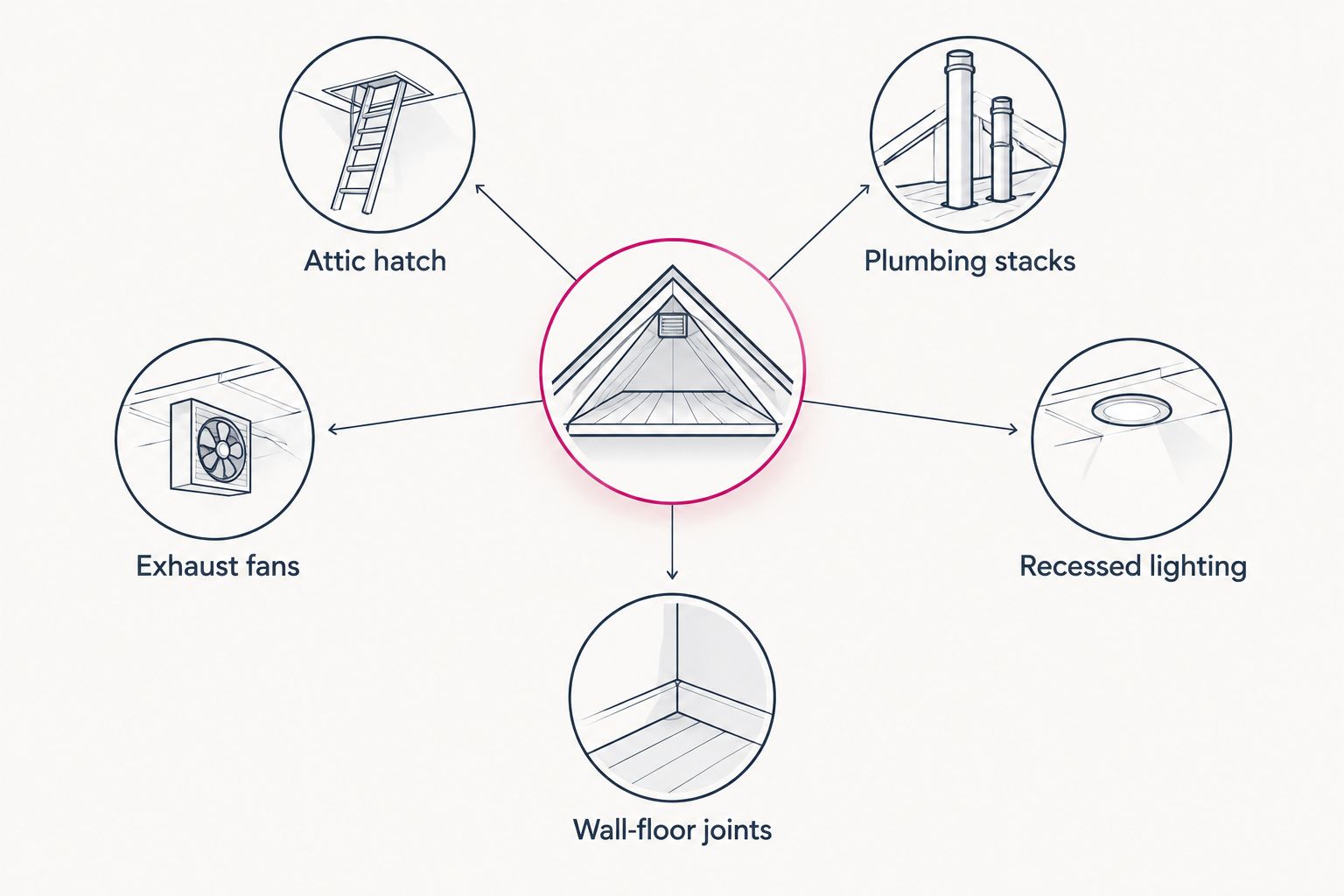
- Seal the attic hatch or pull-down stairs with weatherstripping and a insulated cover
- Caulk or foam around plumbing stacks, wiring penetrations, and chimney chases
- Check bathroom and kitchen exhaust fans for proper venting to the exterior, not just into the attic space
- Address gaps around recessed lighting fixtures, which are a major heat-loss point in homes built or renovated after the 1980s
- Inspect where the attic floor meets exterior walls, a spot that's easy to miss and rarely sealed correctly the first time
Choose the right insulation material for your attic type
Long Island and NYC attics come in a lot of shapes: full unfinished attics over ranch homes, cramped Cape Cod knee walls, finished attic conversions, and rowhouse rooflines with almost no walking room. Material choice follows the shape of the space, not personal preference.
- Blown-in cellulose fills irregular joist bays and works well in older Suffolk County and Nassau County attics with uneven framing
- Fiberglass batts suit new construction with standard joist spacing and easy access
- Spray foam works in finished attic conversions where floor joists have been replaced by rafter insulation and headroom is already tight
- Radiant barrier adds a reflective layer in attics that see intense summer heat gain, useful alongside a base insulation layer rather than instead of it
- Denim or cotton batting is an option for households prioritizing low-irritant materials over standard fiberglass
Compare the main attic insulation options
| Option | Best for | Key limitation |
|---|---|---|
| Blown-in cellulose | Older, irregular attics across Long Island | Settles over time, needs periodic depth checks |
| Fiberglass batts | New construction with standard framing | Leaves gaps around obstructions if installed loosely |
| Spray foam | Finished attic conversions, tight headroom | Harder and costlier to remove or modify later |
| Radiant barrier | Attics with heavy summer heat gain | Doesn't replace floor insulation, only supplements it |
Blown-in cellulose is the practical default for most pre-1990 Long Island attics; spray foam wins for finished attic conversions where floor-level insulation isn't an option.
If your attic hatch is cold to the touch in January, the insulation below it is already failing.
Address recessed lighting and knob-and-tube wiring before insulating
This step gets skipped constantly and it's the one that causes callbacks. Older Long Island and Brooklyn homes often carry electrical setups that change what insulation is safe to install directly against.
- Confirm whether recessed lights are IC-rated (insulation contact rated) before covering them
- Have knob-and-tube wiring inspected, since some insulation materials aren't rated for direct contact with it
- Check attic access hatches and pull-down stairs for the same air-sealing treatment as the rest of the attic floor
- Flag any visible electrical junction boxes so the installer can work around them safely
- Review attic insulation for homes with recessed lighting if the house has more than a handful of fixtures
Watch for ice dams as your winter warning sign
Ice dams aren't a roofing problem first, they're an attic insulation problem showing up on the roof. Heat escaping through an under-insulated attic melts snow on the upper roof, which refreezes at the colder eaves and backs water up under shingles.
- Look for icicles forming in a thick ridge at the roof edge rather than scattered drips
- Check for uneven snowmelt patterns across the roof after a storm, which points to inconsistent attic insulation depth
- Note any water staining on ceilings near exterior walls after a thaw
- Compare this winter's pattern to last year's if the home has had repeated issues
Get local quotes and compare them line by line
Once the attic's condition, air leaks, and material needs are clear, the last step is pricing the work with more than one contractor. A quote that just says "attic insulation" without specifying material, depth, and air-sealing scope isn't comparable to one that does.
- Ask each contractor to specify target R-value in writing, not just "we'll bring it up to code"
- Confirm whether air sealing is included in the price or billed separately
- Check that the quote names the exact material, since "blown-in insulation" alone doesn't specify cellulose versus fiberglass
- Ask about disposal of old, compressed insulation if it's being replaced rather than topped off
- Review best attic insulation contractors on Long Island as a starting point for comparing local options
Get an attic insulation quote
JC Home Care Center serves Long Island and the five boroughs.
Common mistakes Long Island and NYC homeowners make
- Topping off old insulation without checking condition first — compressed or wet cellulose loses R-value regardless of how much new material goes on top
- Ignoring knob-and-tube wiring in Cape Cod and colonial attics — some materials aren't rated for direct contact and need clearance or an electrician's sign-off first
- Skipping air sealing around bathroom exhaust fans — a common gap in homes renovated in the 1990s and 2000s across Nassau and Suffolk County
- Assuming NYC co-ops and condos don't need attic-level work — shared roof decks in older buildings still lose heat the same way, just through a different access point
- Choosing material by price alone — an attic with irregular framing installed with batts instead of blown-in cellulose leaves gaps no amount of extra thickness fixes
FAQ
What is the best attic insulation for Long Island homes?
Blown-in cellulose is the practical default for most pre-1990 Long Island attics because it fills irregular joist spacing better than batts. Spray foam is a better fit for finished attic conversions where headroom is already limited.
How much attic insulation do Long Island and NYC homes need in 2026?
Most attics in this region should target R-49 to R-60, depending on roof framing and home age. Homes with recessed lighting or knob-and-tube wiring need an inspection before that target is applied evenly.
Is blown-in cellulose or spray foam better for older attics?
Blown-in cellulose works better for older attics with irregular, uneven joist framing common across Suffolk and Nassau County. Spray foam suits finished attic conversions where the insulation goes at the roofline instead of the floor.
How do I know if my attic needs more insulation?
Cold ceilings on the top floor, rising heating bills without a clear cause, and a cold attic hatch in winter are the three clearest signs. Measuring existing insulation depth against current material standards confirms it.
Can attic insulation reduce ice dams in Long Island winters?
Yes, ice dams form when heat escaping through an under-insulated attic melts snow unevenly on the roof. Bringing the attic up to a consistent R-value across the full floor reduces that uneven melt pattern.
Are there NY rebates for attic insulation upgrades in 2026?
NYSERDA and related programs have offered rebate and financing pathways for qualifying insulation upgrades in past years. Eligibility rules change, so confirming current 2026 program status before budgeting is worth the extra step.
How long does attic insulation installation take?
A standard attic insulation job in a single-family Long Island home typically completes in a single day once air sealing and material delivery are scheduled. Larger or finished-attic conversions can take longer depending on access and existing wiring conditions.
Does attic insulation help in NYC co-ops and brownstones?
Yes, shared roof decks in older NYC buildings lose heat through the same uninsulated or under-insulated attic and roof cavities as single-family homes. The access point and approval process differ, but the underlying heat-loss problem is the same.
One last thing
The attic hatch is the single most overlooked air leak in Long Island and NYC homes, and it's also the easiest to fix in under an hour with weatherstripping and an insulated cover. Homeowners who check that one spot before booking a full attic job often find it's part of why the room below the attic never feels right, even in houses that already have decent insulation depth.
Related guides